




The Tradeoff Between Efficiency and Downhill Performance (XCD vs XCD Crossover)
How to choose the right scaled ski setup based on how you actually ski
Many backcountry skiers looking at scaled ski setups run into the same question: how much downhill performance do you actually need? How much of that performance are you going to get out of bindings like the 3-Pin Cable, Rottefella Xplore, Switchback, or TTS Transit? They are all suited to efficient backcountry travel, but they prioritize different aspects of it. That’s where XCD and XCD Crossover come into the picture, and understanding the difference between them is the key to choosing the right setup.
We started using the term XCD Crossover because there was a growing group of ski setups that didn’t quite fit into traditional XCD. People keep asking about wider skis, more supportive boots, and stronger bindings that held the same efficiency ethos. They weren’t trying to leave XCD behind, but they wanted more out of the descent than a classic XCD setup could offer. This category gives those setups a place to live.
The Core Tradeoff: Efficiency vs. Downhill Performance
Not all backcountry setups are trying to do the same thing.
Some are built to move through terrain as efficiently as possible.
Others are built to ski better when it’s time to head down.
You can push a setup in either direction. But you can’t fully optimize both at once.
The lighter and simpler your gear gets, the easier it is to travel.
The more supportive and powerful it gets, the better it performs on the descent.
That’s what defines the split:
- XCD leans toward efficiency
- XCD Crossover leans toward downhill performance
What Is XCD?
Efficiency-First Backcountry Skiing
XCD (Cross Country Downhill) is built for movement first.
It’s the most efficient way to travel on snow while still being able to make real turns when the terrain opens up.
This is the setup you grab when the goal is to cover ground, have fun, and keep moving without constantly stopping to transition.
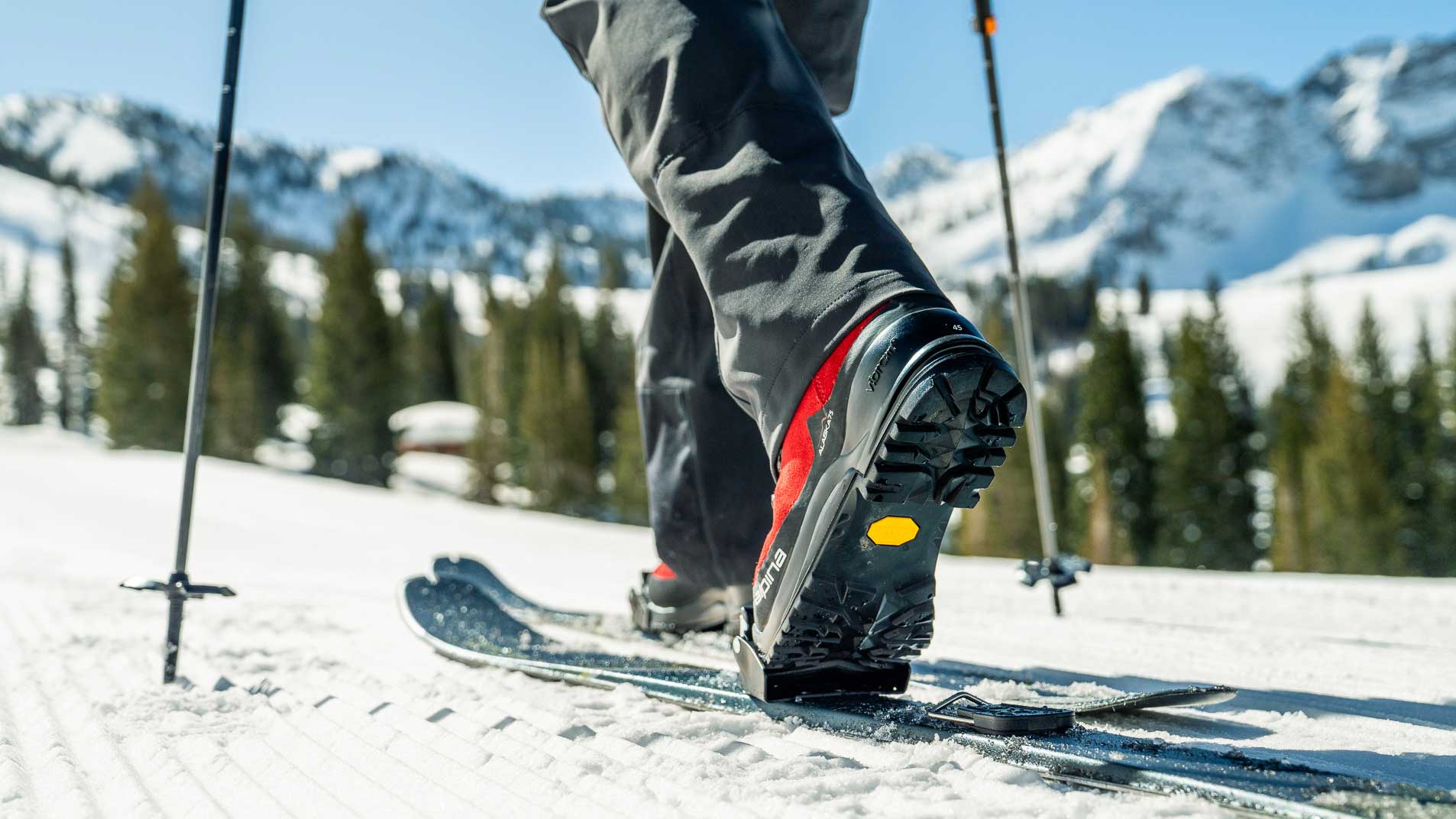
XCD is built for days where you never stop moving.
What defines XCD
- Scaled skis for grip without skins
- Lightweight boots and bindings
- Low resistance while touring
- Moderate downhill capability
Where it shines
- Rolling terrain
- Low-angle glades and meadows
- Tours with constant small climbs and descents
- Days where stopping to put skins on would be a nuisance
A typical XCD day feels like a long walk on snow where turns happen naturally along the way. You’re not forcing the terrain. You’re moving through it.
What Is XCD Crossover?
When Efficiency Meets Downhill Performance
XCD Crossover keeps that same idea, but shifts the balance.
You still want efficient travel. You still want scaled skis. But you also want your gear to show up when it’s time to ski down.
This is where you start adding width, support, and power.
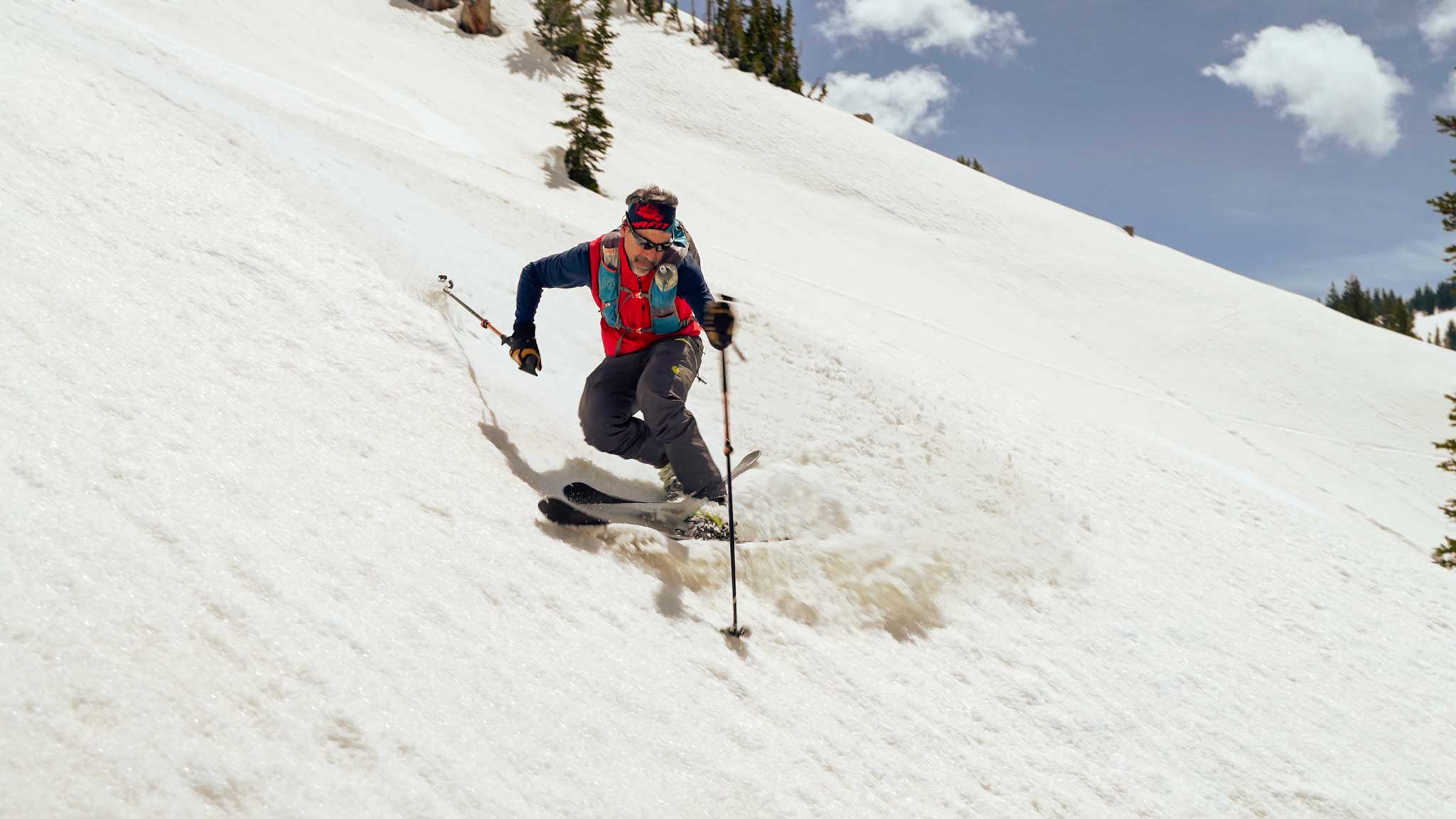
But when the terrain tips down, you want more under you.
That’s where a setup like this comes in.
What defines XCD Crossover
- Wider scaled skis
- More supportive boots
- More active or powerful bindings
- Noticeably better downhill control
Where it expands your range
- Deeper snow
- More variable conditions
- Steeper terrain
- Longer tours where you may carry climbing skins as backup
It’s still the same system at its core. Just with more authority on the descent.
Ski Width:
The Key Difference Between XCD and XCD Crossover
The transition from XCD to Crossover usually starts with ski width.
- XCD skis typically sit in the mid-80 mm range underfoot
- Crossover skis move into the mid-90 mm range
That ~10 mm difference changes everything.
More width gives you:
- Better float in soft snow
- More stability
- More confidence at speed
But it also requires:
- More supportive boots
- Stronger bindings
- More input from the skier
That’s why this isn’t just about skis. It’s about the whole system.
Terrain Still Matters
One thing that doesn’t change: both categories are built around scaled skis.
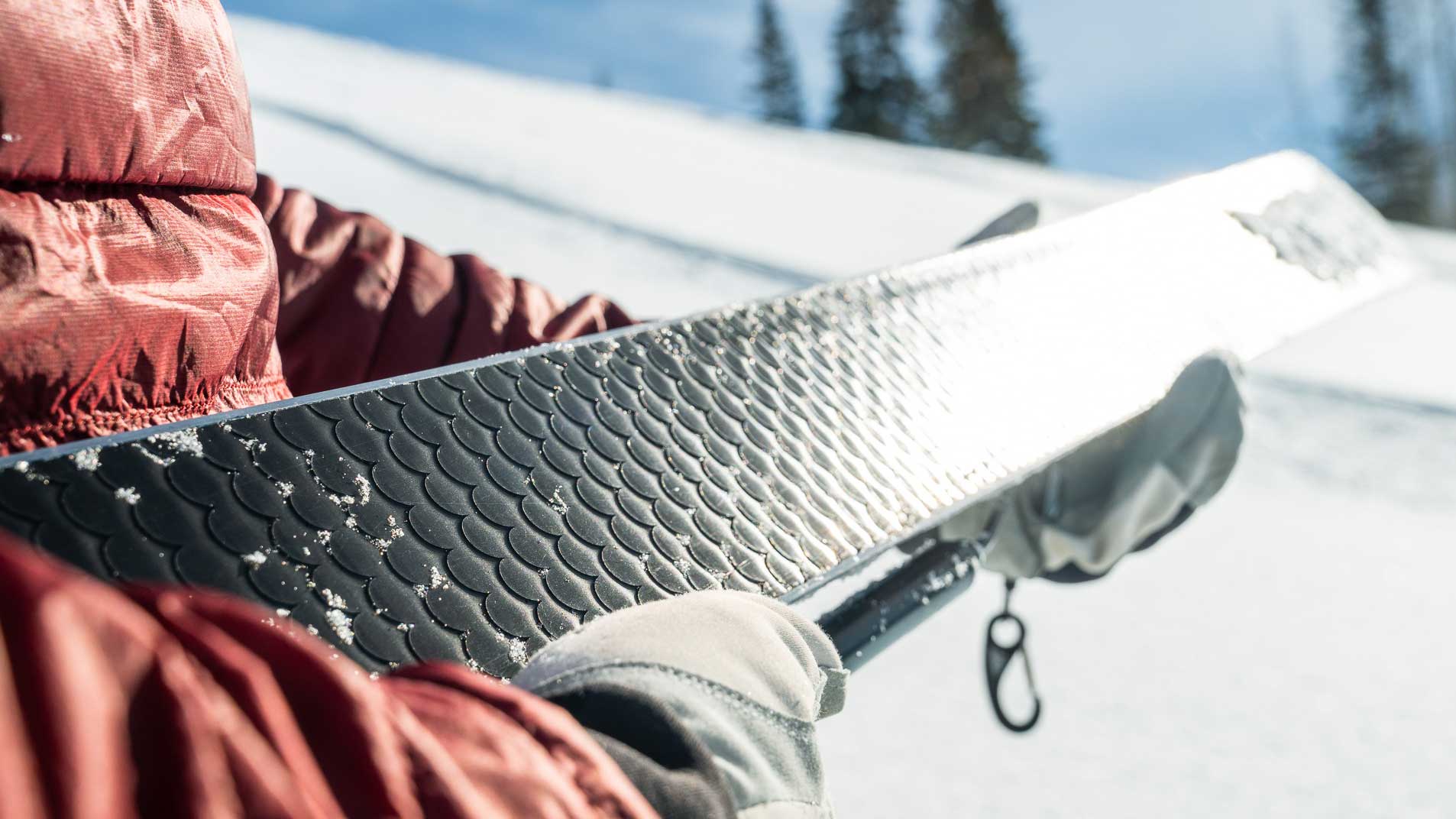
That means that you’re still generally working within ~20° terrain for climbing on scales. Even if you’re traveling on Crossover gear with your sights set on a steeper downhill objective, you’re probably still modifying your up-track to avoid skins. Maybe you’ve got a pair of climbing skins in your pocket just in case.
The difference is how far you can push things if you want to. XCD has a very firm ceiling. XCD Crossover can push the boundaries a lot further.
What an XCD Setup vs XCD Crossover Setup Looks Like
Typical XCD Setup
- Skis: narrower scaled skis (e.g. Endeavor BC)
- Bindings: 3-Pin Cable or Rottefella Xplore
- Boots: leather 75mm duckbill boots or lightweight XP style boots
This is a setup built for efficient movement above all else. It excels when the goal is to cover ground, move through rolling terrain, and keep transitions to a minimum. Downhill performance is there, but it’s secondary to how well the system travels.
Best for skiers who prioritize distance, flow, and simplicity.
Typical XCD Crossover Setup
- Skis: wider scaled skis (e.g. Vector BC)
- Bindings: Hardwire 3-Pin, Switchback, or TTS Transit
- Boots: plastic shell 75mm or NTN boots
This setup shifts the balance toward downhill performance while keeping the benefits of scaled travel. It offers more support, better edge control, and more confidence when conditions get deeper or more demanding.
Best for skiers who still want efficiency, but don’t want to hold back on the descent.
Why Not All Gear Combinations Work
You can mix and match gear. The more experienced you are as a skier, the more you’re going to do exactly that.
But not all combinations feel good on snow. That’s why we’re laying the groundwork by curating specific combinations.
An Xplore binding on a wider ski, for example: it can work, but you might notice difficulty getting the ski on edge.
The XCD and XCD Crossover categories both exist to prevent that mismatch. They’re less about rules, more about setting a logical starting point for building a well-balanced setup.
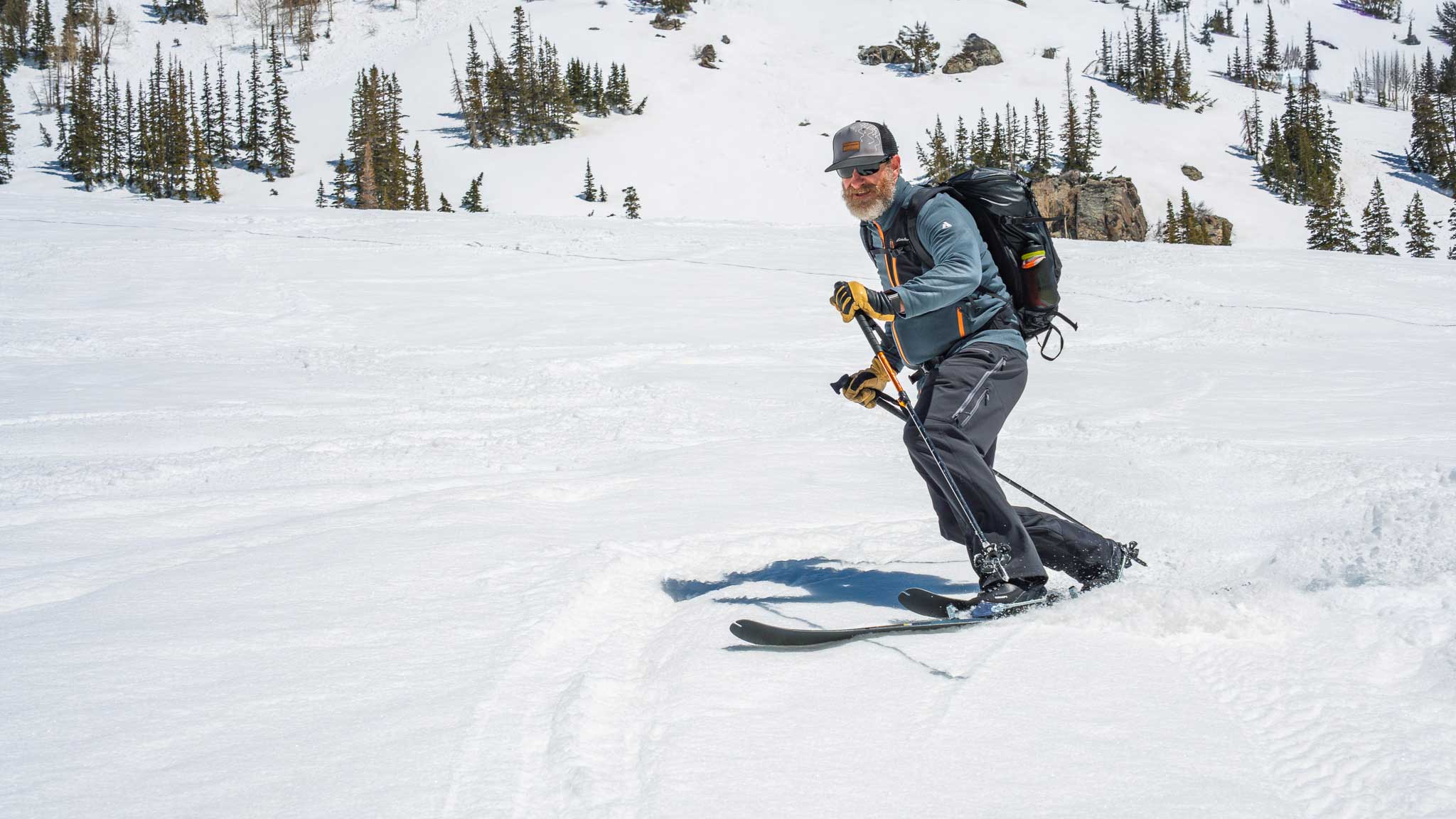
Long approaches and rolling terrain come easy on a setup like this.
And when you find a slope worth turning, it’s ready for that too.
When to Choose XCD Crossover
If you like how your setup tours, but don’t trust it on the descent, you’re in between categories.
You’re probably ready for XCD Crossover if:
- You feel unstable in soft or deeper snow
- You want an efficient setup for a broader range of (steeper) terrain choices
- You want more confidence on the descent, and you don’t mind carrying a little more weight to get it
This is where personal preference really comes into play.
Some skiers will happily stay on a lighter setup forever. Others will take a small efficiency hit if it means skiing better on the way down, skiing more aggressively, or touring deeper into the backcountry.
If you’re not building a setup for a specific role in your quiver, and instead want something more all-purpose, XCD Crossover is usually the better fit.
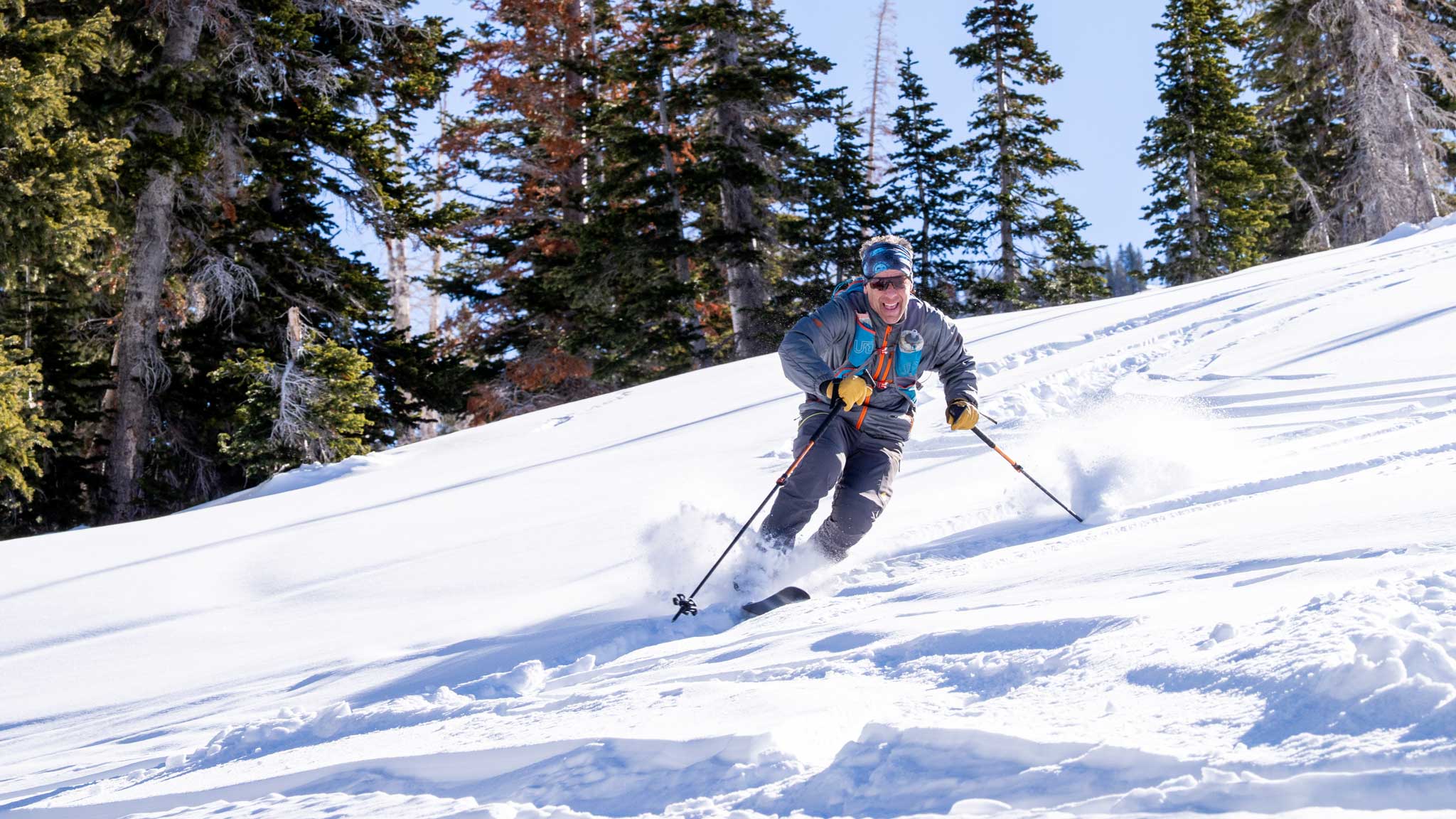
With a wider platform and a more active binding, the system becomes noticeably more powerful and direct on the downhill while still maintaining a free-pivot touring experience.
FAQ: XCD vs. XCD Crossover
What does XCD mean in skiing?
XCD stands for Cross Country Downhill. It’s a style of backcountry skiing focused on efficient travel using scaled skis, with enough downhill capability to make turns on moderate terrain.
What is XCD Crossover?
XCD Crossover is a more downhill-capable version of XCD. It uses wider skis, stronger bindings, and more supportive boots while still maintaining efficient, scale-based travel.
What is the main difference between XCD and XCD Crossover?
XCD prioritizes efficiency and lightweight movement. XCD Crossover adds additional support to improve downhill control and stability.
Are both XCD and XCD Crossover based on scaled skis?
Yes. Both categories rely on scaled skis to reduce the need for skins and keep movement continuous.
Do you still use skins with XCD Crossover?
Sometimes, but not necessarily. Many skiers carry skins as a backup for steeper terrain.
When should I upgrade from XCD to XCD Crossover?
When you want more stability, better turn control, and more confidence on the descent, especially in deeper or more variable snow.
Is XCD or XCD Crossover better for beginners?
XCD setups are simple, intuitive, and efficient, making them a strong entry point into backcountry skiing. XCD Crossover gear will give you more confidence, allowing less practiced telemark skiers rely more on their gear while learning technique.
Is XCD Crossover better for downhill skiing?
Yes. It offers more support, more control, and better performance on the descent compared to lighter XCD setups.