



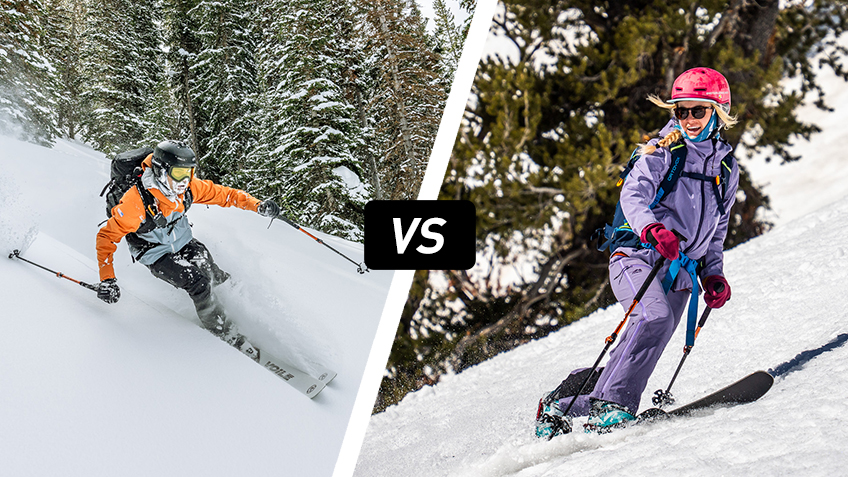
Telemark vs. Alpine Touring: Which is Right For You?
Share this Post
I started Telemark skiing in 2006, at what I would consider the tail end of the ‘modern popularity spike.’ Multiple big-name ski companies were then manufacturing telemark-specific skis, boot and binding technology was developing rapidly, and media outlets were documenting the skill of athletes, mountaineers, and novices alike, all on free heel equipment. What was the eventual downturn in popularity for the second wave of telemark revival? Well, that’s probably a matter of opinion.
A Brief History of Telemark and Alpine Touring
For most of the modern era of skiing in the United States, telemark was considered the ‘way’ to go backcountry skiing. Some might even mistakenly think it was the ‘only way’ to go backcountry skiing because Alpine Touring equipment hadn’t even been invented yet! This misconception may be a product of Telemark’s branding success, but rest assured, while all the woolie-clad tele hippies were touting their technique in the US, Europeans and the rest of the international skiing world were rocking Silvrettas, Fritschis, and even Dynafit bindings (which were, by the way, invented by Fritz Barthel in 1983).
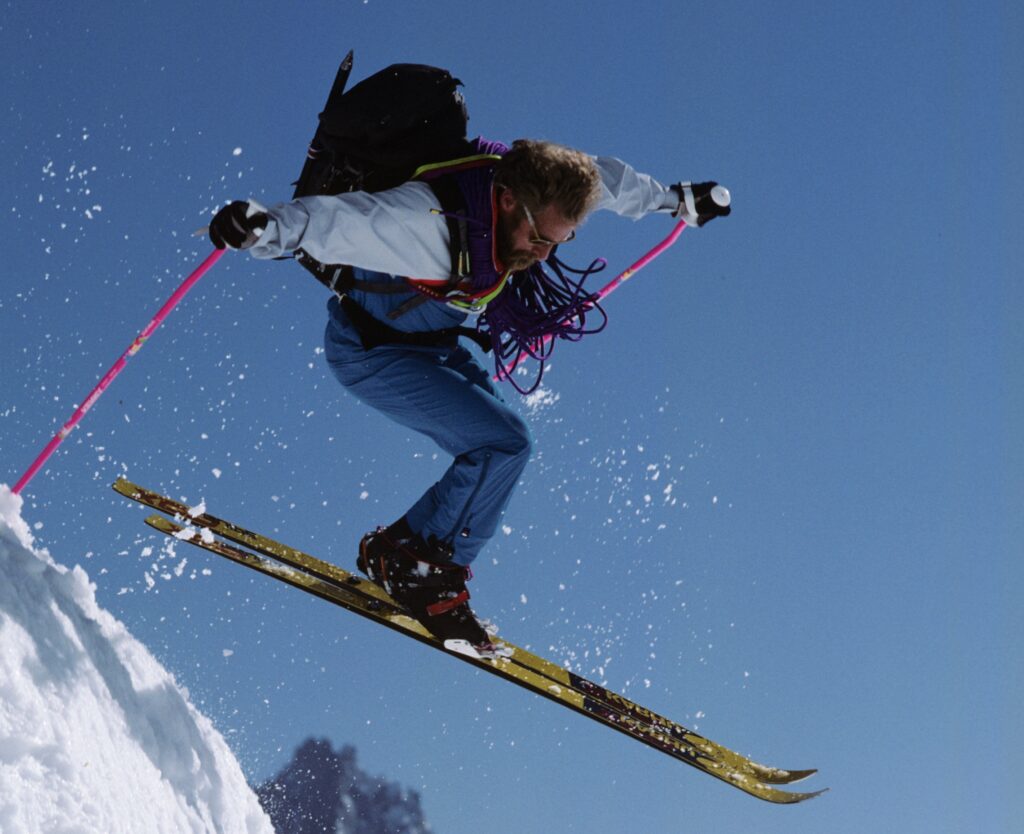
Even though Alpine Touring and Telemark have coexisted since at least 1868, the balance of popularity has usually been driven by technology. Telemark technique in the late 1800s helped stabilize the skier in tighter radius and steeper turns. As the cuffs of alpine boots became higher and stiffer, alpine skiing started to replace the need for the telemark technique. But then, with a curiosity for backcountry travel starting to take hold in the 1970s, telemark was the solution for the widest variety of terrain. Rolling hills? Steep chutes? Lightweight? Simple? Affordable? Easy to get a hold of? Telemark, checkmate!
The Introduction of Modern AT Gear
Regardless of the many ebbs and flows in ski industry technology after the 1970s, two important players entered the scene in the late 2000s that truly impacted the telemark vs AT popularity scale. In 2007, the Marker Duke was released and afforded tourability for 4-buckle alpine boots. With a reliable release similar to the likes of modern alpine bindings, and lacking a need for a touring boot at all, literally everyone could go touring. Then, in 2008, Black Diamond released one of the earliest versions of a 4-buckle hybrid boot that had Dynafit compatibility. Tour like a feather, ski like an Olympian.
The 4-buckle pin-compatible boot and the alpine style binding with tour-ability attacked telemark skiing in a crossfire it couldn’t rationalize its way out of. Many legacy telemark skiers and backcountry diehards bowed out and followed the eventual church of Hoji (Eric Hjorleifson): tiny pin bindings on fat skis with mega ultra-powerful boots that walk like bedroom slippers.
I can’t hide the fact that the Alpine Touring industry is doing a really good job at being awesome right now. But alternatively, telemark never went away. Commonly branded as a dying art, telemark is seeing more attention and technological advancements in the last few years that have kept its sport and community thriving.
DIY Innovation Bringing Telemark up to Speed
Similar to how Eric Hjorleifson built his ground-breaking AT boots in his own garage, the underground telemark world has gone full speed with their own tinkering and has helped springboard the best ideas to the forefront. The 2011 telemark tech system developed by Mark Lengel has morphed into Voilé’s current masterpiece: The TTS Transit Telemark Binding. A binding with three position adjustability, both with soft and stiff spring offerings, AND, get this… walks uphill at less than 250g per foot.
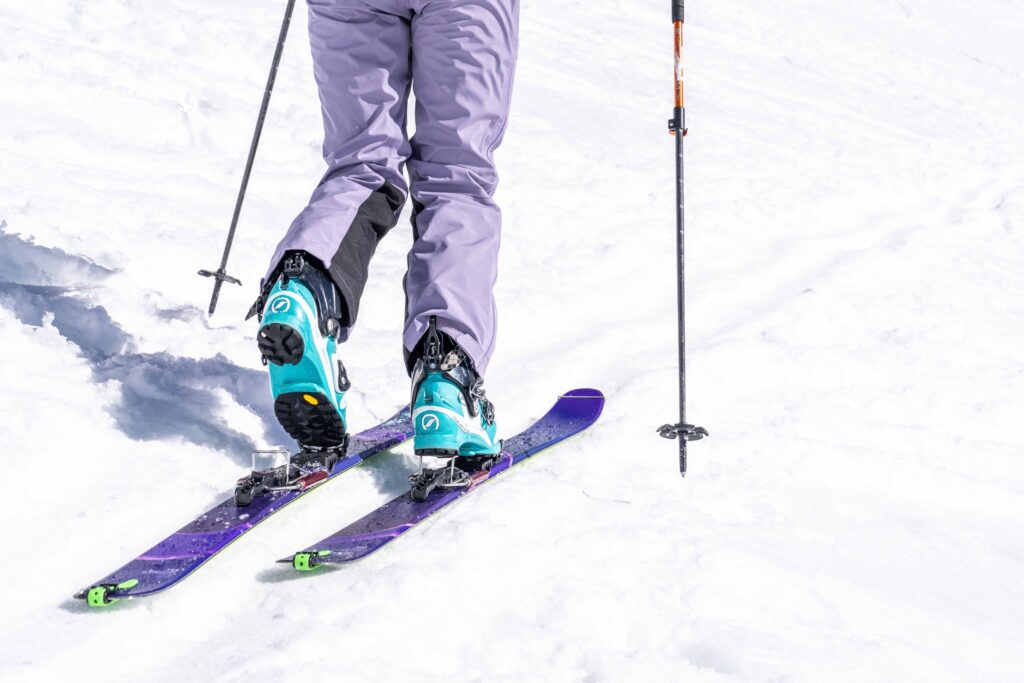
Additionally, Scarpa issued a long-awaited and highly anticipated update to the TX Pro and TX Comp NTN telemark boots. This update brought a modern AT boot style walk mode and major weight savings to the telemark world. For the first time in many seasons, telemark skiers can purchase off-the-shelf boots and bindings that ski and tour just as well as AT counterparts.
So, the question remains: Telemark vs Alpine Touring?
Well, to be honest, there are plenty of reasons to AT. Most people are more familiar and feel more comfortable with an alpine turn. There are many more binding and boot offerings on the market to match your preferences. AT still reigns king in consideration of weight and efficiency. So why would anyone telemark ski at all?
Well, there are many reasons. For me, the answer is much more complicated than “I like it”. As I said earlier in this article, I have been telemark skiing since 2006, which originally started as a way for me to go backcountry skiing. I put together my first setup for $25 using old Riva II cable bindings mounted on skis I found in a ditch. Being from NH, naturally, I brought this setup to Tuckerman Ravine and used those old junkers on many of the major fall lines on Mt. Washington.
Transitioning to Telemark
I later went through a series of Alpine skiing-induced knee injuries in my early 20s involving three ACL reconstructions and multiple meniscus scopes. I would always rehab from those surgeries on my telemark gear to help strengthen my legs. Eventually, after so much knee trauma, I sort of just stuck with the telemark turn full time.
20 seasons later, I’m working both as an IFMGA guide and professional ski patroller on my telemark gear. I neurotically nerd out on how to make my gear lighter and more efficient, and am almost always prototyping either a new boot or binding mod. So when people ask me why I tele ski, I tell them, “Because I’ve gone so far down the rabbit hole, I have lost my way out.”
For others, you might need a reason to telemark that is more cut and dry. Below, I have compiled a list of six reasons why I think everyone should have at least one telemark setup in their quiver.
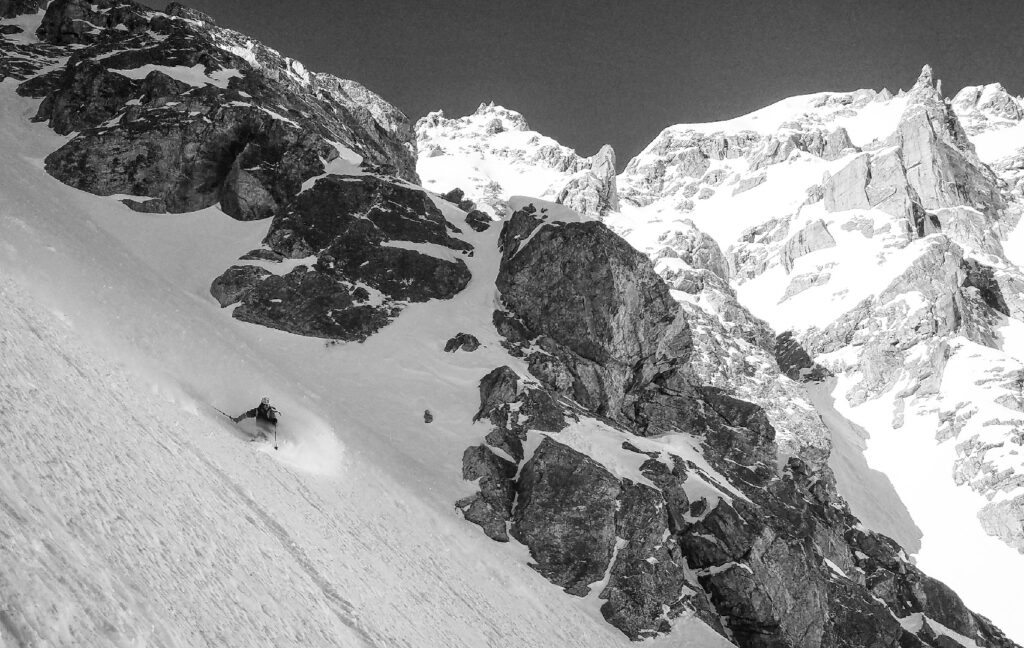
Reasons to telemark
To explore a new learning curve.
Maybe you have skied your entire life, witnessed the development of ‘parabolic skis’, and you just need something new? Telemark skiing will certainly put a new spin on the sport you have known and loved since your early days. The intricacies and skill development will keep you occupied for a while longer.
You are teaching your kid(s) and/or friends to ski.
Maybe you are spending time on the hill with someone who is learning to ski…? You can learn while they learn! Also, bending over to pick up a crashed toddler has never been easier than on a binding that is meant to bend a knee.
The boots are warmer and more comfortable.
It’s a hard point to argue when the boots mimic the real-time geometry of a human foot. They are also much warmer. Period. If you are going through foot problems or recovering from cold injuries, give your dogs a break by putting in some telemark days.
Telemark skiing is easier on your knees and back.
I hate to break it to you all, but it’s true. The telemark turn puts your body in a more anatomically correct position to protect all your ligaments and soft tissue in your knees. I can attest to telemark being a much more sustainable pathway after 5 knee surgeries from alpine injuries. If you are worried about releasability, look into release-rated bindings such as the ones offered by Rottafella. As far as back and spinal health goes, telemark turns put your body in a more spring-like position, therefore taking the shock and strain off your back common from some alpine techniques. There is a reason why a lot of professional ski patrollers choose telemark gear for long-lasting careers.
Add more fun to flat terrain.
Maybe you moved to a place that has flatter terrain than you would prefer? Maybe you are in this new local for school or for a temporary job? Add a new dimension to plain terrain by releasing your heel.
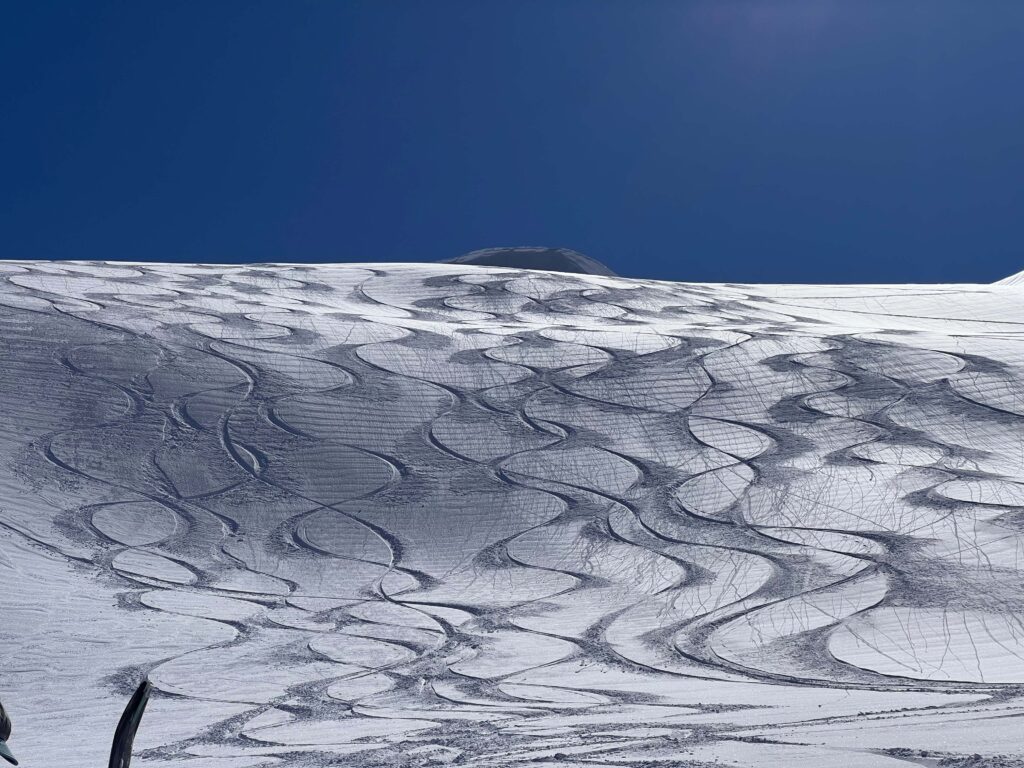
You can do both with one setup.
Crispi boot manufacturer makes their NTN boots with both a pin toe and heel, which allows the use of hybrid setups incorporating Meidjo alpine heels, or even offerings from Kreuzspitze. The unicorn setup that had been talked about in many telemark circles for decades now actually exists!
“Okay, Ty, I get it. You have convinced me to try telemark skiing because you have some really, really good points. What is my next step? How to find a setup that’s right for me?”
Great question;) Let’s find a setup that is right for you.
Finding a Telemark Setup That Works for You
Price: “I want to get in for less than $100.”
Investigate your local options. Ask friends, look in free bins, and scrounge the used market for what is available. Many accomplished telemark skiers earned their stripes on skinny skis and simple 3-pin bindings. What’s most important for performance is finding relatively high cuff plastic boots. But even old original Scarpa terminators or T2s will suffice. If you go this route, your technique will be more polished than those who start on stiffer gear.
Adaptability: “I want to legitimately AT and Telemark on the same setup.”
Look at NTN Crispi boot offerings with both a tech heel and toe. You can pair this with a factory Meidjo binding and supplemental alpine heel.
Security and power: “I want to telemark on icy groomers with vector forces strong enough to snap my skis in half.”
Look at stiff and powerful bindings like 22 Designs Bandits, Bishop BMF, or Rottefella Freerides with stiff cartridges. Look into boots burly enough to flex those monster bindings: Scarpa TX comp, or Crispi EVO WC. Lastly, pick the in-vogue phat metal skis that all the cool alpine kids are riding.
Best possible fit: “I want to find a setup that works well for my natural telemark style, and flexes with boots, bindings, and skis in perfect natural harmony.”
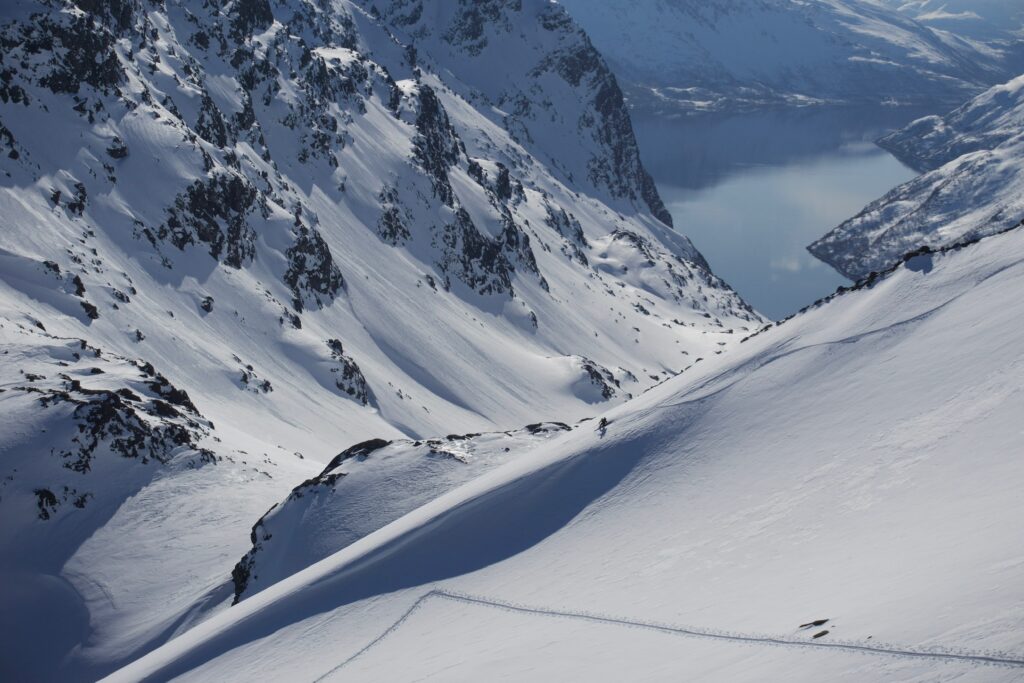
For me, these setups generally complement my loosely goosey binding background, turned NTN and short radius turn.
Setups that I love, being 170lbs and 5’10’’
- 181cm Voilé V8 with the 22 Designs Lynx, soft flex plate on the stiffest pin setting. I ski these with old Scarpa TX lowers with adapted Alien RS cuff… (new Scarpa TX Pro is the off-the-shelf version substitute.
- Application: Everyday touring, powder, variable, spring slop)
- 178cm Charger Ace. Same binding and boot as above.
- Application: Firm, big mountain skiing with a focus on Not. Falling. Off. The. Mountain.
- 183 or 178cm Voilé V6 with Voilé TTS Transit Binding, Soft springs on the stiffest activity setting. I ski these with the same boots as above.
- Application: Ski mountaineering, focus on lightweight, still smeary
- 185cm Charger Ace and 186 V8 with 22 Designs Outlaw X on the softest setting, paired with old Scarpa TX comps with the top buckle and power strap super loose. I can still articulate my ankle, make a short radius turn, but still have the power to stomp.
- Application: Canadian pillow smashing, ski patrolling at Bridger Bowl, skiing human-powered spines.
Give it a shot!
Whether you are looking to sample a new way of skiing or ready to fully commit and dive in headfirst, telemark skiing is in a new and exciting place that we haven’t seen in many years. NTN technology affords one the flexibility to try out the free heel style while still maintaining enough power to make parallel turns whenever you want. New boots and bindings are now comparable to weights and efficiency previously only seen in the AT world. If you can’t decide which way to go, you can get one set up that does both. So now, I ask, after all these reasons and this new momentum in the world of telemark skiing, what are you waiting for?
About The Author

Ty Guarino
Location: Bozeman, MT
Skis: V8 186cm / Charger Ace 178cm
Website: www.TelemarkTy.com
Instagram: @ty.guarino
Ty is a career Mountain Guide and Ski Patroller currently working for Exum Mountain Guides, Beartooth Mountain Guides, Montana Mountaineering Association and Bridger Bowl Ski Patrol. He is the only active American IFMGA Mountain Guide working solely on Telemark gear. Originally from southern New Hampshire, Ty developed his passion for Backcountry skiing on the eastern flanks of Mt Washington in New Hampshire’s Presidential range. Currently Residing in Bozeman Montana, Ty skis as much as possible in and around the greater Yellowstone ecosystem. Although Bridger Bowl is his home mountain, Ty likes to explore other skiing venues including Alaska, South America, New Zealand, and New England.
Share this Post