



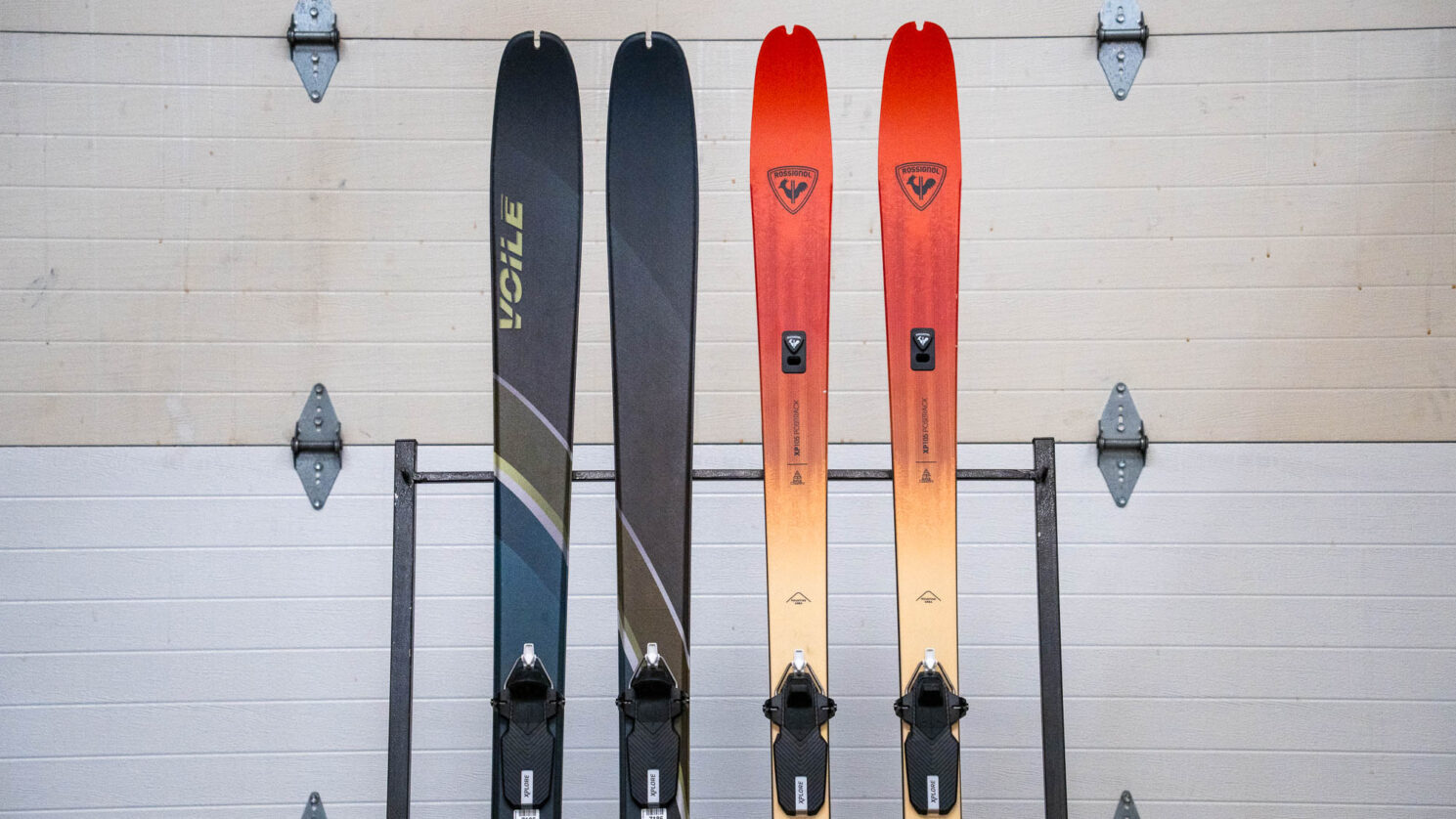
Comparing Voile Endeavor BC skis to Rossignol XP 105 Positrack skis
A side-by-side field test of the Endeavor BC and Rossignol XP 105 shows the real tradeoffs behind scaled ski design.
Share this Post
Two Scale-Based Skis, Two Very Different Priorities
Fishscales are simple. The design choices behind them are not.
Move the scale pattern, change the camber, add width, and suddenly two “scale-based” skis can feel very different on snow. One glides better. One climbs better. One tracks straighter. One turns easier.
That is the point of this comparison.
The Rossignol XP 105 represents a very appealing cross-country approach to scaled nordic ski travel. The Voile Endeavor BC represents a decidedly XCD-oriented approach.
Dave Grissom from Voile Manufacturing took both skis out near Alta for a series of uphill and downhill test laps. Conditions were warm, soft, and springlike, with temperatures around 65 degrees. Dave also considered earlier observations from a colder, firmer day on both skis a few days prior. This was not a lab test. It was a real-world field comparison.
Watch the field comparison: Dave takes the Endeavor BC and Rossignol XP 105 out for uphill and downhill laps to show exactly how the two scale-based skis function differently on snow.
The takeaway is straightforward: if your terrain is truly flat, glide matters more than any other metric. If your terrain climbs, rolls, drops, and requires controlled turns, a more XCD-oriented ski design is a better fit.
Why Scale-Based Skis Are Not All Built the Same
“Scale-based ski” is a broad category. It can describe everything from classic cross-country skis, to XCD skis, to wider XCD-Crossover and backcountry skis built for more extreme downhill performance.
For a broader look at why scaled skis have a place in the backcountry, see Why Every Backcountry Skier Needs to try XCD Skiing.
A Nordic-leaning ski is usually designed with kick-and-glide efficiency as the sole focus. Straight-line tracking, glide, and classic touring efficiency are high priorities.
An XCD-oriented ski still needs to travel efficiently, but it also needs to descend well. It should feel comfortable making turns, managing variable snow, and moving through terrain where the downhill matters as much as the approach.
The Voile Endeavor BC is an XCD-oriented scale-based ski. It is built for skiers who want the convenience of scales, but who also care about climbing traction, turn initiation, and downhill control.
Field Test: Voile Endeavor BC vs. Rossignol XP 105
| Test Setup | Details |
|---|---|
| Voile Endeavor BC | 178 cm, 84 mm underfoot |
| Rossignol XP 105 | 180 cm, 70 mm underfoot |
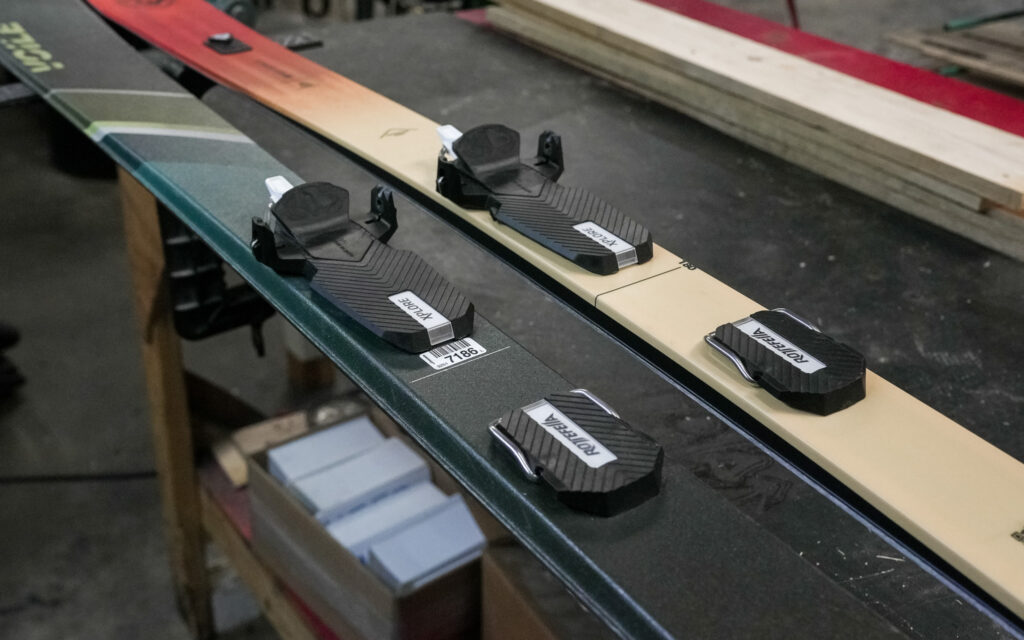
| Bindings | Rottefella Xplore with standard flexor |
| Boots | Alpina Pioneer Tech |
For this comparison, Dave tested two scaled skis with the same binding platform: Rottefella Xplore with the standard flexor.
For more on where the Xplore binding fits between traditional Nordic and more downhill-oriented backcountry systems, watch Rottefella Xplore: The Bridge Between NNN BC and Alpine Touring.
The skis are close enough in category to make the comparison useful, but different enough to show where their priorities split.
How Camber Changes Glide, Grip, and Turn Feel
Camber has a major effect on how a ski behaves underfoot.
The Endeavor BC uses a modest single camber and early rise in the nose. Together, those design elements help the ski release more easily and feel more natural when turning downhill.
The Rossignol XP 105 appears to be closer to a double-camber ski. That camber can boost the efficiency of kick-and-glide movement, but it also requires more significant input from the skier on the descent.
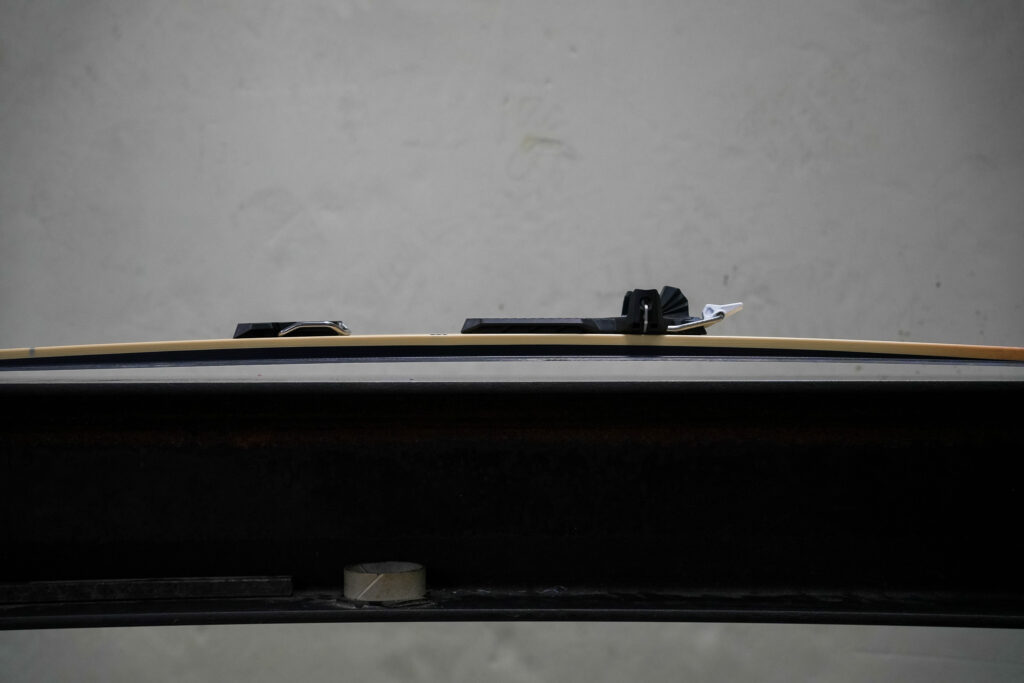
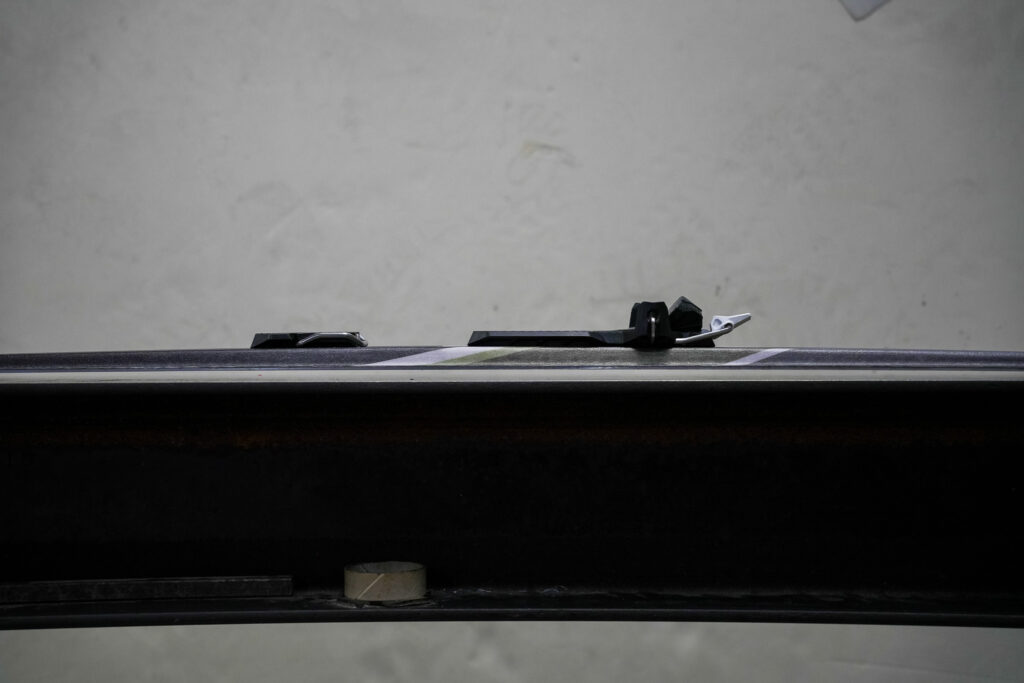
On the Rossignol, Dave had to be more deliberate when unweighting the ski through turn transitions and bringing the ski across the fall line. On the Endeavor BC, he could unweight more naturally and ski more directly down the fall line.
If you are used to downhill turns, telemark transitions, or a ski that releases without an argument, camber is one of the first design specs you’ll notice.
How Scale Pattern Placement Affects Climbing and Glide
Scale pattern placement affects how a ski balances uphill grip and glide.
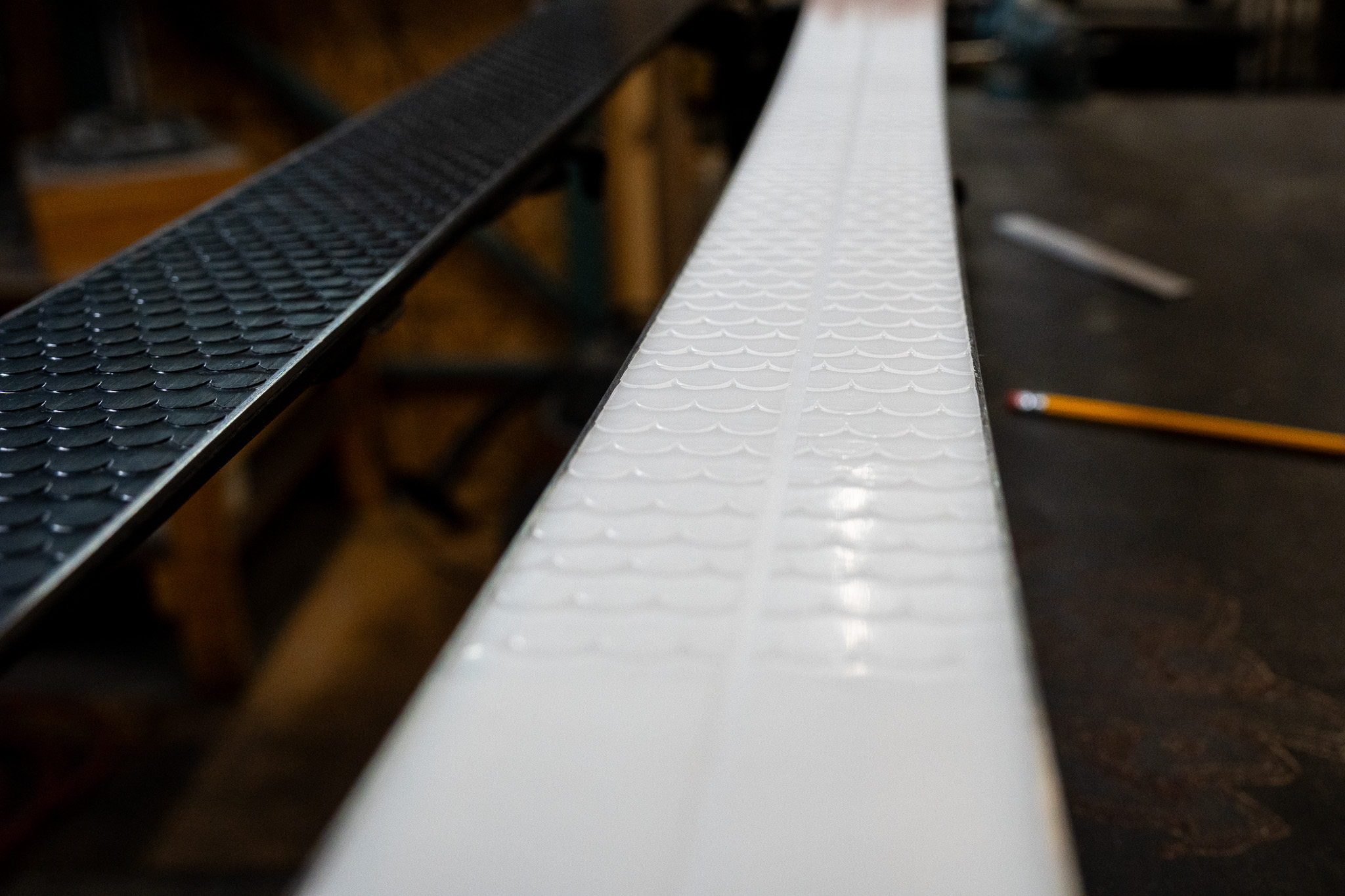
On Voile’s scaled skis, the scale pattern sits farther back than it does on the Rossignol XP 105. In this side-by-side comparison, the Endeavor BC’s scale patch is positioned roughly four inches farther back.
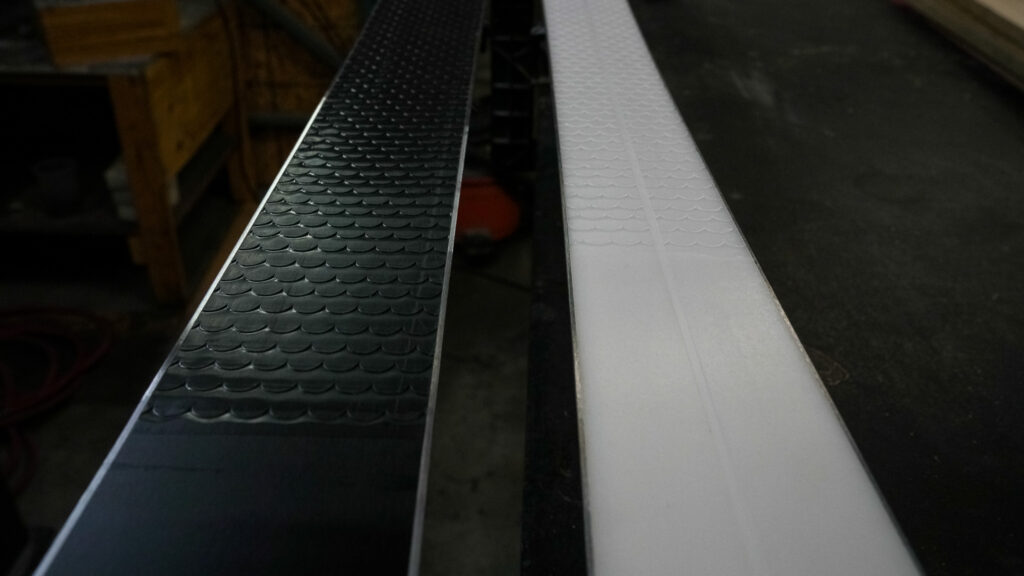
Voile moves the scale pattern rearward because backcountry terrain often requires more significant climbing ability.
Placing the scale pattern farther back improves the climbing traction, especially when the slope angle increases. The tradeoff is more drag on flats and long low-angle exits.
Dave found that the Rossignol XP 105 moved incredibly well on flat terrain, but reached its traction limit sooner on steeper climbs. With the Endeavor BC, he could climb steeper lines before losing grip. In the conditions tested, he estimated the practical upper limit for the Endeavor BC to be around 22 degrees.
Can a Scaled Ski Really Climb a 22-Degree Slope?
For a traditional cross-country skier, 22 degrees on scales may sound like nonsense. With many Nordic-style scale patterns, it probably would be. But the Endeavor BC is not built around a glide-first scale position.
Its scale patch sits farther back for a reason: climbing traction. That placement gives the ski a much stronger bite when the slope steepens, and the difference is not subtle. We have documented it repeatedly. In the right snow, the Endeavor BC climbs pitches that would shut down more glide-focused scaled skis.
Snow conditions and technique still matter. Scales are not skins. But the point stands: the Endeavor BC’s scale placement changes what is possible on a scaled ski.
Grip vs. Glide: What Each Ski Does Better
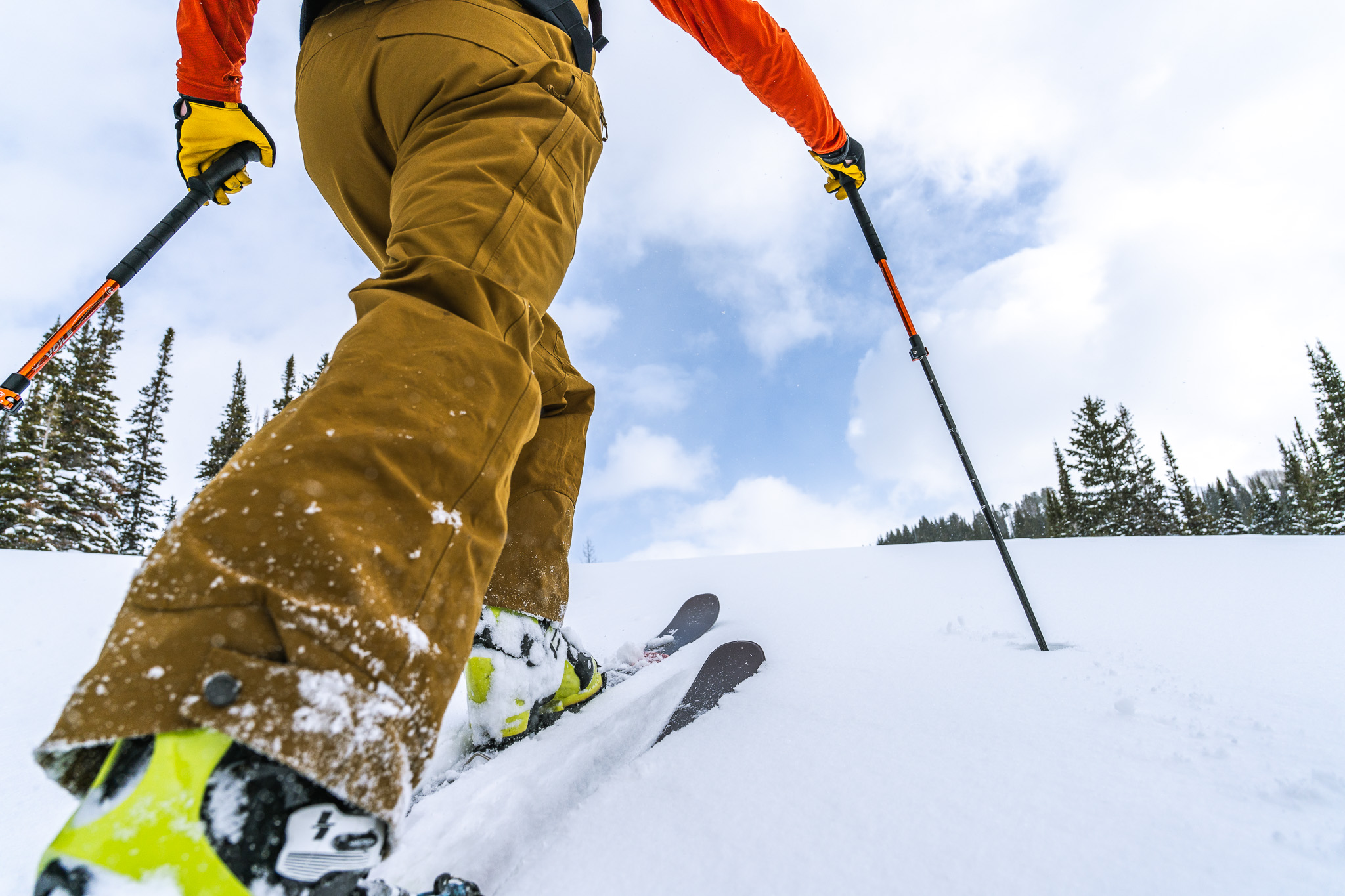
The Rossignol XP 105’s biggest strength in this comparison was glide. On flat terrain, moderate angles, and runouts, Dave found that it carried speed more easily. That is exactly where a Cross-Country ski should shine.
The Endeavor BC’s advantage was uphill grip and downhill confidence. It had more drag on flats, especially on longer exits, but it climbed more securely and felt much easier to turn.
That drag is the cost of choosing steeper climbing capability.
For skiers who spend most of their time on mellow approaches and long exits, that cost may not be worth it. For skiers who want to climb steeper pitches, make real turns, and move through rolling backcountry terrain without constantly reaching for skins, the tradeoff starts to look pretty enticing.
Why the Endeavor BC Feels Easier to Turn Downhill
The downhill is where the Endeavor BC most clearly shows its XCD personality.
Dave found that the Endeavor BC was easier to ski. The single camber, early rise, and wider platform helped it transition more naturally from turn to turn. He could ski more directly down the fall line and did not have to be as careful about forcing the ski through each transition.
The Rossignol XP 105 required more attention when turning. Dave had to be precise with unweighting and more deliberate about bringing the ski across the slope. His impression was that camber had the biggest effect on that downhill feel.
The Rossignol XP 105 also has a center tracking groove running from the tip through the scale pattern and toward the tail. That groove is intended to help the ski track straight in classic Nordic-style skiing. Some skiers wonder whether a groove like that affects downhill turning. In this test, Dave felt the camber influenced the downhill feel more than the groove.
A ski built to track well in a classic Nordic motion will feel very different from a ski built to release, turn, and descend. That is where the Endeavor BC felt more natural.
Which Scale-Based Ski Design Fits Your Terrain?
| Rossignol XP 105 | Voile Endeavor BC | |
|---|---|---|
| Better at | Kick-and-glide efficiency | Uphill grip and downhill control |
| Best terrain | Flats, long exits, rolling approaches | Rolling terrain, steeper climbs, descents |
| Uphill feel | Efficient on mellow grades | More secure on steeper climbs |
| Downhill feel | Tracks well, but takes more effort to turn | Easier to release and turn |
| Main tradeoff | Less downhill ease | More drag on flats |
A classic Nordic ski makes sense when your tour consists of:
- Long flat exits
- Low-angle approaches
- Minimal downhill turning
- Classic kick-and-glide movement
- Straight-line tracking
The Endeavor BC makes sense when your tour includes:
- Rolling backcountry terrain
- Short steeper pitches
- Low-angle meadows with real descents mixed in
- Telemark or Xplore setups that need the ski to release predictably
- Terrain where climbing grip matters
That is the core tradeoff: glide versus grip, tracking versus turnability, Nordic efficiency versus XCD versatility.
If you’re building a full XCD or XCD-crossover setup, boot and binding choice matter too. Check out our Rottefella Xplore vs 3-pin Binding: Head-to-head Shootout.
FAQ: XCD vs. Nordic Scale-Based Skis
What is an XCD ski?
An XCD ski blends Nordic-style touring efficiency with more downhill-oriented backcountry performance. It is designed to climb, travel across rolling terrain, and make controlled turns on descents.
Is the Voile Endeavor BC a Nordic ski?
The Voile Endeavor BC is better described as an XCD-oriented scale-based backcountry ski, not a Nordic ski. It shares some traits with Nordic touring skis, but its design prioritizes climbing traction and downhill control more than classic Nordic glide.
Why does the Endeavor BC climb better but glide slower?
The Endeavor BC climbs better but glides slower because Voile positions the scale pattern to prioritize uphill traction. That improves grip on steeper climbs, but it creates more drag on flats and long exits.
Do fishscale skis replace climbing skins?
Not always. Fishscale skis are useful for rolling terrain, moderate climbs, and efficient transitions, but they do not replace climbing skins in every situation. On steeper, firmer, or icier terrain, climbing skins still provide better grip and security.