



Look for the Mark: Voile Adds a Permanent Signature to Every Voile Strap
After more than four decades since its invention, Utah ski-gear manufacturer Voile is molding its brand mark and dimensions directly into every Voile Strap, making the original easier to identify in a growing field of imitations.
By Eric Reed, Voile Mfg., Salt Lake City
Share this Post
The Voile Strap has always been a remarkably simple piece of equipment. A flexible strap and a buckle. Not much else.
That simplicity is part of what made the “rubber ski strap” useful enough to escape its original purpose and find its way onto bicycles, motorcycles, rafts, backpacks, roof racks, work trucks, and tool kits around the world.
It also made the idea relatively easy to imitate. Sort of… We’ll come back to that later.
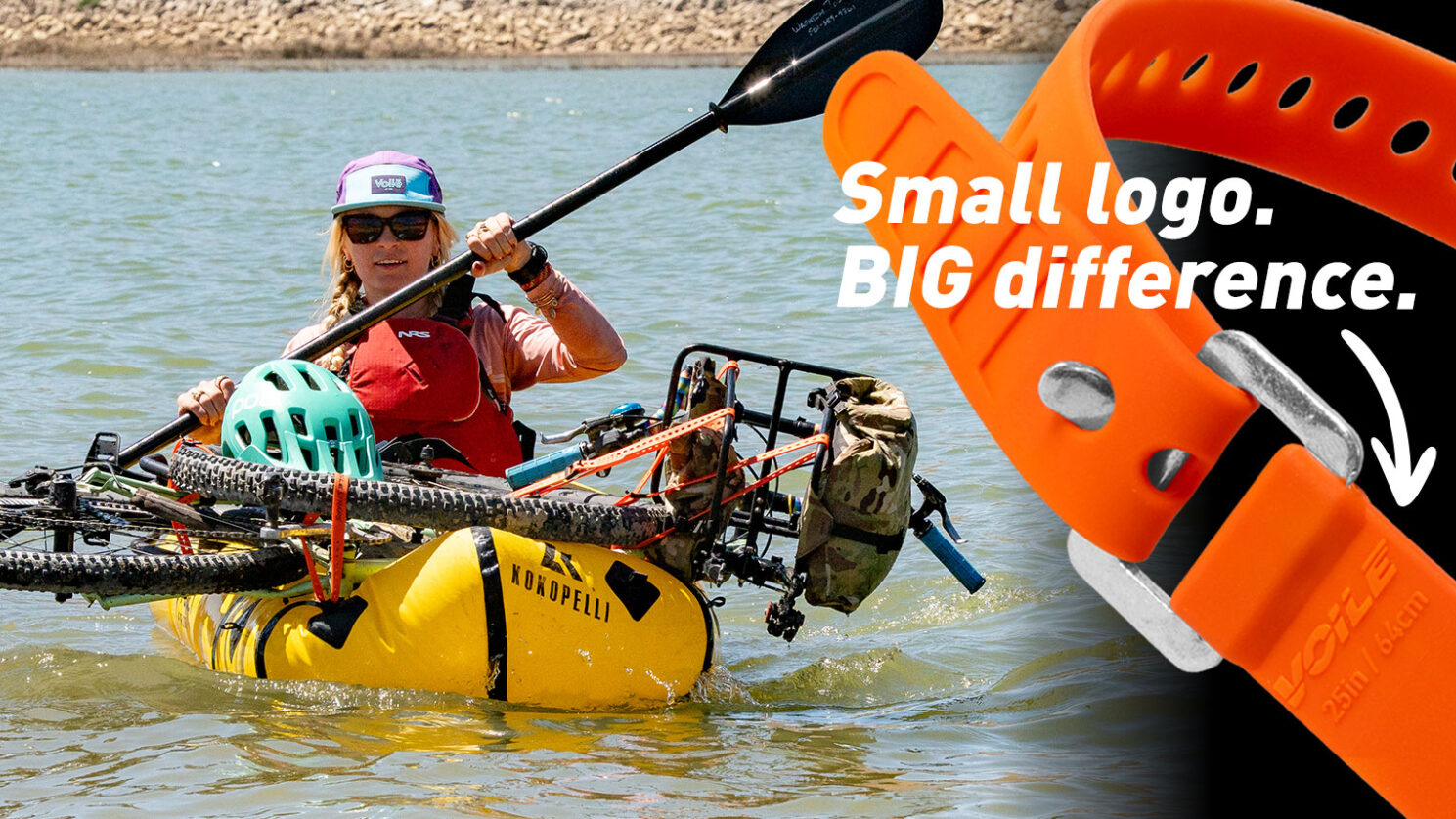
As lookalikes have become increasingly common, Voile is making one small but significant change to every strap we produce: the Voile name is now permanently molded into the product itself. The logo is more than branding. It tells you whose standards you can expect it to live up to.
“If that small Voile logo is there, you’re holding a product with more than four decades of development behind it.”
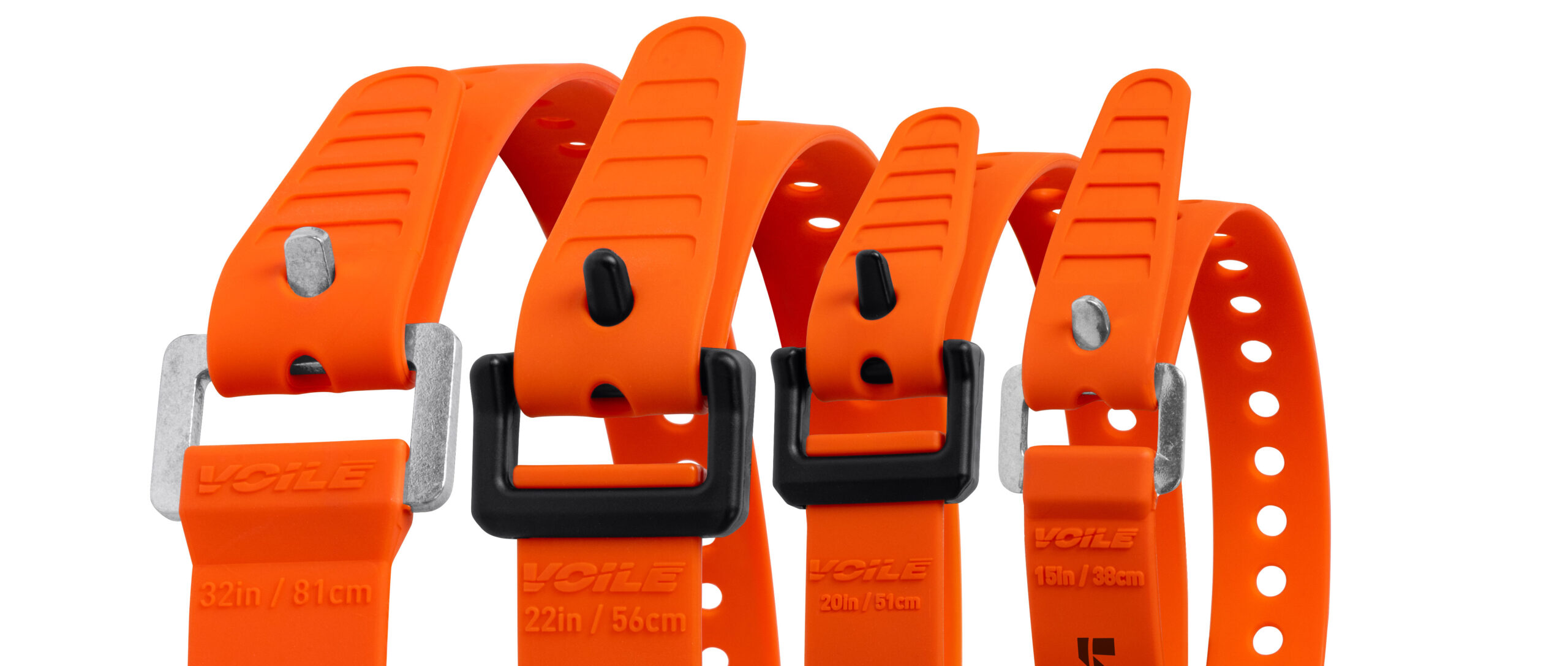
The new molds also include each strap’s length in both inches and centimeters, giving users an immediate way to identify not only who made the strap, but exactly which size they’re holding.
An Idea That Started in 1982
The story of the Voile Strap begins before it was ever sold as a standalone product.
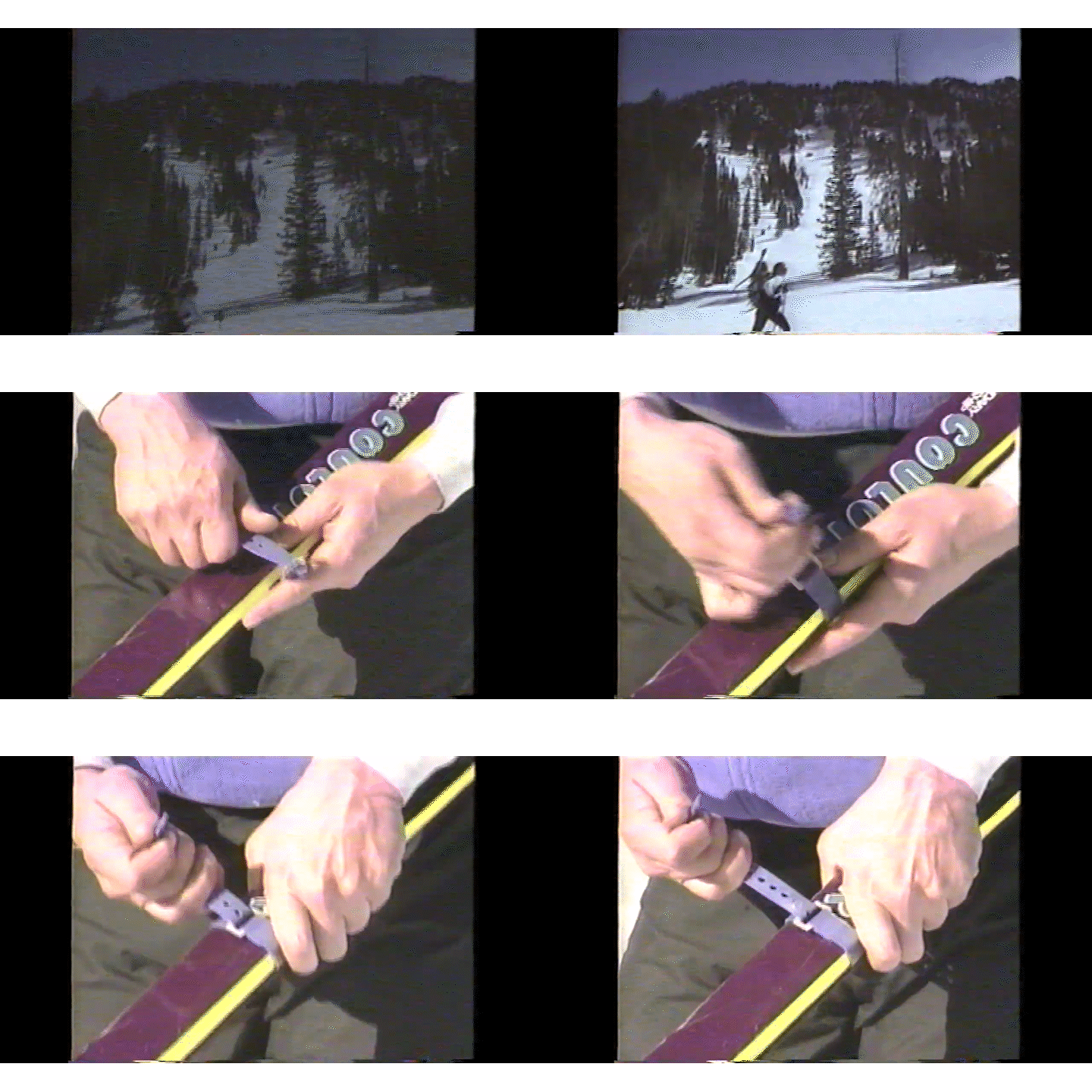
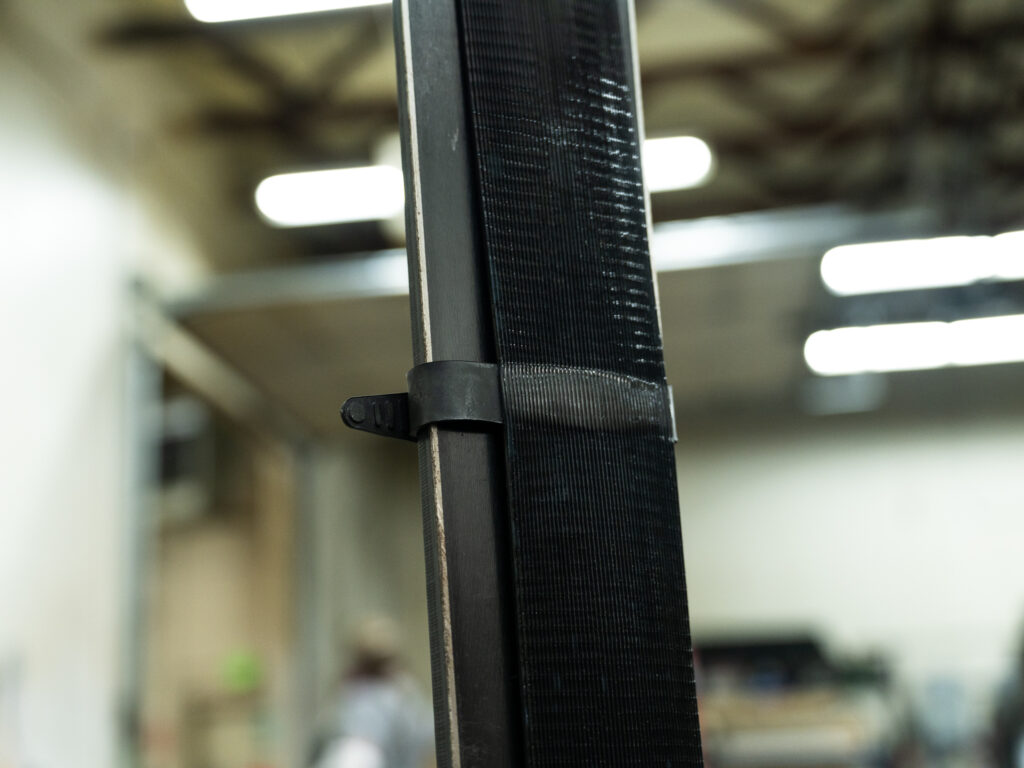
In 1982, Voile developed the original strap as a component of the Voile Snake Skins, a backcountry ski touring system that pre-dates modern adhesive skins. The strap was invented as a way to secure a length of thin belting material to the bottom of skis for uphill traction. It wasn’t anticipated that the strap itself would be the star of the show.
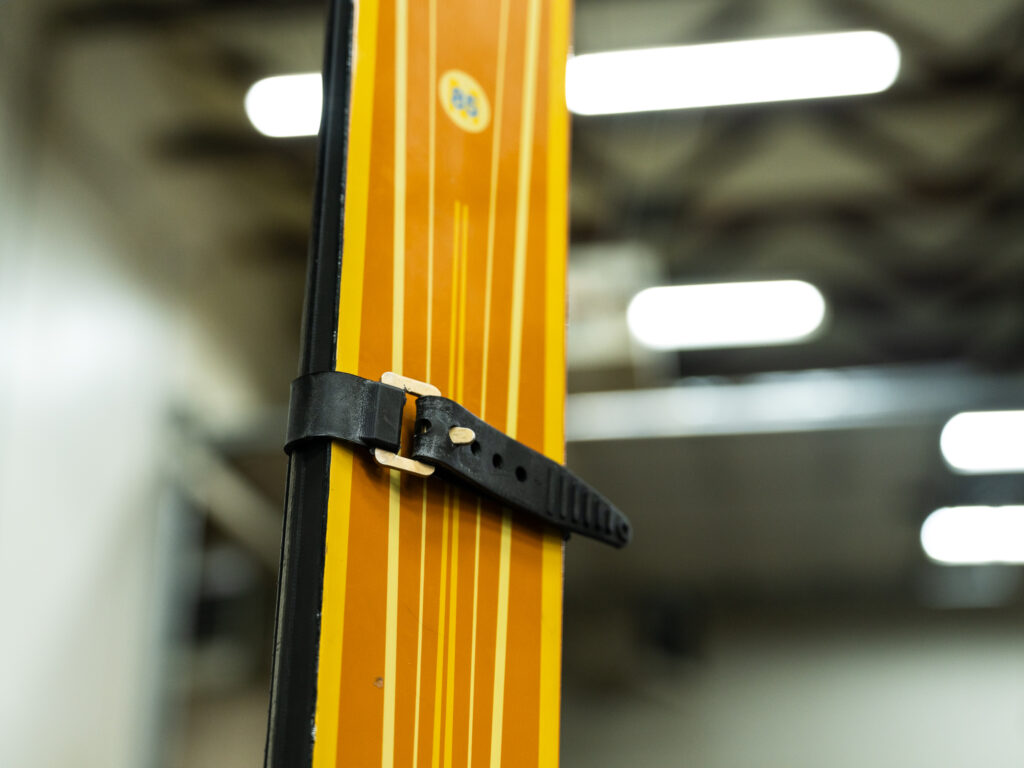
Merrell boot company loved how much tension the strap provided, and immediately began including it as a toe strap on their Super Comp telemark boot.
Ski shops quickly discovered that the simple tension strap was useful for far more than its intended application and began urging Voile founder Mark Wariakois to provide “The Voile Strap” separately.
In 1984, Voile-branded straps reached retail shelves as an individually packaged product.
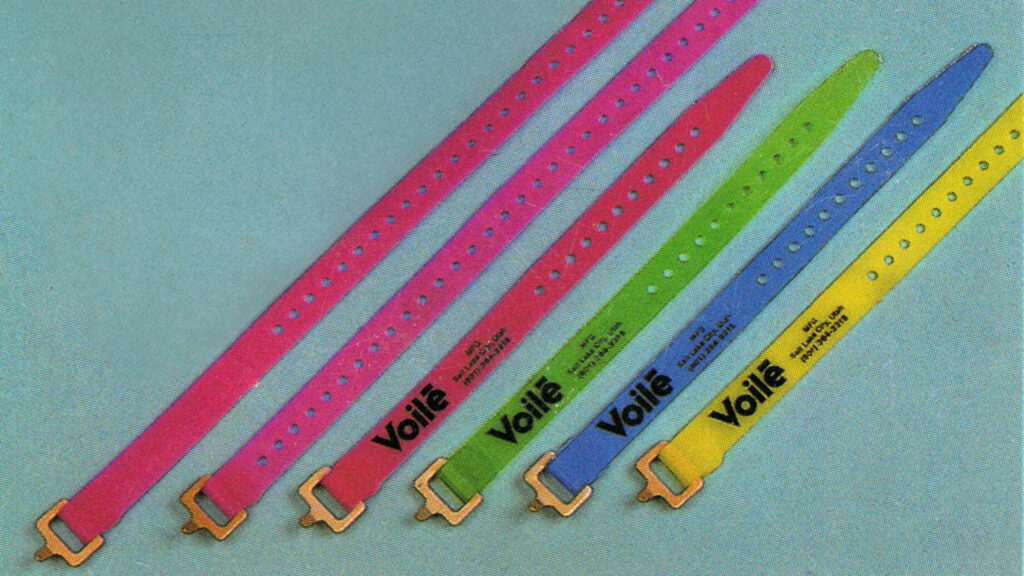
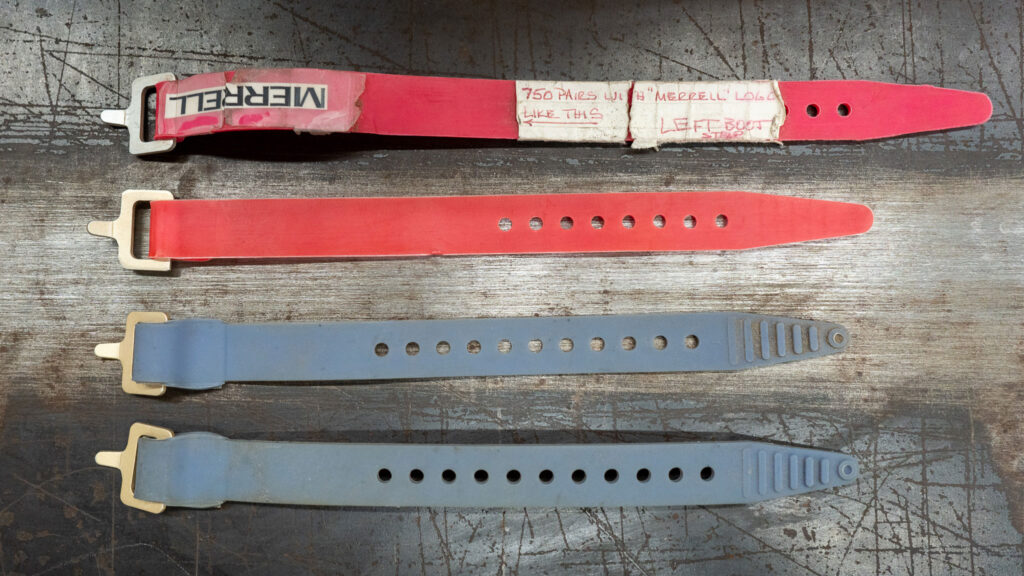
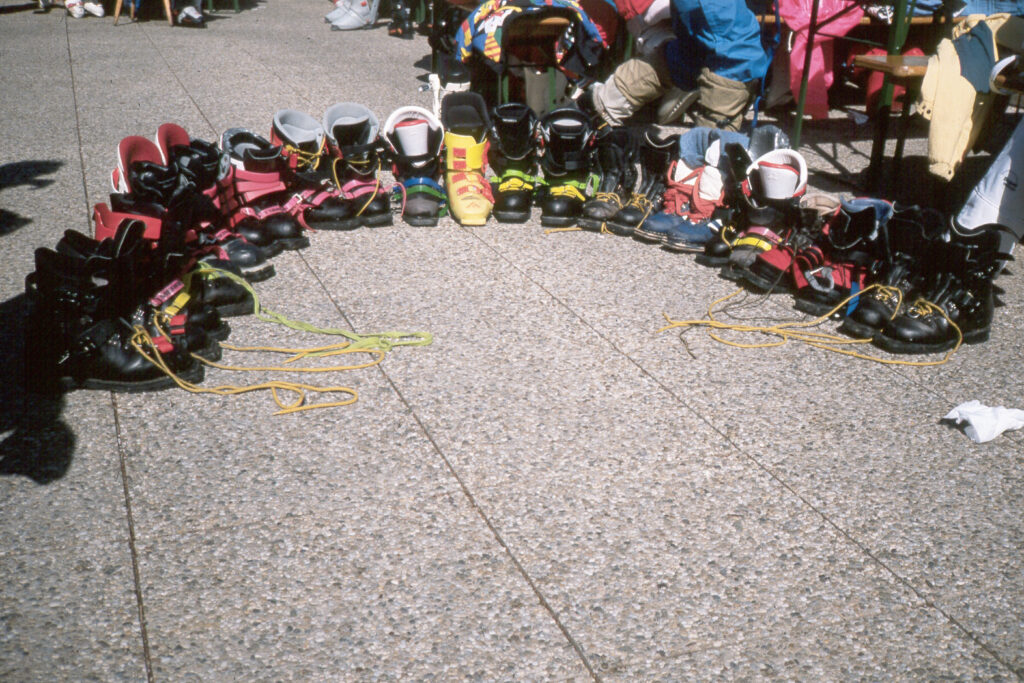

Photo courtesy of John Laptad.
What followed was more than four decades of continuous refinement. The basic idea remained simple, but we continued developing the material formulation, dimensions, hole geometry, buckles, manufacturing processes, weather resistance, and specialized variations of the product.
Forty years of R&D doesn’t necessarily make a product more complicated. In our case, it helped us make a simple product better.
Today, Voile Straps remain the only product in their category backed by more than 40 years of continuous research, development, manufacturing experience, and field use.
You can copy the shape of a Voile Strap, but you can’t copy the four decades of learning behind it.
Not Every Strap Is a Voile Strap
The Voile Strap caught on with ADV riders. It was praised on motorcycle forums as “strong, versatile, easy-to-use, and effective.” 1
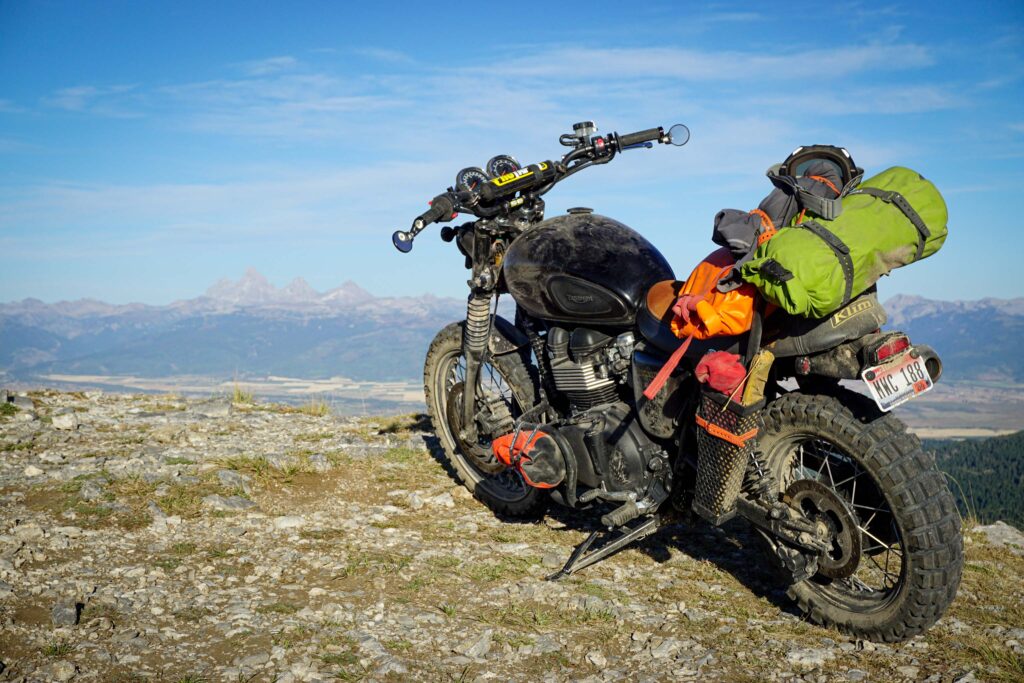
Photo Courtesy of Lukas Eddy
Then the bikepacking community caught wind of it, and suddenly the ‘ski strap’ was “the ubiquitous bikepacking strap,” 2 and hailed as “a bikepacking necessity.” 3
As the original design has spread throughout outdoor recreation and beyond, the market for similar straps has grown with it. But not every polyurethane strap is a Voile Strap (even though consumers often refer to the lookalikes as “Voile Straps”).
We’ve encountered everything from generic dollar-store alternatives to remarkably close imitations, including products customers themselves have mistaken for genuine Voile Straps.
“Some customers have even contacted Voile about warranty issues before discovering that the failed strap was made by someone else,” wrote Voile General Manager David Grissom.
Systematically updating each mold has been a work in progress for years now, but the rise in consumer confusion has made the permanent identifier a priority.
Packaging gets thrown away. Printed graphics eventually wear. Straps get passed from one person to another and can spend years bouncing between bikes, garages, backpacks, and toolboxes. A permanent molded mark stays with the product.
“There are many straps that resemble ours now,” Grissom warned. “If our name isn’t molded into it, don’t assume our materials, manufacturing, or quality are behind it.”
The distinction matters because visual similarity says relatively little about how a strap will actually perform.

What Makes Voile Straps So Special?
Voile uses a proprietary material formulation developed to achieve the particular balance of stretch, rebound, grip, strength, weather resistance, and longevity required by the design. We deliberately keep the specifics of that formulation, sourcing, and processing proprietary.
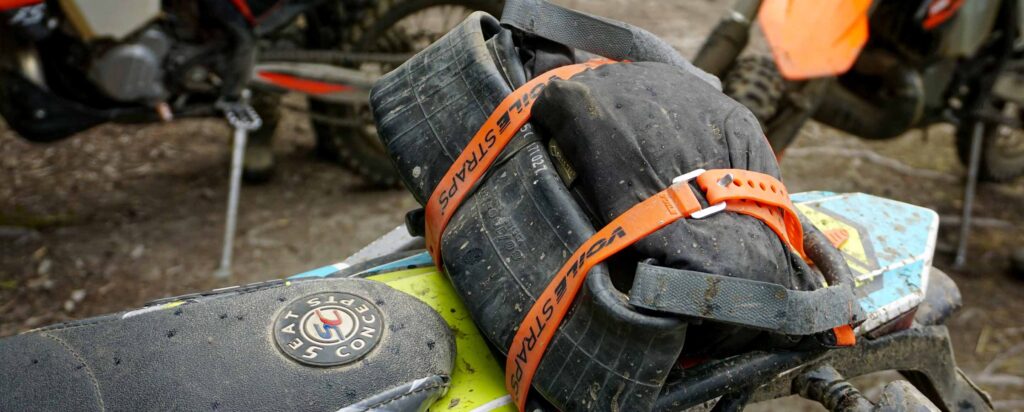
What exactly makes them so useful?
Two straps can look nearly identical and behave completely differently. The formulation matters. The dimensions matter. The manufacturing process itself matters. Even the texture matters. Every little detail adds up, and copying the dimensions or materials isn’t enough to deliver the same product.
We’ve tested a wide range of imitations and found meaningful differences in material behavior, dimensions, stretch, and recovery. The results have varied considerably.
That inconsistency is part of the problem. Two straps may look nearly identical on a screen or hanging on a retail wall, while behaving very differently once they’ve been stretched, loaded, exposed to weather, and used repeatedly over time.
We’re giving customers a simple answer to an important question: Who actually made this? Is it going to hold up?
If it’s got the permanent Voile brand mark, you can put away the calipers and chemistry set. We’ve already done that part. Many times over.
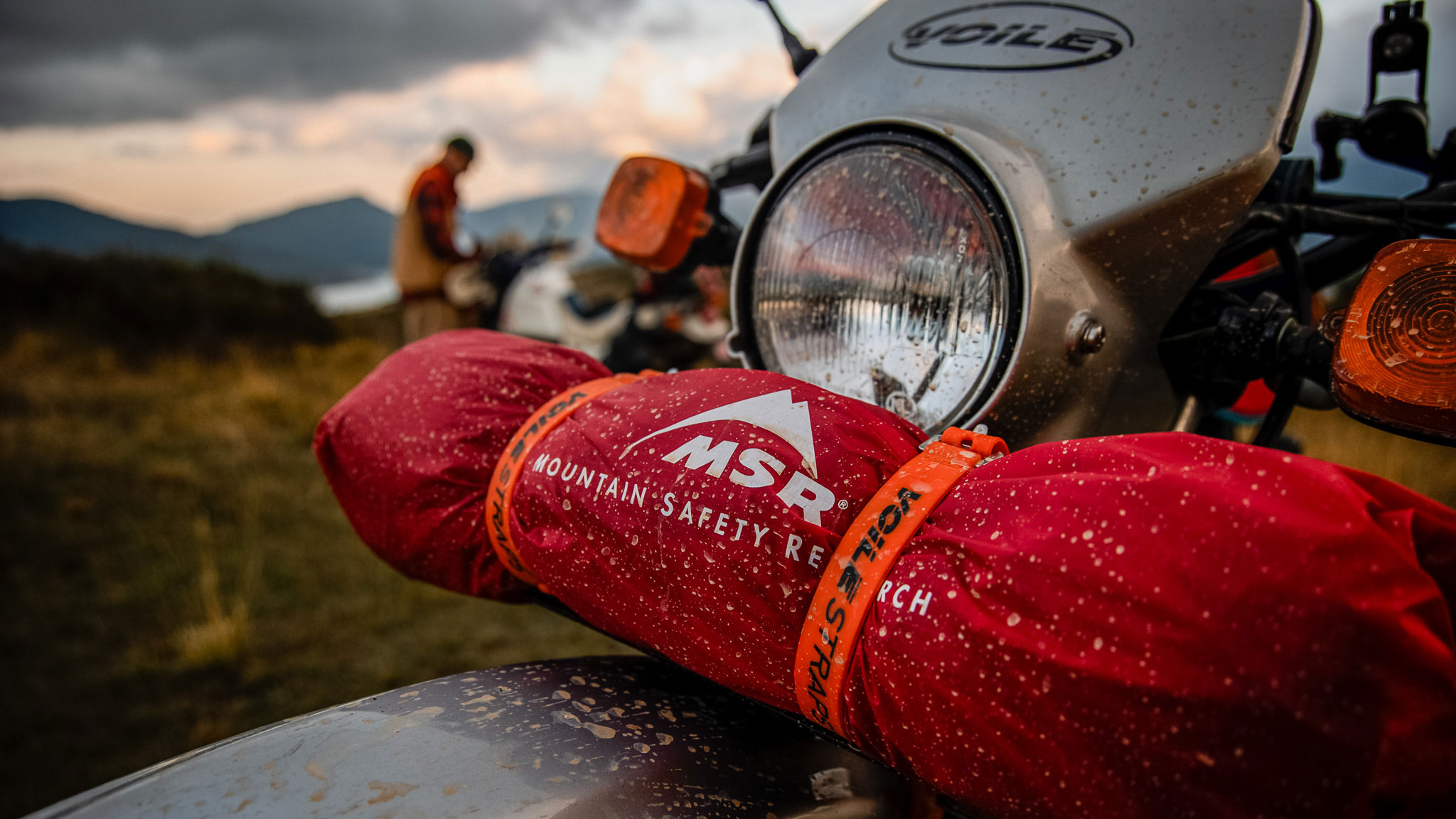
Voile Straps are Made Close to Home for a Reason
We continue to manufacture Voile Straps in Utah, keeping close control over every aspect of their development.
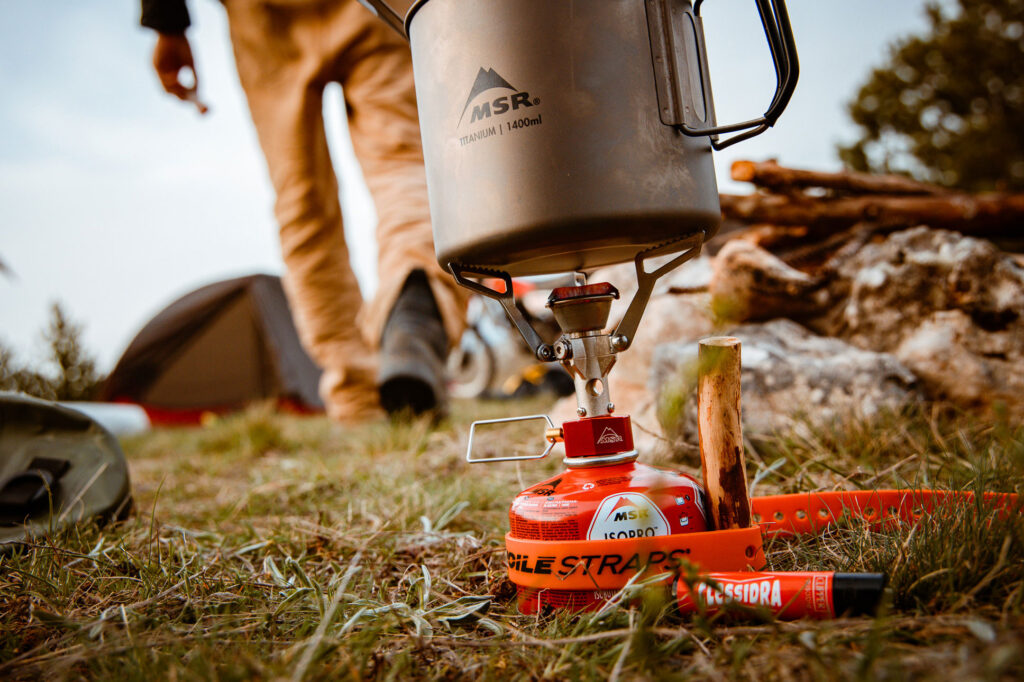
For us, domestic manufacturing is about more than a country-of-origin label.
Keeping production close gives us control over the quality. The material, the tooling, the process; we don’t want to hand any of that off and risk unseen changes to something we’ve spent so much effort dialing in. And beyond that, we actually enjoy it.
That’s pretty fundamental to Voile. The people developing the product aren’t separated from the people making it or the people using it.
The molded Voile mark represents that chain of accountability. It’s a small, permanent seal of origin: a way to know that the product came through our manufacturing process and carries the standards associated with our name.
The message is deliberately straightforward.
Look for the mark.
“If you see that little Voile logo molded into the strap, you know exactly what you’re holding,” Grissom said. “That’s the reaction we want: ‘The Voile mark is there. We’re good.’”
Voile Straps Now Molded With Length Information
Alongside the brand mark, we’ve taken the opportunity to add another permanent piece of information to the mold: strap length.
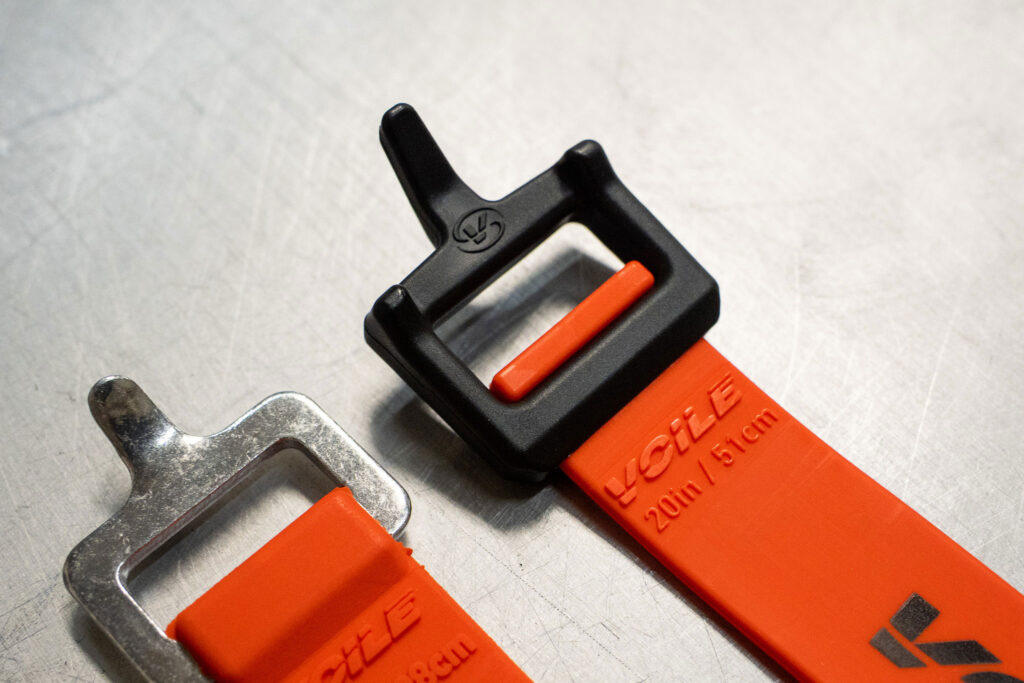
Each strap now identifies its length in both inches and centimeters.
It’s a small addition, but one rooted in how the products are actually used. Most Voile Strap users eventually accumulate several lengths, and those straps migrate pretty quickly from their original packaging into bike bags, repair kits, gear bins, vehicles, garages, and packs.
Now, determining whether the strap in hand is the right one for the job doesn’t require comparing it against another strap or pulling out a tape measure.
One glance tells you who made it and what size it is.
From One Strap to a System
The product that emerged from the Snake Skin system more than four decades ago has also become considerably more diverse.
The familiar aluminum-buckle Voile Strap remains at the center of the line, but it now sits alongside nylon-buckle versions, Nano Straps, XL models, Extenders, Rack Straps, Strap Keepers, and other specialized variations.
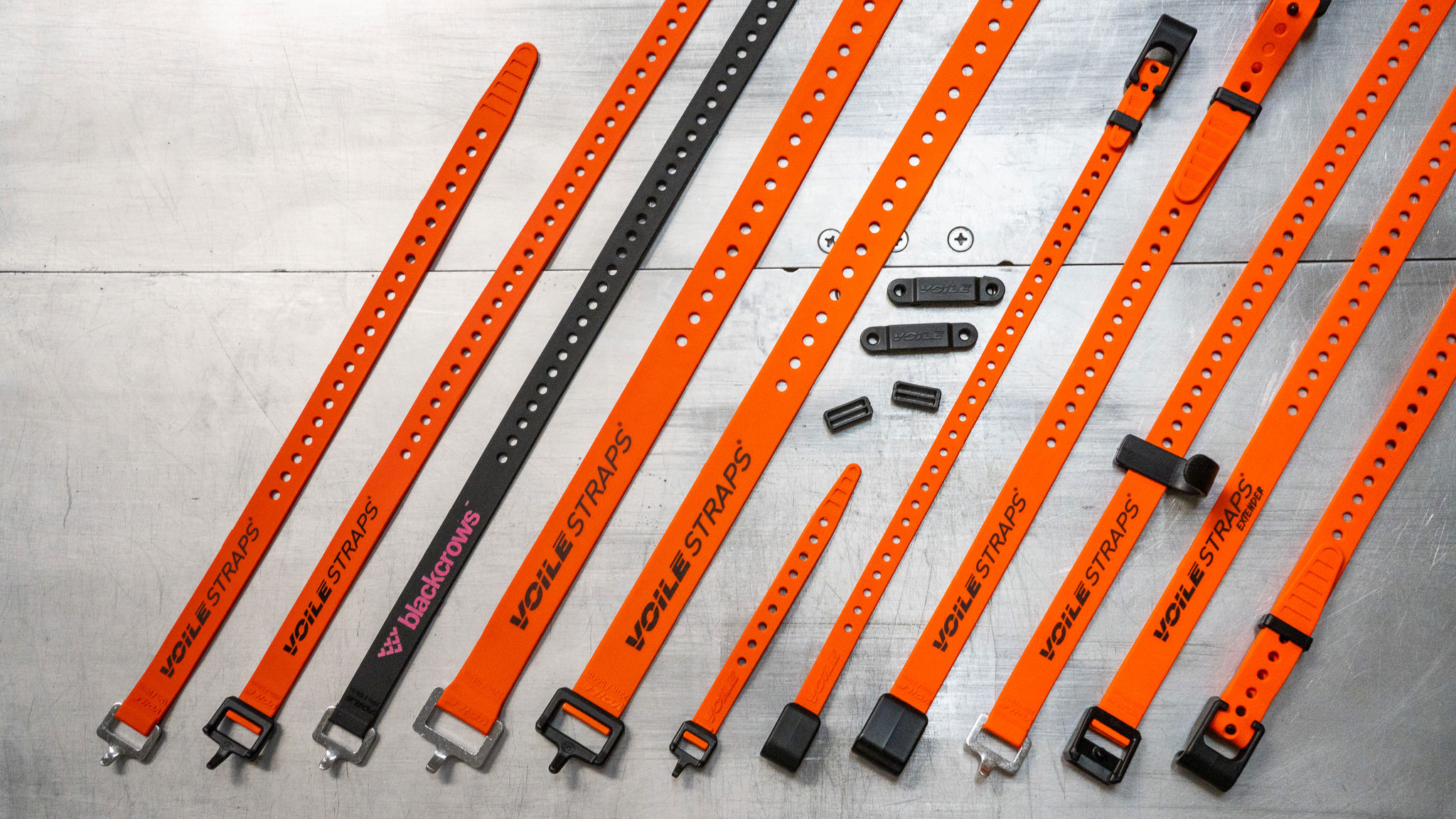
Increasingly, we see these products not simply as a collection of different strap sizes, but as an interlocking ecosystem.
Different buckle materials serve different applications. Different widths and lengths accommodate different loads. Straps can be linked to extend their reach. Accessories add security or organization. Products such as the Rack Strap adapt the underlying concept specifically for bicycle racks (and are now commonly seen on MOLLE panels and other overlanding modifications).
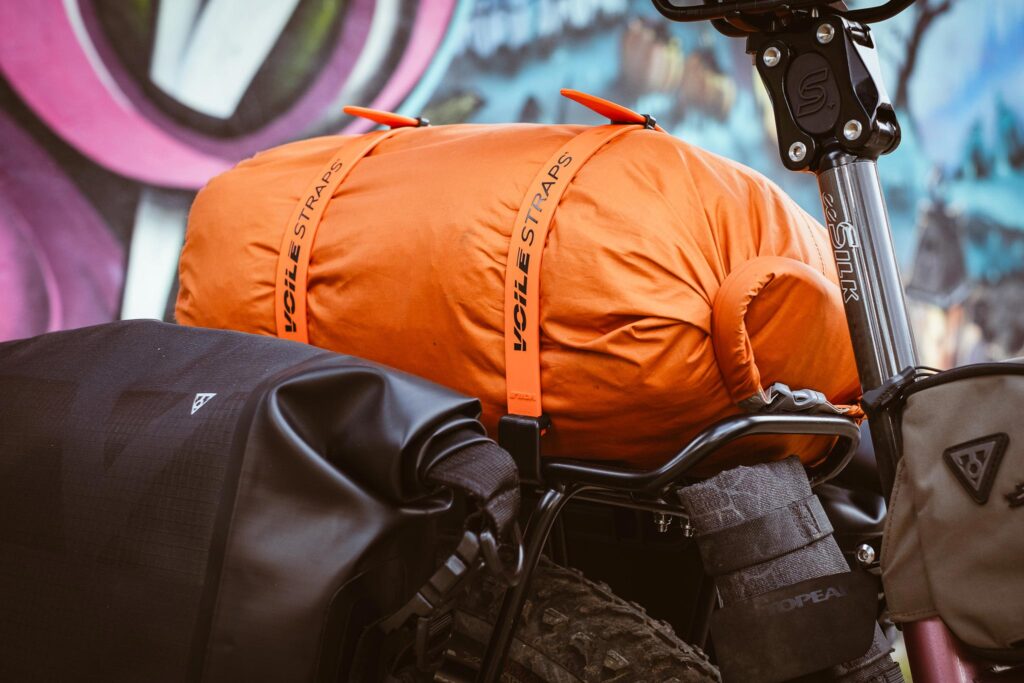
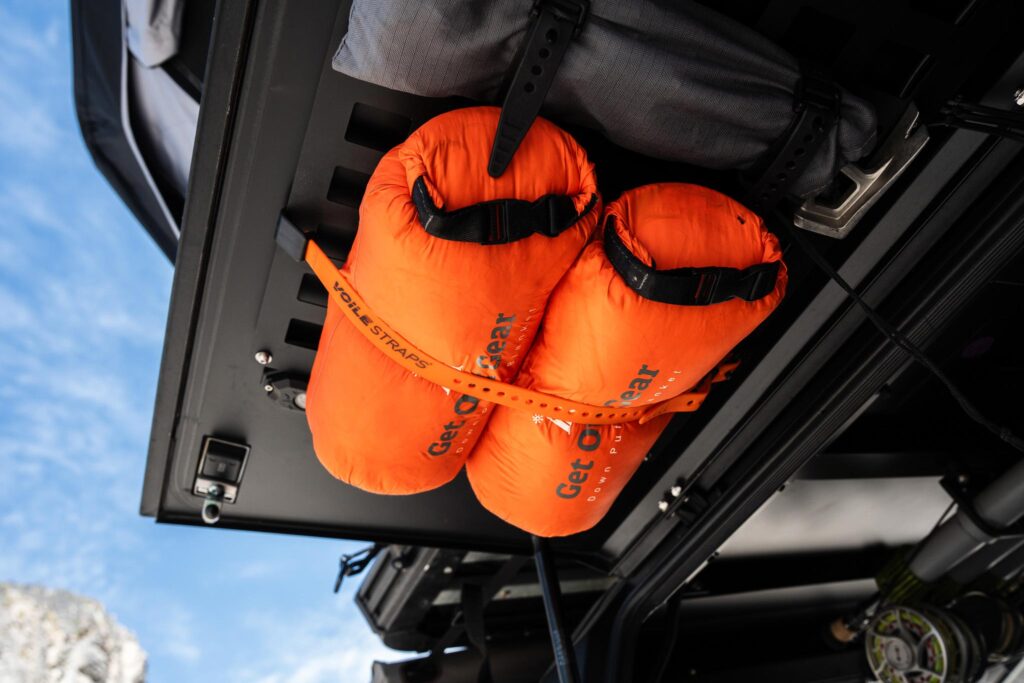
Right: Years later, Voile Rack Straps appearing in places we never expected.
What began as one simple strap has grown into a family of products designed to solve different problems while working from the same basic philosophy.
We’re increasingly thinking about it as a modular fastening system rather than a single product.
That evolution also helps explain why four decades of development matter.
A competitor can reproduce the broad silhouette of a strap relatively quickly. Building a family of products around a consistent material, manufacturing process, hardware standard, and decades of accumulated field experience takes considerably longer.

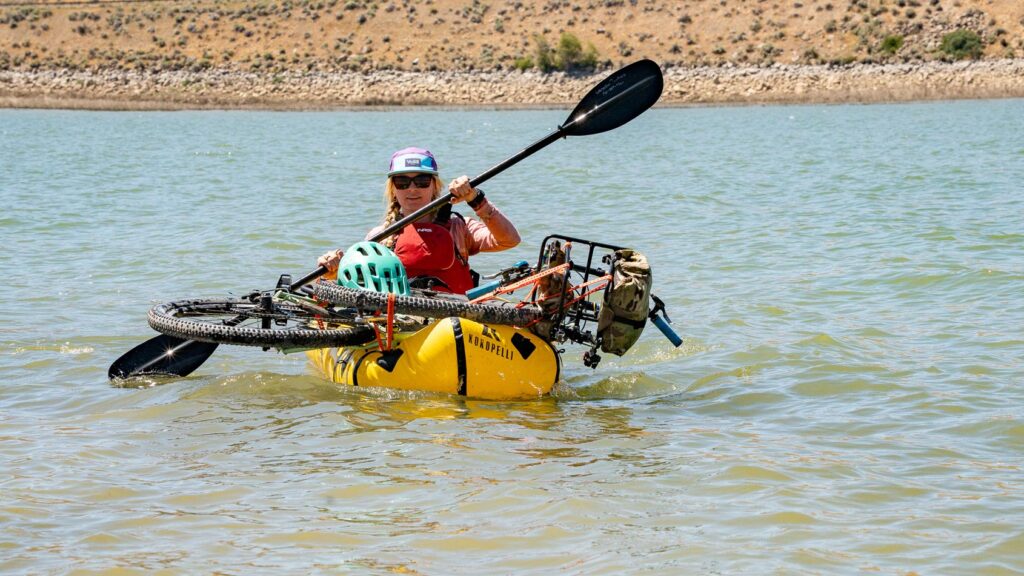
Imitation Comes With the Territory
We’re not particularly surprised that the product has been copied.
In some ways, imitation is an inevitable consequence of the Strap’s success. What started as an obscure piece of backcountry ski equipment has become recognizable enough that an entire class of outdoor products now follows the same general format.
You don’t get copied this often unless the idea works.
We’re also not interested in shouting about imitations. Some genuinely interesting variations and new use cases have come out of people taking the basic idea in different directions, and some of that experimentation has absolutely moved the category forward. We simply want to make it easy for people to identify the original and understand what to expect from it.
“Just be careful with imitations,” Grissom says. “Look for the permanent Voile mark.”
If that small Voile logo is there, you’re holding a product with more than four decades of development behind it.

The Voile Mark Remains, Even When Another Brand Is on the Strap
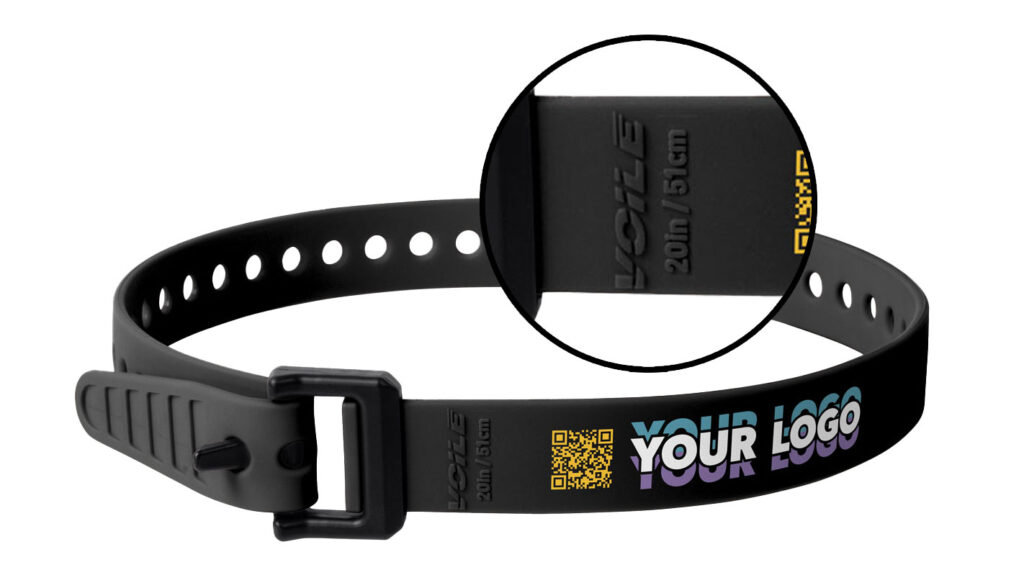
For years, outdoor companies, bicycle brands, shops, events, and other organizations have chosen genuine Voile Straps as the platform for their own branded versions.
Those partners aren’t just looking for something handy to slap their logo on. They’re deliberately choosing the Voile product and the reputation associated with it.
They could put their logo on any strap. They specifically choose ours.
The partner’s artwork may be the most visible branding on the finished product, but the permanent molded Voile mark remains.
That’s important to us. The mark is a seal of authenticity regardless of whose name is printed alongside it.
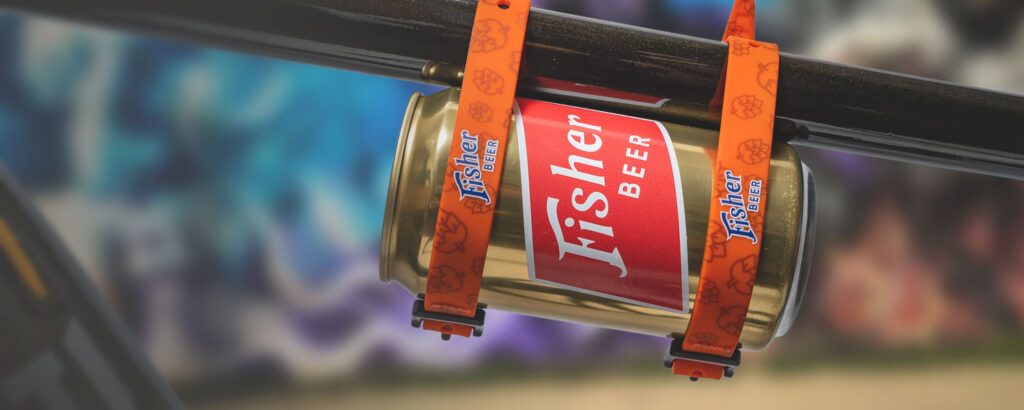
• Multi-color
• Intricate detail
• Full-length imprinting
• New scratch-proof outdoor ink
About Voile
Voile has been manufacturing simple, durable backcountry equipment in the Wasatch Mountains of Salt Lake City, Utah, since 1980. The Voile Strap originated as part of the company’s Snake Skin climbing system in 1982 before being introduced as a standalone product in 1984. Today, Voile Straps are manufactured in Utah and used throughout outdoor recreation, industry, transportation, travel, and everyday life.
Voile Straps are available worldwide through both brick-and-mortar retailers and online sellers. You can always find them online at voilestraps.com
Share this Post
Sources:
1. https://www.thumpertalk.com/reviews/product/46490-voile-manufacturing-straps/
2. https://www.thenxrth.com/post/ultimate-list-of-bikepacking-straps
3. https://bikepacking.com/gear/bikepacking-gear-that-lasts/