



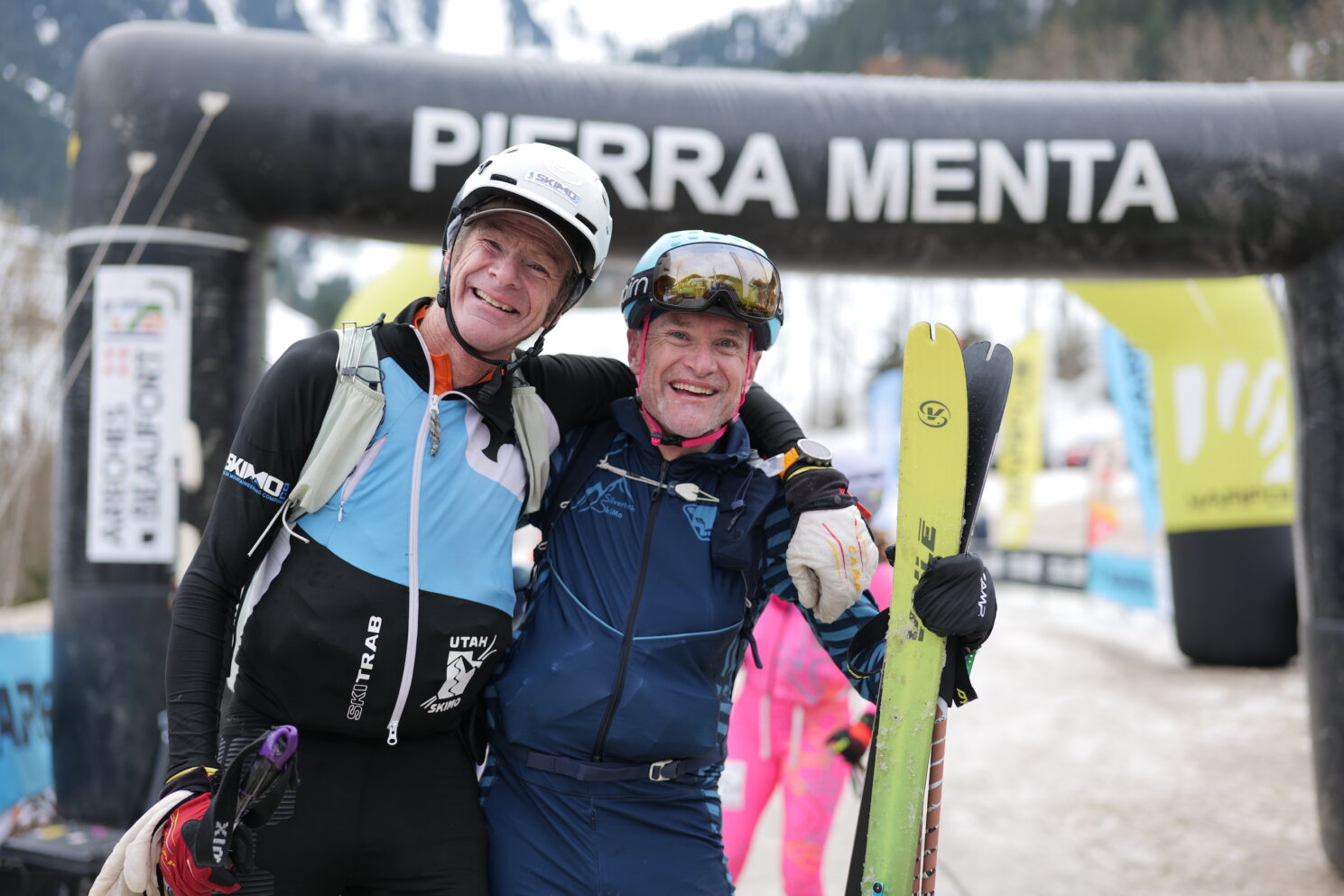
What it Takes to Finish the Pierra Menta Skimo Race
Since the beginning of time, mankind has figured out a way to compete in athletic events. Running, jumping, and throwing are obvious examples. But as we evolved, we also determined that throwing a ball through a hoop, running, kicking, or throwing an odd-shaped ball down a field, kicking another into a net, flicking a hunk of plastic across ice into a net, and a zillion other ways to make pastimes into competitions.
As we evolved into sliding down snow on fancy sticks, we inevitably figured out how to make that competitive as well. “Ski racing” has long been a way to use gravity to basically rage down an obstacle course, with the best becoming heroes and legends. It took a lot longer to add uphill skiing to downhill skiing, but “skimo” seems to have finally assumed its place in the ski racing world.
Skimo’s Biggest Races
All these sports have their big events: the Super Bowl, the World Series, the Tour de France, Wimbledon, national and world championships of all sorts, and, of course, the Olympics.
Skimo debuted this year at the Olympics, and it was a bit odd: super short, pretty contrived little courses that seemed to have little in the way of the actual mountaineering that is part of the “skimo” moniker.
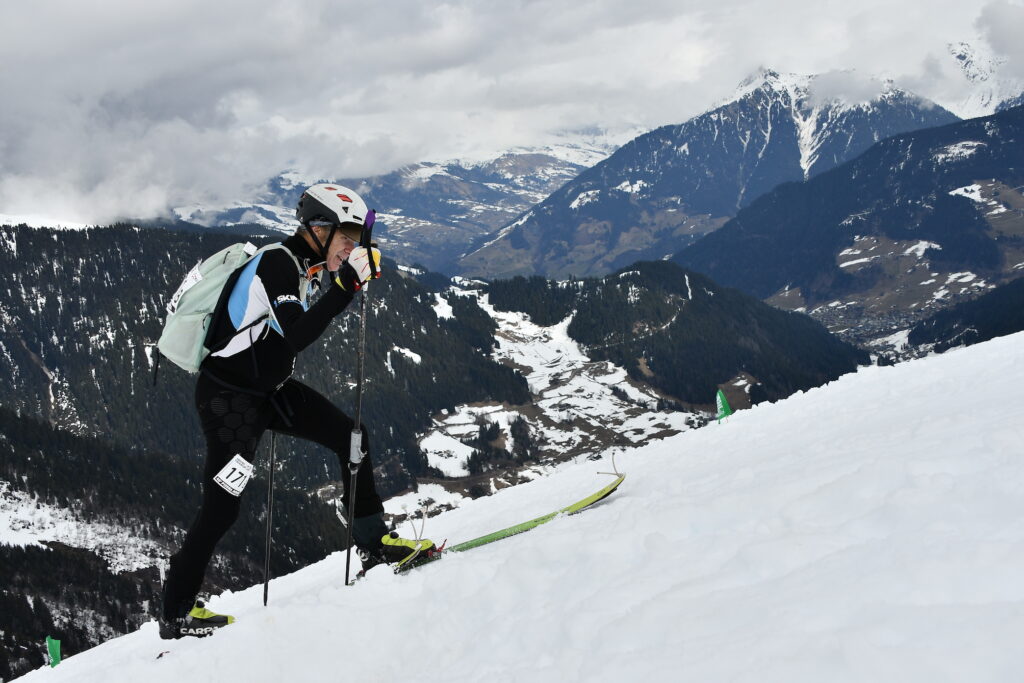
But just as the Tour de France makes the Olympic road race seem like a bit of a one-off, several skimo races have achieved legendary status due to their length, vertical, and difficulty. Switzerland’s Patrouille des Glaciers (PDG) started in 1943 to, as Wikipedia puts it, “develop the endurance, courage, and tenacity of the mountain troops” serving during World War II. Italy has the Tour du Rutor and Trofeo Mezzalama, the latter of which began in 1933. France has the Pierra Menta, first run in 1986.
These races are multi-day stage races done as two- or three-person teams and involve serious mountain terrain. Lest anyone think that the Cortina Olympic skimo represented the full scope of the sport, these races all put the “mountaineering” into skimo!
A Long-Delayed Shot at the Pierra Menta
In 2020, Colter Leys and I decided we’d give one of these big boys a go. Colter had spent years competing in Nordic events, and I had raced in U.S. skimo events like the Wasatch’s Powder Keg. The Pierra Menta was the race we chose.
We applied for the race, where they evaluate everyone’s worthiness, and got in, only to be denied by the March outbreak of COVID-19.
We were already in France doing our last bit of “training” by powder skiing during a rare two-week snow cycle. It wasn’t too bad to come home without racing, but we kept the Pierra Menta in mind for the future. In 2026, it was once again gonna be The Year: we were hitting the Big Time in skimo.
This time, however, things were a little different. I hadn’t raced much over the last few years. Colter, with the incentive of chasing around his fast daughter and joining her in events, had been racing more. He’d also been quite successful as one of the fastest masters in the country.
Training Through a Low-Snow Winter
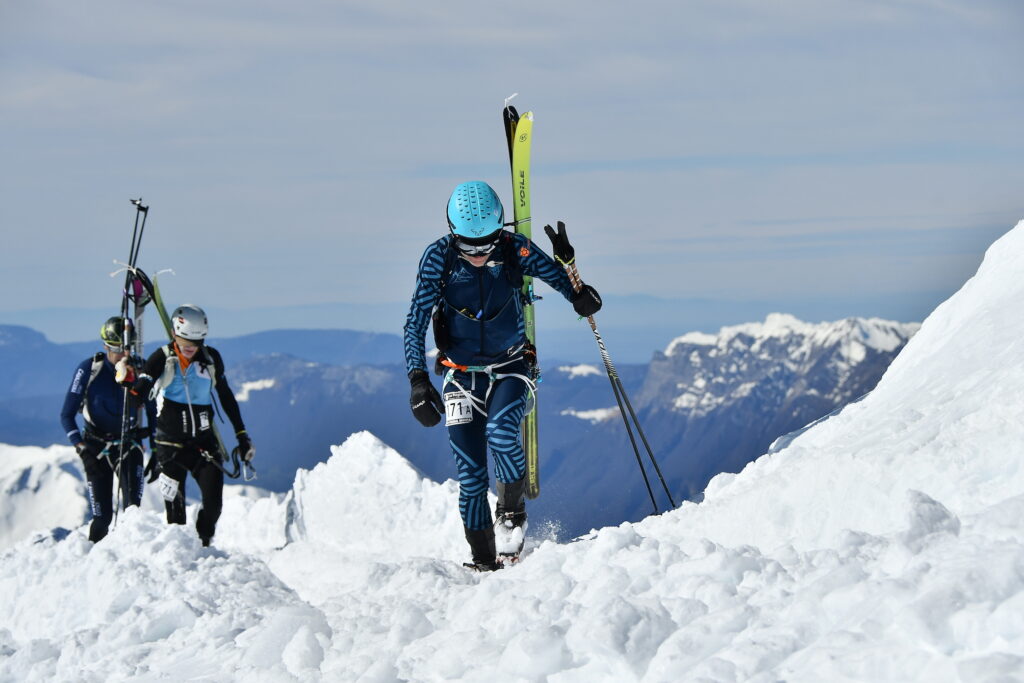
I was in Austria for the winter, while Colter was in the Wasatch. Both zones had famously little snow throughout the winter. It was a bit of a bummer, but it made for a good opportunity to actually “train” for skimo.
The sport demands a fast climbing pace and quick transitions. It also involves reckless, out-of-control downhill skiing on lightweight gear in usually terrible snow conditions, particularly in the maritime snowpack of the Alps.
This was in lieu of our typical Wasatch winter of breaking a lot of trail through boottop or deeper snow and skiing nice lines in untracked snow. But as we all experienced acutely this winter, you get what you get. On our respective continents, Colter and I used our knowledge of each other’s habits as motivation to train hard and not let the other down.
Putting the Voile SR-61 to Work
Both Colter and I had sorta “grown up” using the Voile Wasatch Speed Project (WSP) skimo race skis, and on that 2020 France non-race trip we just sorta shrugged and continued to use our race skis to ski powder. They worked amazingly well for that.
However, it’s an evolving sport. Competitors had begun using stiffer skis with a longer turning radius to support the higher-speed, longer-turn strategy that enables faster descents. Voile responded in kind by creating the SR-61: a “tougher” skimo ski with a bit more shovel, a stiffer tail, and less tip rocker.
Colter and I rode them enough to develop a lot of confidence in suboptimal snow conditions. We didn’t necessarily look good; few people do in skimo races, but we were skiing fast!
The SR-61s retained the WSP’s ability to make quick, snappy turns, yet they were more confidence-inspiring on hardpack. That included everything from wet winter storm snow to spring pre-corn, or “firn,” as the Euros call it.
Expectations Going into the Race
We kinda guessed that we would be somewhere mid-pack: maybe mid-pack plus, maybe mid-pack minus. With over 300 (!!) teams, we figured it didn’t matter where in that spectrum we landed. We just wanted to have fun and keep our gear and our bodies intact.
This was not a gimme, however. “Fun” is relative when you’re hammering out 30,000 feet in four days (?!?!). The challenging terrain, difficult snow conditions, and many multi-thousand-foot descents meant that staying intact demanded attention and luck.
Our prospects dimmed when Colter got RSV and developed a terrible cough the week before the race. Then, two days before the start, I fell ill. I felt terrible and slept basically all day and all night.
But Colter seemed to be improving, and I was surprised to wake the morning before the race feeling okay. With modified expectations, we lined up with hundreds of our skimo friends early the next morning for about an 8,000-foot day.
Four Days at the Pierra Menta
Stage One: Starting from the Back
Because I hadn’t raced for a while, some of my gear was dated and worn from continued non-race use. I already talked about updating my skis, which was smart. But my old mohair skins were that much balder, and my “race” pack didn’t have features suited to faster transitions or the switch from water bottles to flasks.
I also didn’t have any of the featherweight “race” crampons for boots; most skimo events don’t allow ski crampons. On top of that, I had kinda gotten away from speed-food like easy-access, high-calorie gels and the management of those.
I got new skins, borrowed a better pack from a friend, borrowed the fancy cramps from Colter’s wife, etc.
The skins had worked in practice, though they were a bit funky. They used a “hybrid glue” that I was assured would be fine. Instead, they both failed within minutes, and our “mid-pack” position immediately became … dead last!
But we recovered and moved up. All went well despite a lot of flat light and desperately challenging skiing. At one point, we descended a long, 40-plus-degree chute that was so icy everyone used a fixed line to get down. In the end, we had a finish that was pretty satisfying.
Stage Two: 9,500 Feet and an Empty Tank
The second day of the Pierra Menta is always a big one, and this year was no different: 3,000 meters, or about 9,500 feet.
That fact alone was daunting. More daunting was the fact that I got sick again. Early on the morning of the race, I watched all the hydration and food/fuel from the day prior get flushed down the toilet … five times before the gun went off.
But we lined up anyway, and we finished. I suffered mightily with weakness and cramping and had to rely on Colter to get me through the stage. Thanks to him, we were able to continue the next day.
Stage Three: Climbing to the Grand-Mont
The next day was also daunting. They dropped the total vert by a couple hundred meters, so it was only 8,900 feet!
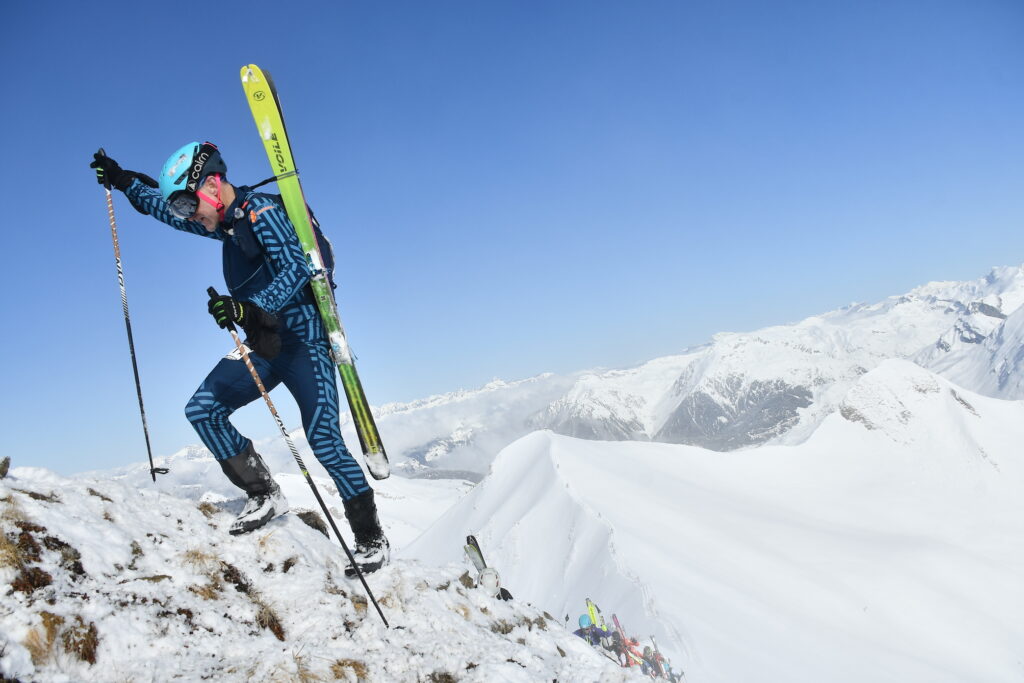
But again, we persevered. My borrowed crampons had trouble staying on my feet as we climbed an alternately snowy and rocky ridge to the Grand-Mont, the highest point in the area. Once again, we stayed intact.
Stage Four: Wet Snow and the Final Climb
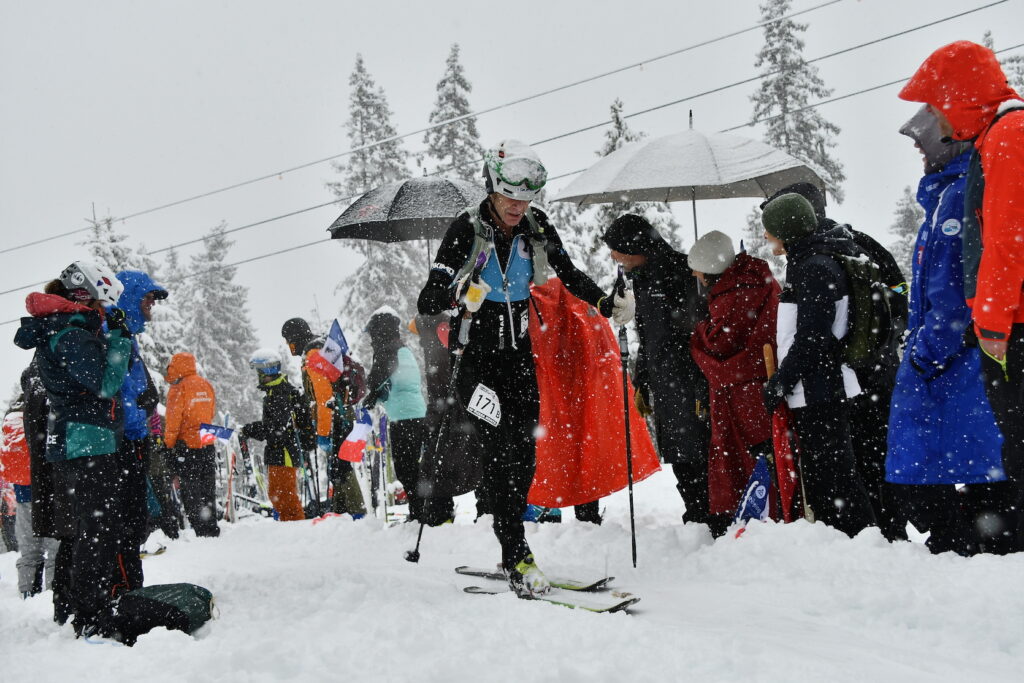
The last day had the least vert, but it was snowing hard and the weather was very warm and wet. Visibility and skin management became the key issues, and we struggled with both.
But again, we persevered. The finish line finally presented itself at the top of a wet and cold 1,500-foot climb.
The Gear That Held Up
Despite our, (mostly my), gear woes, the Voile SR-61s were rock solid. They did what I hoped they would do: enable us to ski dangerously fast in variable conditions.
Despite many hard bangs into ruts and moguls, and even a fast crash into Colter, they held up. We saw a solid handful of broken skis being carried down and thrown into the garbage can!
Finishing the Pierra Menta
We knew that actual European ski mountaineering races would be challenging, and … we were right!
Given all our challenges, we were pleased simply to finish. The next day, we celebrated with a rare, glorious day of bluebird powder in the Alps, with a solid lift bump!
Share this Post