




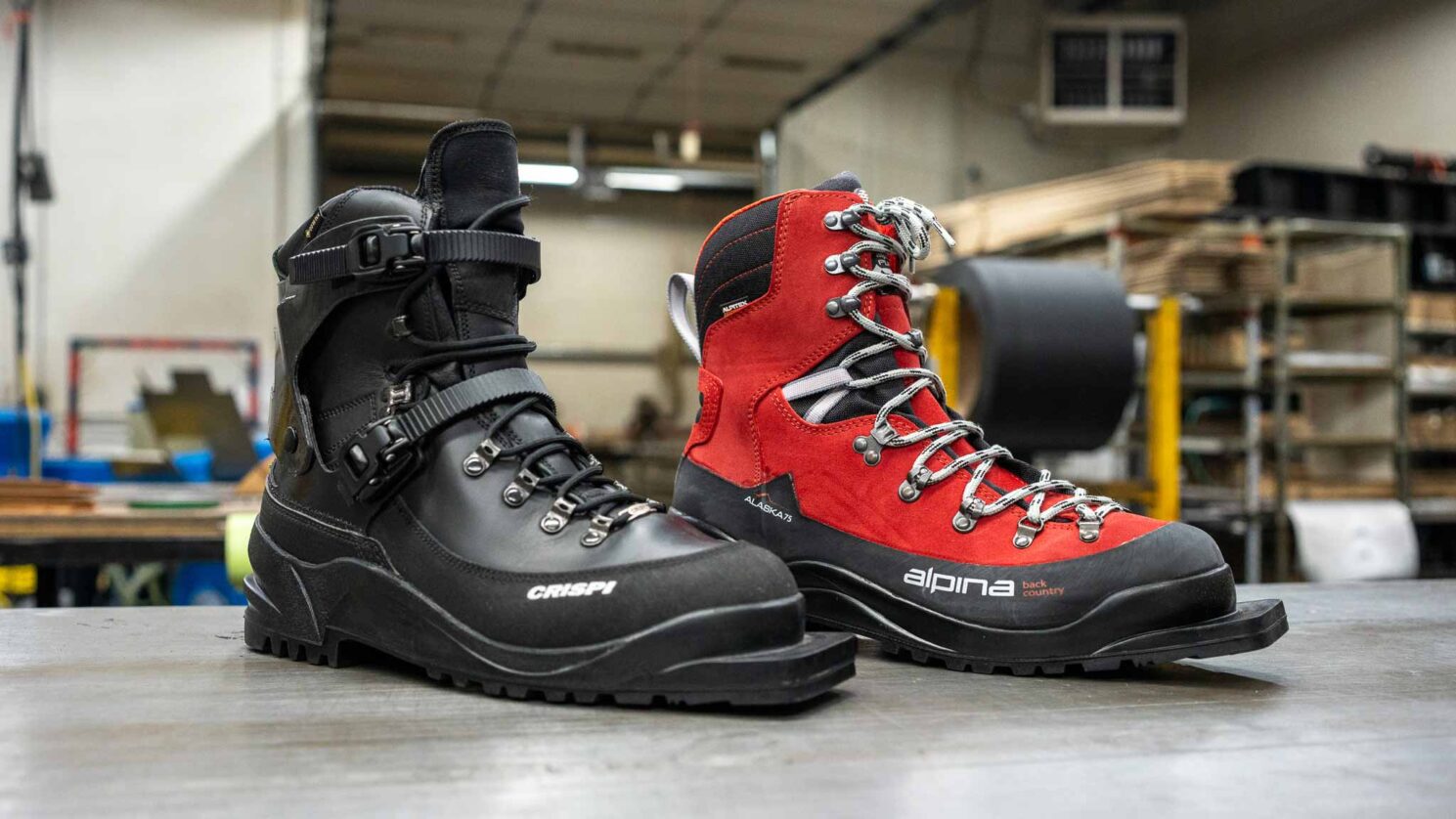
Alpina Alaska 75 vs Crispi Svartisen: XCD Boots
The Alpina Alaska 75 and Crispi Svartisen both fit the XCD world, but they serve different priorities. Here’s how to think about boot choice, binding pairing, and the line between touring efficiency and downhill control.
Share this Post
Do you want a light, simple setup for covering ground, cruising rolling terrain, and sneaking in low-angle turns when the opportunity presents itself? Or are you trying to push a leather boot and 75mm binding setup a little harder into downhill-focused skiing?
That’s the useful distinction between the Alpina Alaska 75 and the Crispi Svartisen.
Both boots live in the 75mm XCD world. Both are comfortable out of the box, and pair naturally with scale-based skis like the Voile Endeavor BC. But they are not trying to do exactly the same job.
The Alpina Alaska 75 leans toward touring efficiency, comfort, warmth, and approachable XCD skiing. The Crispi Svartisen leans toward more downhill control, more support, and a more turn-oriented XCD experience.
And just as important as the boot itself is the binding you pair with it.
Addressing Alpina Alaska Durability Concerns
Not every 75mm boot fits a 75mm binding the same way.
That became especially clear with the Alpina Alaska 75. The Alaska uses a thinner duckbill than many other 75mm boots on the market today. In Dave’s testing, the duckbill measured roughly 14–15mm thick. That thinner profile did not pair as cleanly with Voile’s standard 3-Pin Cable binding, which is built around a taller bail height for modern duckbill boots.
The result was a fit that functioned, but was far from ideal. The boot felt less securely clamped, and the bail would rub against the rubber rand of the boot in a way that raised durability concerns over time.
So Voile went back to an older solution: the 201 binding.
Updating the Voile 201 binding as a mate for the Alpina Alaska
The original Voile 201 was one of the first telemark bindings in the Voile line, dating back to the early 1980s. It was built around thinner duckbill boots, which made its bail height a better match for the Alpina Alaska 75. Rather than simply reintroducing the binding unchanged, Voile updated the bail to better suit the Alaska’s shape and reduce unwanted contact with the boot rand.
That updated version became the Voile 3-Pin AK.
The 3-Pin AK is built specifically as a match for the Alpina Alaska 75. It gives the thinner duckbill a more secure clamp, improves boot-binding compatibility, and keeps the overall setup simple, light, and touring-friendly.
Voile also added the 3-Pin AK Cable for skiers who want the same Alaska-specific fit with more support for making turns. The cable can be used when you want more downhill control, or stowed when you want to tour on the pins.
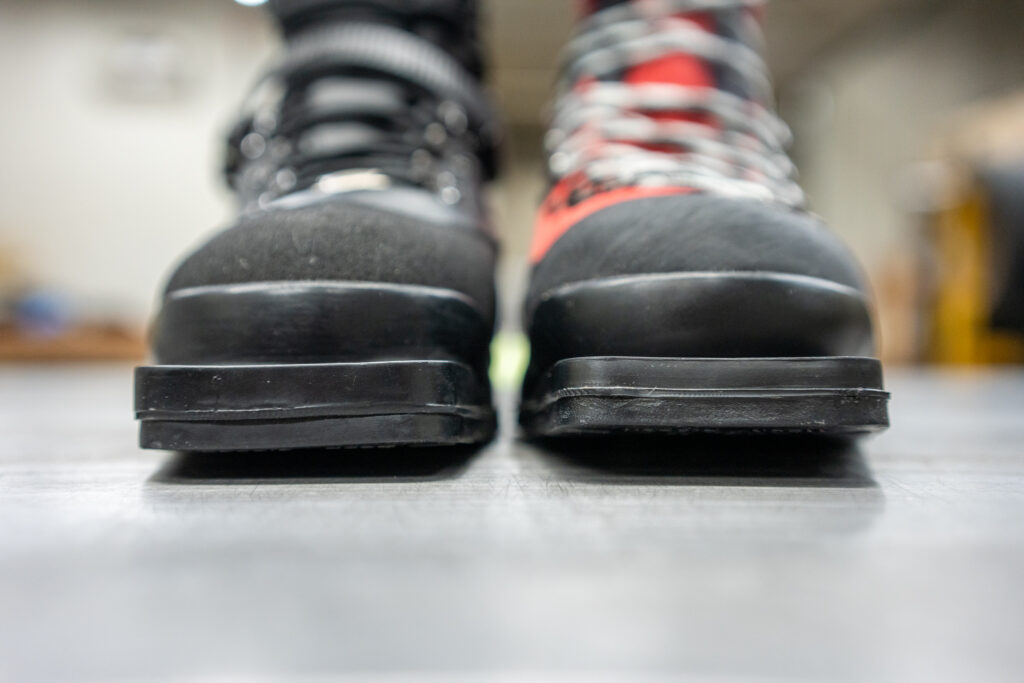
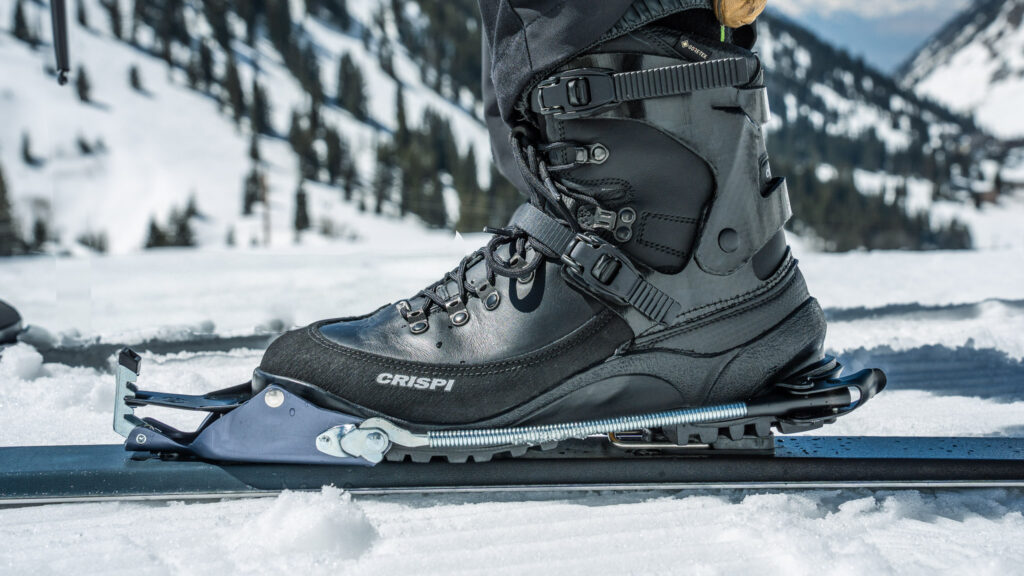
The Crispi Svartisen is a different story. Its duckbill is thicker, closer to 19mm, which makes it a better match for Voile’s traditional 3-Pin Cable binding family. The Svartisen does not need the lower bail height of the 3-Pin AK because it already fits securely in the standard 3-pin cable platform.
In other words, Voile did not update the 201 just to add another binding option. The binding exists because the Alpina Alaska 75 needed a cleaner, more specific fit.
Alpina Alaska 75: Best for Touring-Focused XCD Skiers
The Alpina Alaska 75 is the more forgiving, touring-oriented boot in this comparison.
It is comfortable, warm, and easy to walk in. For newer XCD skiers, or for skiers who mostly want to tour with the option of making mellow turns, that matters. A boot that feels good right away and walks naturally can make the difference between enjoying the whole day and wondering why you brought the wrong gear.
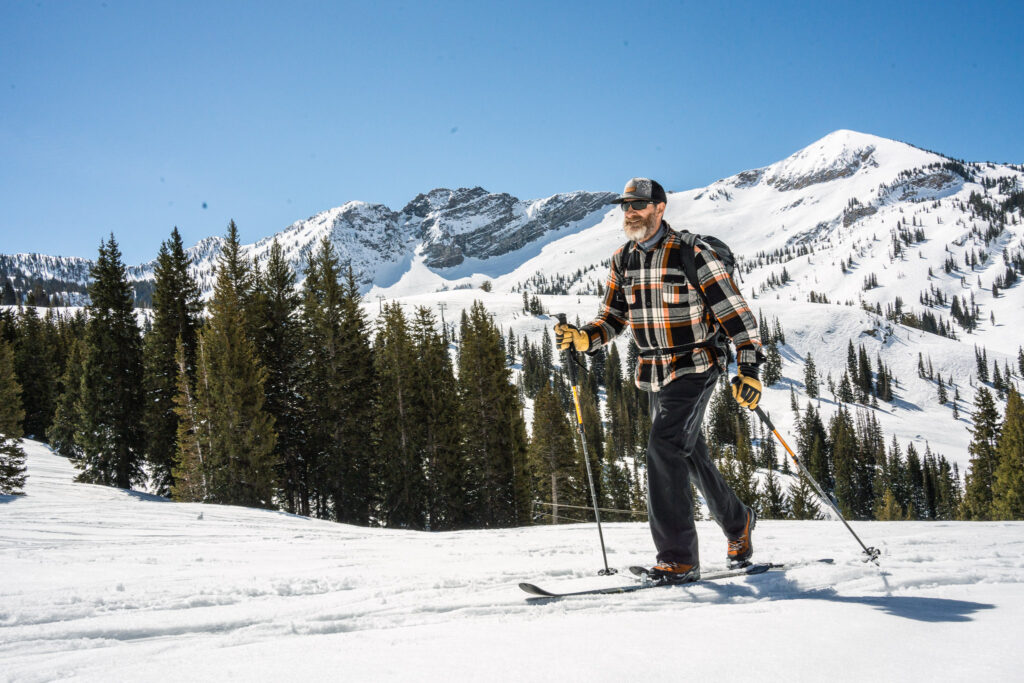
The Alaska 75 is best suited for low-angle terrain, rolling hills, fitness-oriented tours, mellow meadows, and exploratory days where moving efficiently matters more than driving the ski hard.
That does not mean it cannot turn. Paired with the right binding, the Alaska 75 can make both telemark and parallel turns. But its personality is clear: this boot prioritizes walking comfort and touring efficiency before downhill power.
Best For
The Alpina Alaska 75 is a strong fit for:
- Newer XCD skiers
- Touring-focused skiers
- Long, low-angle days
- Rolling terrain
- Skiers who value warmth and comfort
- Anyone who wants a simple, approachable 75mm setup
If you are skiing 20 days a year or less, mostly touring mellow terrain, or just getting started with XCD, the Alaska 75 is likely the better place to begin.
Best Binding Pairings for the Alpina Alaska 75
Voile 3-Pin AK
The Voile 3-Pin AK is the simplest option.
This is the binding for skiers who want maximum touring efficiency and minimum fiddle factor. Clamp in and start moving. If your terrain is mellow, your focus is walking, and your turns are more occasional than central to the day, this is the cleanest pairing.
The 3-Pin AK is best for the skier who wants the lightest, simplest version of an Alaska 75 setup.
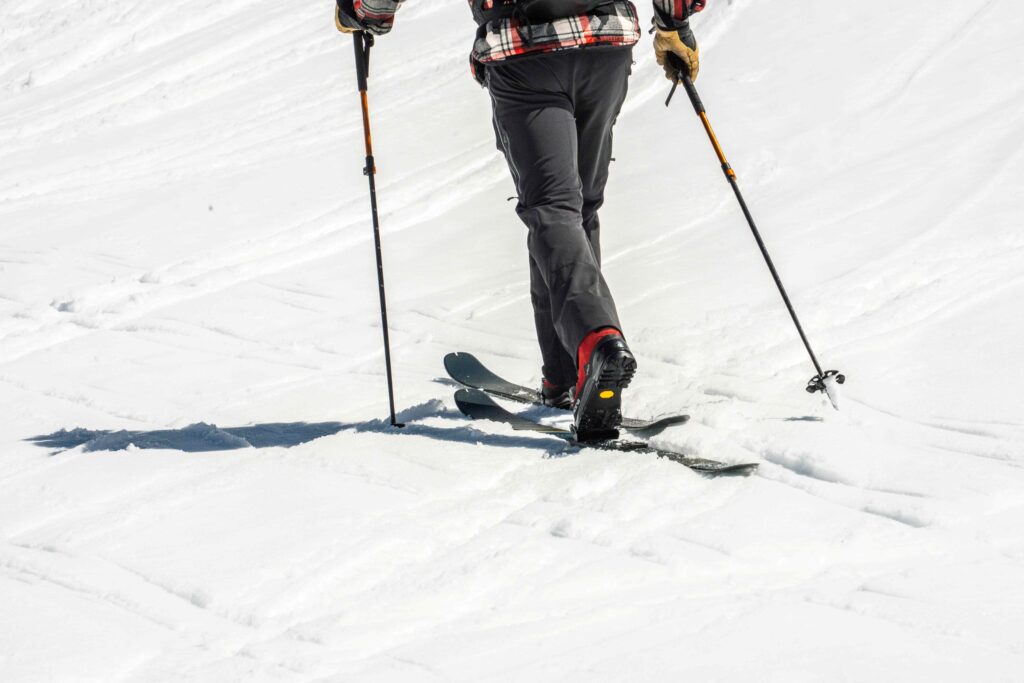
Voile 3-Pin Cable AK
The Voile 3-Pin Cable AK adds downhill support while keeping the setup simple.
The cable gives the boot and binding more lateral support for turning. It can also be removed or stowed when you want to walk on the pins only, then re-engaged when it is time to make turns.
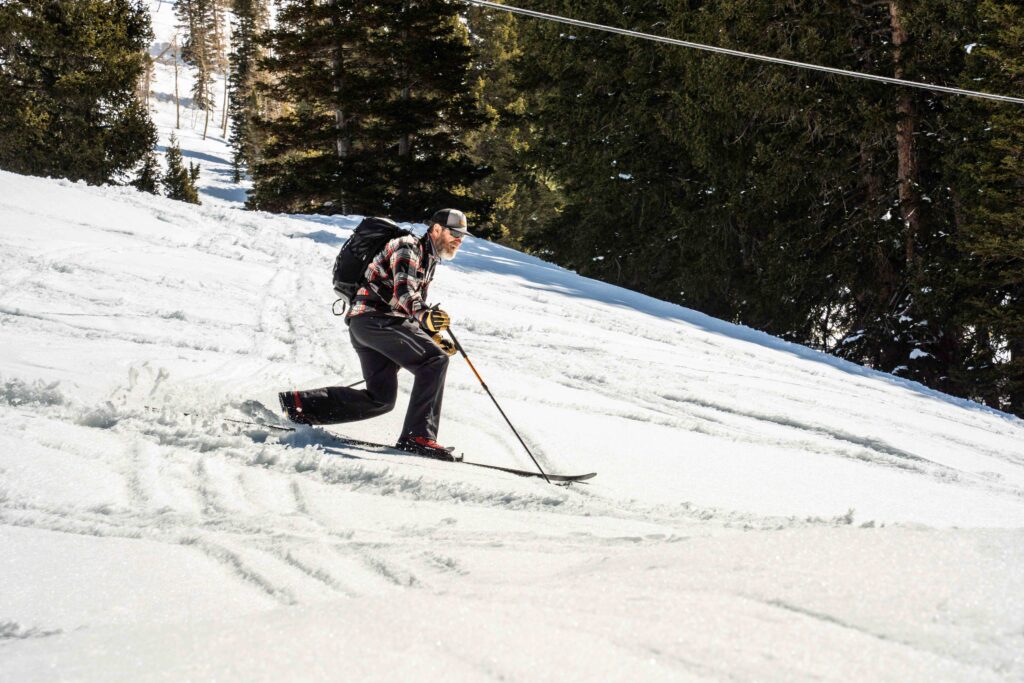
That makes the cable version a compelling “two-in-one” option. You get the simplicity of a 3-pin setup for touring, with added support available when the terrain points downhill.
If you are not sure whether you will want more turn support later, the cable version gives you room to grow.
Crispi Svartisen: Best for Turn-Oriented XCD Skiers
The Crispi Svartisen sits on the more powerful side of this comparison.
It is still an XCD boot, and very light compared to a plastic telemark boot. It still keeps the setup simple. But compared to the Alaska 75, it offers more downhill confidence and more control.
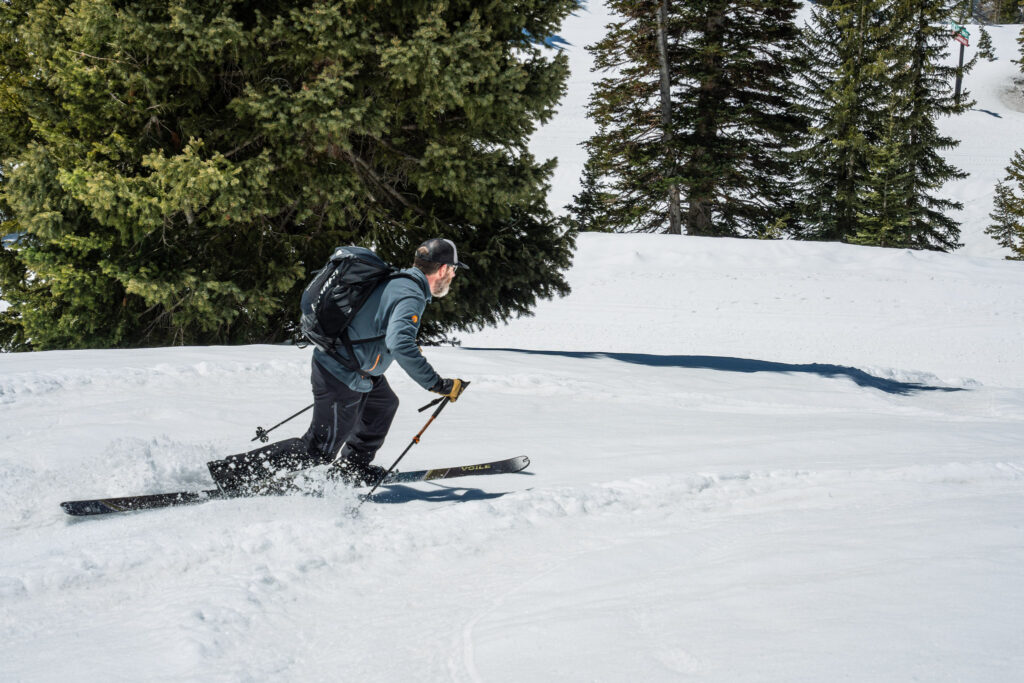
The major difference is the boot’s structure. The Svartisen uses a more supportive design with buckles and an external support system that helps create a more secure fit. On snow, that translates to better power transfer and more stability when making turns.
The Crispi Svartisen is the better choice for XCD skiers who want to prioritize downhill performance without stepping all the way into a heavier plastic telemark boot.
Best For
The Crispi Svartisen is a strong fit for:
- More experienced XCD skiers
- Skiers who prioritize turns
- Skiers getting out 20-plus days per year
- Moderate backcountry slopes
- Powder, firmer snow, and more variable conditions
- Anyone who wants more support from a 75mm leather-style setup
Dave’s take was straightforward: if the Alaska 75 is the more touring-focused boot, the Svartisen is the more turn-focused boot.
See also: Scarpa T4 vs Crispi Svartisen: XCD Boot Comparison
Looking for the next step up in downhill support? We also compared the Scarpa T4 and Crispi Svartisen to help explain where leather-style XCD boots end and more downhill-oriented crossover setups begin.
Best Binding Pairings for the Crispi Svartisen
Voile 3-Pin Cable
The Voile 3-Pin Cable is the go-to pairing for the Crispi Svartisen.
This setup gives you the simplicity of a traditional 75mm binding with the added support of a cable. For skiers who want more torsional rigidity, better power transfer, and more confidence making turns, this is the natural match.
It is still simple. It is still lightweight. But compared to a straight 3-pin binding, it gives you more help when the skiing gets more interesting.
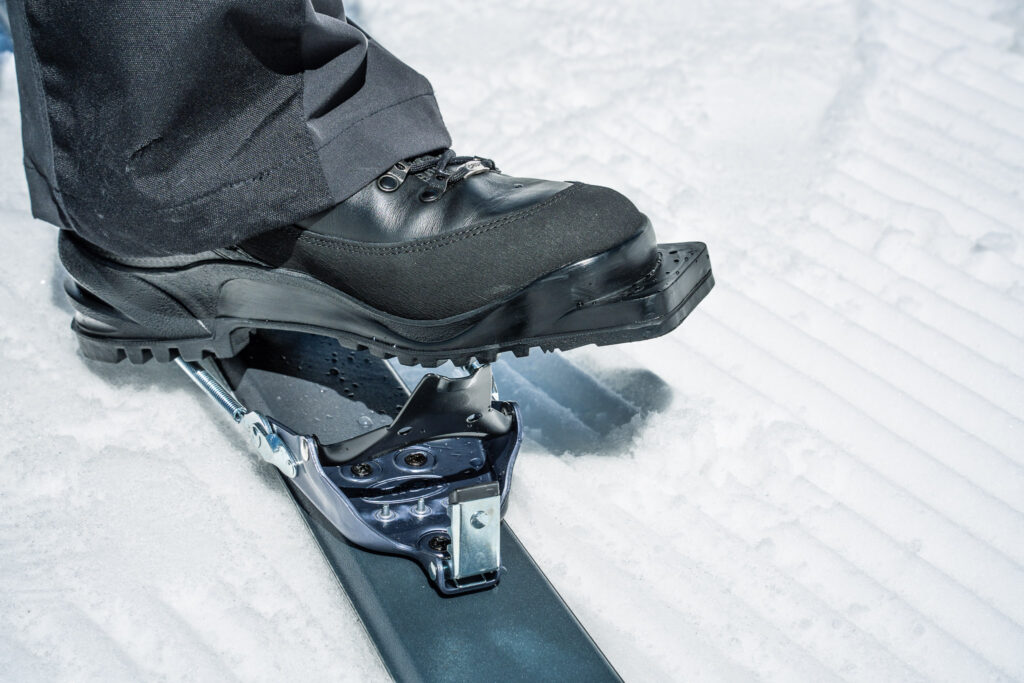
Voile HD Mountaineer
The Voile HD Mountaineer keeps things dead simple.
For skiers who want the stability of the Svartisen boot but do not want to mess with a cable, this binding still has a place. It securely fits the thicker duckbill, keeps the system clean, and works well for touring-focused use where simplicity matters most.
You can still make turns without a cable. You just give up some of the added support and power transfer that a cable binding provides.
Which XCD Boot Setup Should You Choose?
Alpina Alaska 75 vs. Crispi Svartisen: Quick Comparison
| Category | Alpina Alaska 75 | Crispi Svartisen |
|---|---|---|
| Overall personality | Touring-focused XCD | Turn-focused XCD |
| Best terrain | Low-angle, rolling terrain | More varied terrain and moderate slopes |
| Comfort | Very comfortable out of the box | Also comfortable out of the box |
| Warmth | Slight edge to Alaska 75 | Still comfortable, but less warmth-focused |
| Downhill support | Moderate | Stronger |
| Forgiveness | More forgiving | More supportive |
| Best skier type | Newer or touring-focused XCD skier | More experienced or turn-focused XCD skier |
| Recommended binding | Voile 201 AK / 201 AK Cable | Voile 3-Pin Cable / HD Mountaineer |
| Duckbill fit note | Thinner duckbill, roughly 15mm | Thicker duckbill, roughly 19mm |
| More forgiving boot? | Alaska 75 |
| More powerful? | Svartisen |
| Lightest? | Svartisen (barely) |
| Best for long, low-angle days? | Alaska 75 |
| Better for turns? | Svartisen |
| Better for new XCD skiers? | Alaska 75 |
| Better for experienced XCD skiers? | Svartisen |
Choose the Alpina Alaska 75 if your priority is touring.
If you want a comfortable, warm, forgiving boot for rolling terrain, low-angle tours, and simple XCD travel, the Alaska 75 is the better fit. Pair it with the Voile 201 AK for maximum simplicity or the 201 AK Cable if you want the option for more support when making turns.
Choose the Crispi Svartisen if your priority is turning.
If you want more downhill control, more boot support, and a setup that can handle more varied snow and slope angles, the Svartisen is the better fit. Pair it with the Voile 3-Pin Cable for a strong all-around setup or the 3-Pin Cable Traverse if you want a little more clearance and downhill confidence on firmer snow.
Choose the HD Mountaineer with the Svartisen if you want the simplest possible binding while still using the more supportive boot.
Share this Post