



How to Choose a Free-Pivot 75mm Telemark Binding
We’ll cover what a free-pivot binding does and why you might want one. Then we’ll break down how to choose one based on your boots, where you ski, and how you like to turn.
Share this Post
On a long skin track, a little resistance adds up. In a fixed-toe telemark binding like a traditional 3-pin, you bend the front of your boot every time you lift your heel. You’ll feel the fatigue stacking on sustained climbs and on rolling tours that keep sending you back uphill.
What does a free-pivot binding do?
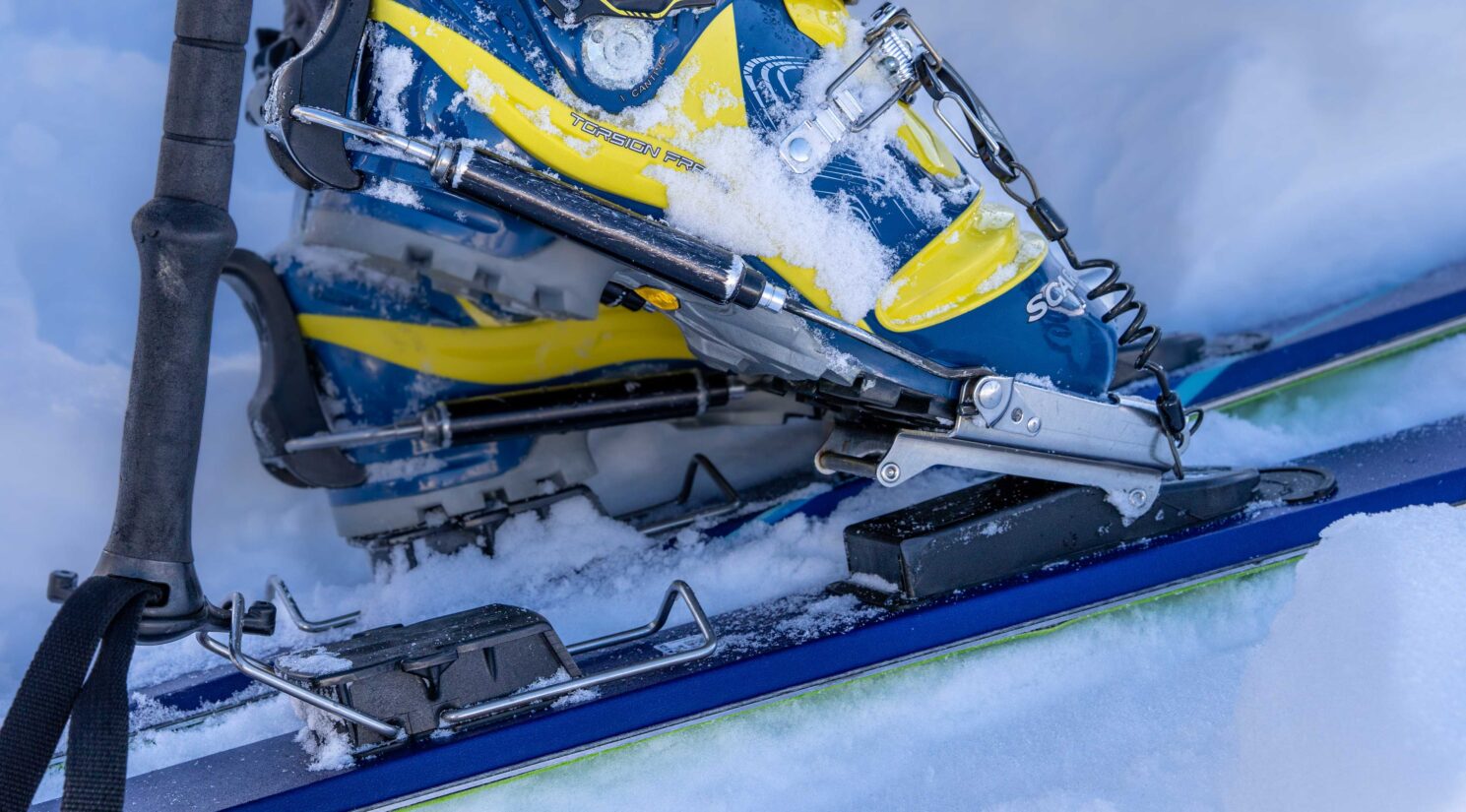
A free-pivot binding gives the whole boot a hinge to swing on, so you can stride uphill without having to flex the sole on every step. For example: in tour mode, the Voile Switchback’s toe assembly swings up with your boot. The touring hinge takes the spring resistance out of your stride.
When you’re ready to ski, a lever locks the hinge down. Your heel can still rise in a telemark turn. As the boot bends at the forefoot, it loads the springs in the heel assembly.
All four Switchback models let you work that lever with the tip of a ski pole while the heel assembly stays on the boot. That saves you from bending down every time a short climb gives way to a few turns.
Start with the boots you plan to ski
Plastic and leather boots can both have an appropriate duckbill for Switchback style bindings, but their construction changes what characteristics you’ll want from the binding.
Leather 75mm boots
Leather boots tend to bend more easily at the forefoot and offer less support from side to side. That easy flex feels good when you’re striding and traversing through rolling terrain. Pair it with a heel assembly that lets the boot flex naturally.
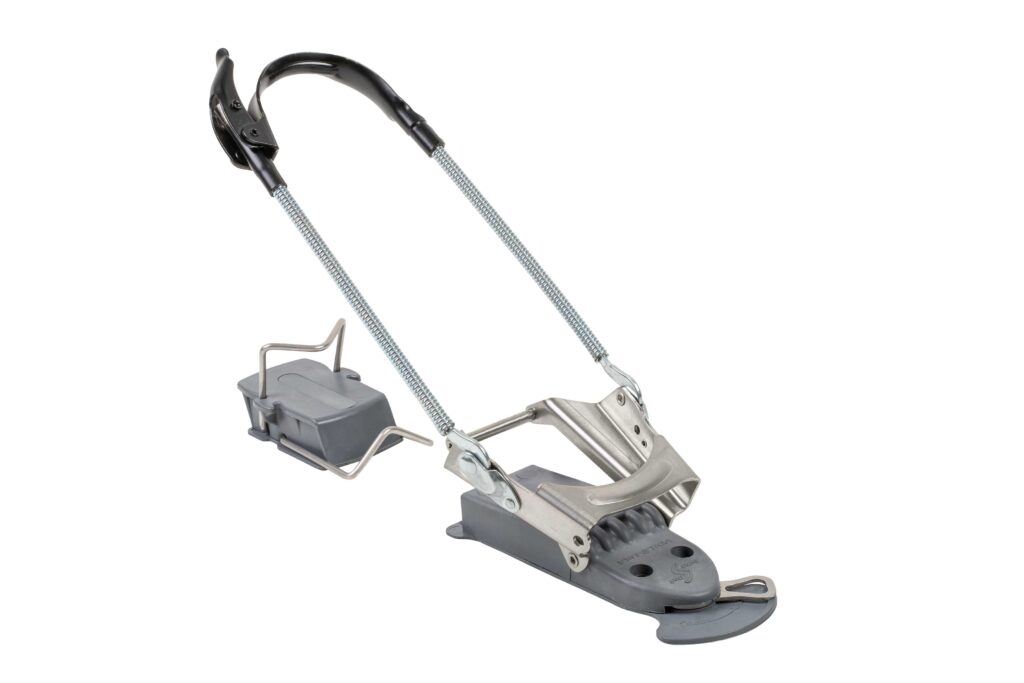
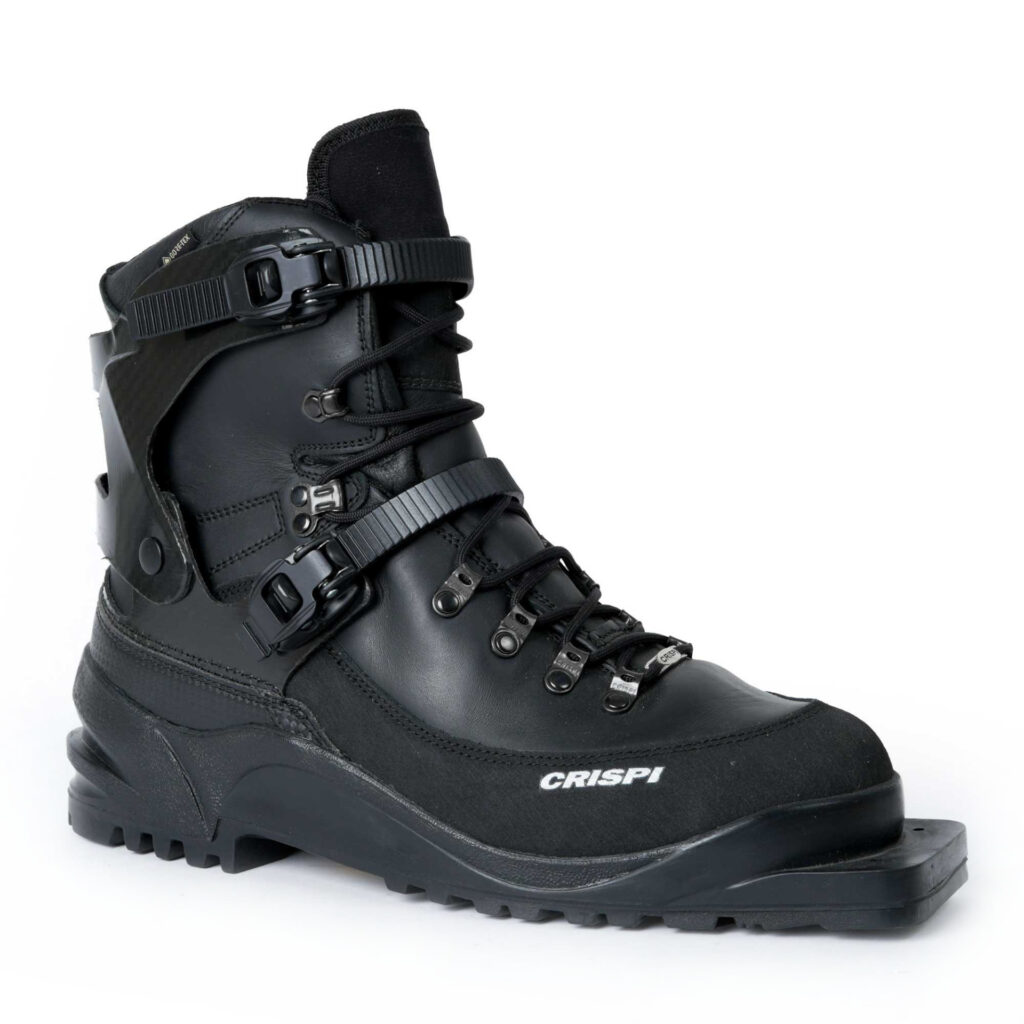
The Voile Switchback Cable combines a free-pivot toe with a flexible cable heel assembly for leather 75mm boots with standard duckbills, such as the Crispi Svartisen 75. Duckbill thickness varies among leather boots, so check the exact model as well as the sole length.
**We advise against using a hardwire binding with leather boots. The cartridges are going to compress a leather boot much too easily.
Plastic 75mm boots
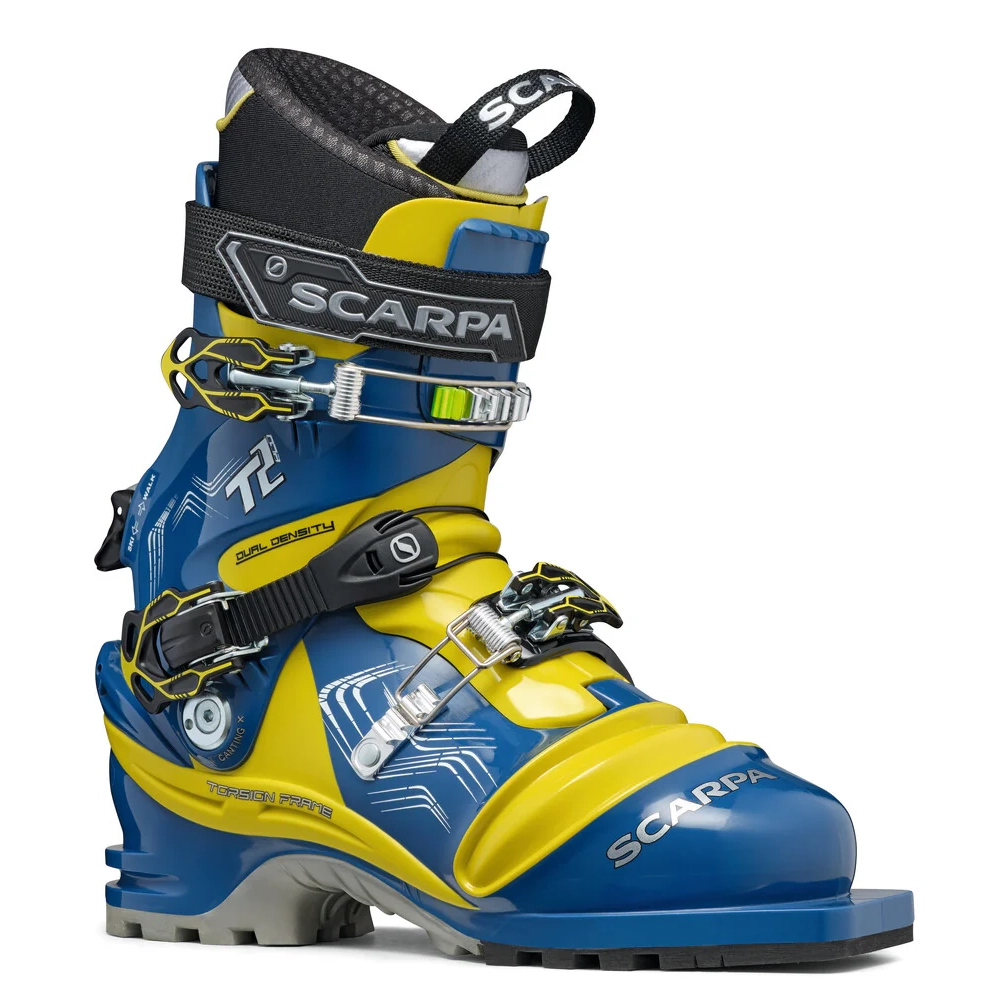
Boots like the Scarpa T4 and Scarpa T2 use a molded plastic shell for support. The bellows give the boot a place to bend at the forefoot, and the shell helps you tip the ski on edge. That structure works well with the firmer pull of a hardwire heel assembly.
For an all-mountain setup with a neutral downhill feel, start with the Voile Switchback. The Women’s Switchback uses the same springs and downhill geometry, with shorter heel hardware to fit smaller boots.

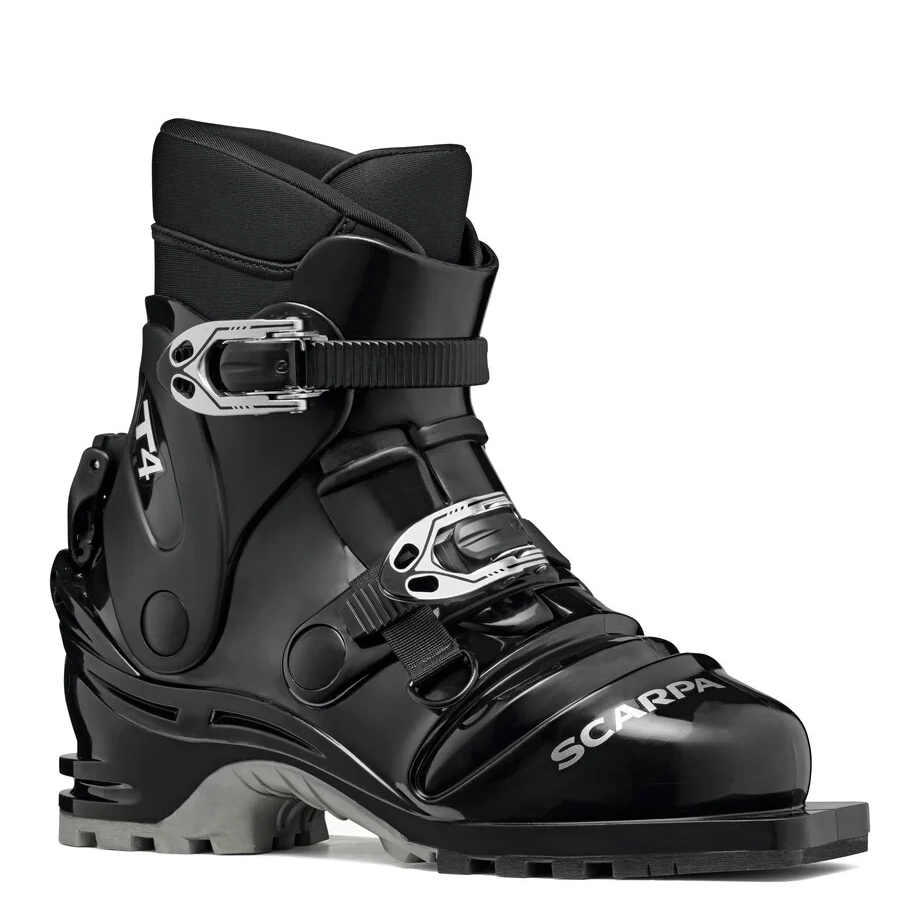
* Don’t use a plastic boot with Switchback Cable bindings. Plastic boots matched with cable-style heel assemblies require the more positive toe attachment provided by a 3-pin bail.
A more “active” option:
If you want a free-pivot binding with more active resistance, choose the Voile Switchback X2.

Two changes make the Voile Switchback X2 more active than the standard Switchback.
- The heel assembly pivots farther back. The X2’s hardwire rods attach farther back on the toe plate. When your heel comes up, the rods pull at a steeper angle. More of that pull goes downward, so the binding resists heel lift more strongly.
- The cartridge springs use thicker wire. The thicker wire makes the springs harder to compress. As the heel assembly loads the cartridges, they push back harder and you feel a firmer pull at the heel.
All Switchback bindings use the same free pivot for the climb. For a firmer downhill feel, we like the X2 is a balanced match to the three-buckle Scarpa T2. It also pairs with the T4 when you want more heel resistance.
See also: Best Bindings for the Scarpa T2 and Best Bindings for the Scarpa T4
Wait… What is binding activity?
In a telemark turn, the rear heel rises as the boot bends at the forefoot. The binding’s heel assembly pulls down against that movement. Activity describes how much resistance you feel as you lift your heel. A neutral binding lets you lift your heel and drop into a turn with less effort. A more active binding gives your rear foot something firmer to press against as you put the trailing ski on edge. That can be handy on a wider ski, if you ski aggressively, or if you simply like a more supported feel through the turn.
Extra spring resistance can be a boon when you’re getting a wider ski on edge. It’s not limited to wide skis, though. Mark Christopherson skis a T2 (a full-height, three-buckle plastic 75mm boot) and X2 (the more active of the Switchback bindings) on a smooth-base Endeavor (which is only 84mm underfoot). He call’s it a favorite combination for early season and spring tours.
Pro Tip: Consider scaled skis for rolling terrain
Scales aren’t just for cross-country skiers. Far from it.
Some backcountry tours are one steady climb followed by a descent. Others are a string of short climbs, traverses, and turns. On those kinds of days, scaled skis and a free pivot binding work exceptionally well together. As long as the scales are getting enough grip, the skins can stay in your pack and a flick of your pole gets you back into tour mode.
Voile’s BC skis are still shaped for downhill turns; they are our standard backcountry skis but with a traction pattern in the camber pocket. You can use a scaled ski as your everyday backcountry setup, for a quick fitness lap, or for a long approach with a little climbing and descending along the way.
Learn more: Everything You Need to Know About Scale-Based Skis.
Share this Post
Frequently asked questions
Is free pivot the same as a free heel?
A free heel lets you lift your heel in a telemark turn. Free pivot is a touring feature that lets the boot swing at the toe so you can stride with less resistance. On a Switchback, you still have a free heel once you lock the touring hinge for the descent.
How can I tell whether a binding has a free pivot?
Look for a dedicated tour mode in the binding’s specs. If you can try it with a compatible boot, engage tour mode and lift the heel. The boot should rotate at the touring pivot without you having to bend the boot’s sole.
Do I need a free-pivot binding for XCD skiing?
A traditional 3-pin can work well for cross-country downhill skiing (XCD), especially if you like a light setup and are comfortable striding by flexing the boot. Consider a free pivot if you want an easier stride on climbs or spend a lot of your tour switching between climbing and making turns.
Does any 75mm boot fit the Switchback Cable?
No. Thinner duckbills such as the one on the Alpina Alaska 75 are outside its fit range. Plastic boots like the Scarpa T4 need a binding designed for plastic boots.
What’s the difference between the Switchback and Switchback X2?
Both use the same free-pivot touring system. In ski mode, the X2 offers more heel resistance. Its cartridge springs are 25% stiffer, and its downhill pivot point sits 26 mm farther back.
Is the binding’s tour mode the same as the boot’s walk mode?
They’re separate controls. The binding’s tour mode lets the boot pivot at the toe. A boot’s walk mode, when it has one, frees up the cuff so your ankle can move more easily. You can use both on the climb.