




Scarpa T4 vs Crispi Svartisen: XCD Boot Comparison
The Scarpa T4 and Crispi Svartisen both live in the XCD world, but they serve different skiers. Here’s how to think about flex, terrain, turn style, touring efficiency, and binding pairings.
Share this Post
XCD skiing covers a lot of ground. Literally and figuratively.
Some skiers are looking for long, rolling tours with a few low-angle turns mixed in. Others want an efficient setup that still lets them make confident telemark turns in more varied terrain. That difference matters, especially when choosing boots and bindings.
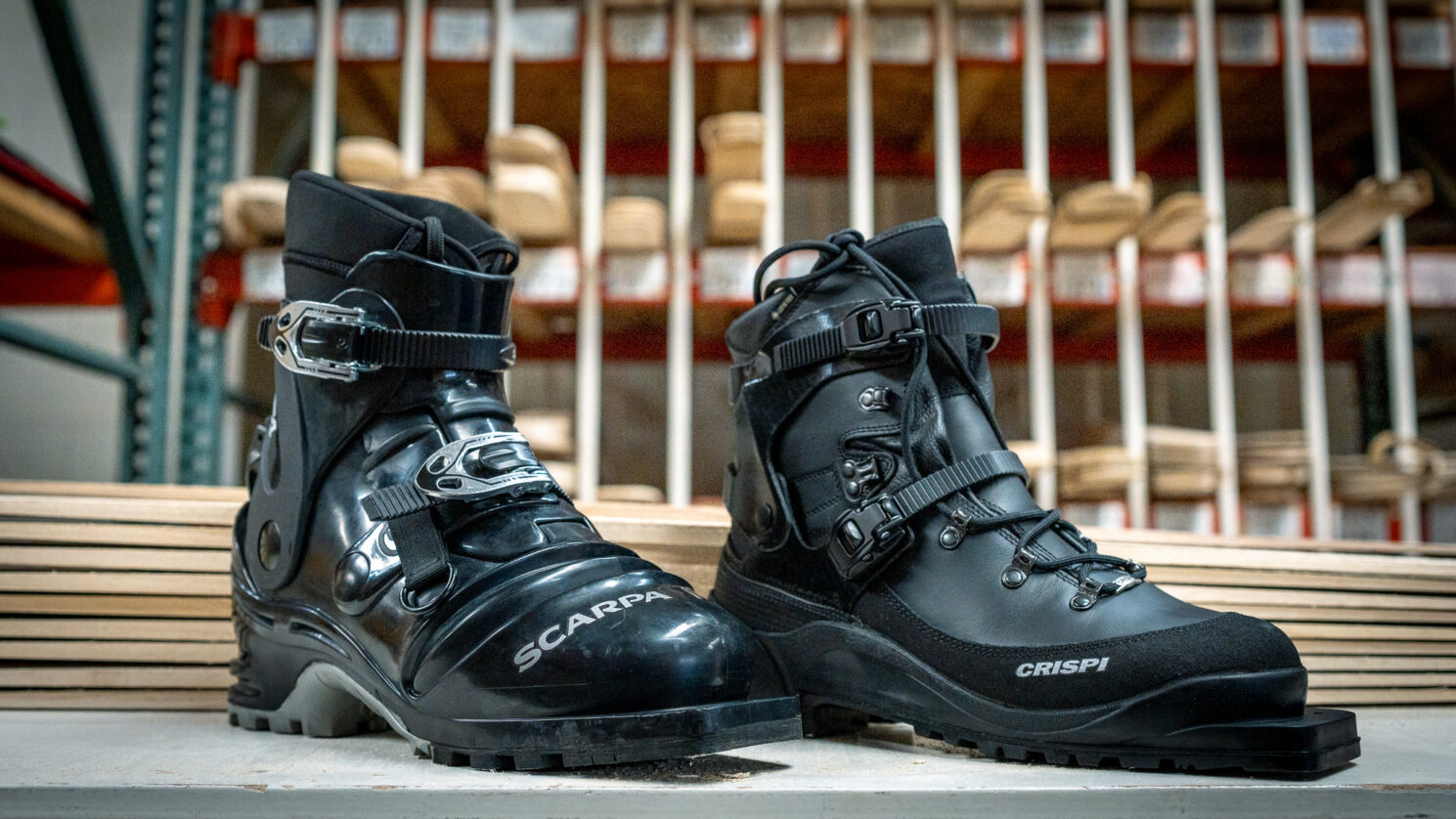
In this comparison, we’re looking at two popular 75mm boot options: the Scarpa T4 and the Crispi Svartisen. Both can fit into the broader XCD conversation, but they are not trying to do the same job. The Svartisen leans toward lightweight touring, easy flex, and low-angle turns. The T4 leans toward more downhill control, faster turn transitions, and XCD Crossover-style skiing.
The real question is not, “Which boot is better?” The better question is, “What kind of XCD skiing are you actually trying to do?”
XCD vs. XCD Crossover: A Useful Distinction
XCD stands for cross-country downhill. It is a niche within telemark skiing that blends touring efficiency with downhill turnability. In a typical XCD setup, the goal is to travel efficiently through rolling terrain while still having enough boot, binding, and ski to make turns when the terrain allows.
XCD crossover, or XCD-X, moves a little farther toward the downhill side of the spectrum. It still values touring efficiency, but it puts more emphasis on descending confidence, turn power, and versatility for medium-to-high angle terrain.
A ski like the Voile Endeavor BC fits well into the XCD category. A wider ski like the Voile UltraVector BC moves more naturally into the XCD Crossover world. That same distinction helps explain where the Scarpa T4 and Crispi Svartisen fit.
The Crispi Svartisen is more touring-focused. The Scarpa T4 is more turn-focused.
Want the full breakdown? Read The Tradeoff Between Efficiency and Downhill Performance: XCD vs. XCD Crossover to better understand where touring-focused XCD ends and more downhill-capable XCD Crossover begins.
Big Picture: How These Boots Differ
At a glance, the Scarpa T4 and Crispi Svartisen may attract the same shopper because both are relatively light compared to more powerful telemark boots. Both have a lower cuff than a full-height downhill-oriented telemark boot. Both appeal to skiers who want to keep things efficient, simple, and fun.
But once you get them on snow, the difference is clear.
The Crispi Svartisen is a leather boot with a softer, easier flex. It feels natural for walking, touring, and low-angle skiing. It is comfortable, forgiving, and well suited to skiers who want to cover ground.
The Scarpa T4 is a plastic boot. It is stiffer, heavier, and more powerful. That stiffness gives the skier more control when making turns, especially when terrain gets steeper, snow gets more variable, or the skier wants quicker transitions.
In short: the Svartisen tours better. The T4 turns better.
Scarpa T4: Best for Turning-Focused XCD Skiers
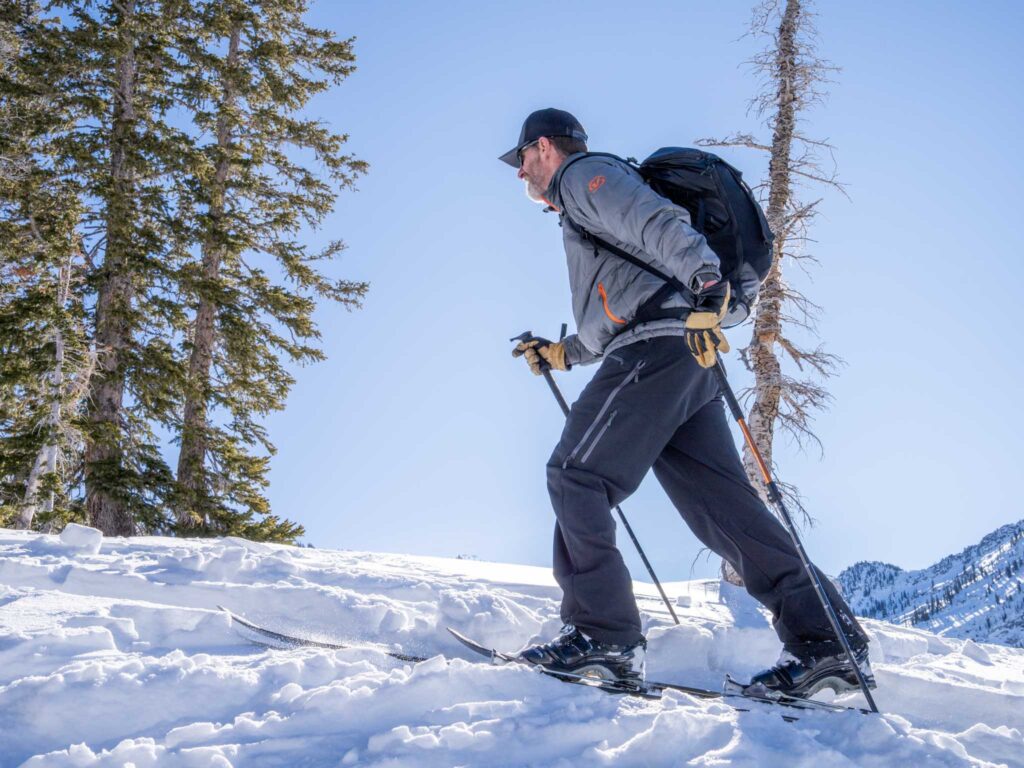
The Scarpa T4 is the better choice for skiers who prioritize telemark turns and downhill performance within an XCD or XCD crossover setup.
Because it is a plastic boot, the T4 gives you more support and more power than a soft leather boot. That translates to better stability and quicker turn transitions. Instead of setting one big, swooping turn and holding it, the T4 allows for shorter-radius turns and faster edge-to-edge movement.
That does not mean the T4 is a full resort telemark boot. It is still a low-cuff, two-buckle boot. It is still relatively minimal compared to bigger telemark options like a T2 or NTN boot. But for XCD crossover skiing, that balance can be exactly the point.
The Scarpa T4 is a strong choice for skiers who want to tour efficiently but still make real turns in low- to medium-angle terrain. It is especially useful when downhill performance matters enough that a soft leather boot starts to feel undergunned.
Where the T4 Shines
The T4 shines when you want:
- More downhill control
- Faster telemark turn transitions
- Better support in variable snow
- A boot that pairs well with more powerful 75mm bindings
- A setup that can handle medium-angle terrain
The tradeoff is weight and stiffness. If your main goal is long-distance touring with only occasional low-angle turns, the T4 may be more boot than you need.
Crispi Svartisen: Best for Touring-Focused XCD Skiers
The Crispi Svartisen is the better choice for skiers who prioritize touring comfort, low weight, easy flex, and low-angle turns.
This boot is at home when the day is more about traveling through terrain than charging down it. It walks naturally, flexes easily, and feels comfortable right out of the box. That makes it a compelling option for long tours where efficiency and comfort matter more than downhill power.
The Svartisen can turn, but it rewards a different style of skiing than the T4. Rather than quick transitions and short-radius turns, think larger, smoother turns. You set the turn, hold it, and let the boot work within its limits.
The Crispi Svartisen is an excellent XCD boot for low-angle touring and turning. It is less ideal when the terrain gets steeper, the snow gets firm, or the skier wants more aggressive downhill performance.
Where the Svartisen Shines
The Svartisen shines when you want:
- Lightweight touring comfort
- Easy walking and natural flex
- Low-angle turns
- Long days with more touring than descending
- A forgiving boot for mellow XCD terrain
The tradeoff is support. If you are regularly skiing firm snow, steeper lines, or medium-angle terrain where you want to make lots of turns, the Svartisen may feel undergunned.
Binding Pairings Matter
Boot choice is only half the conversation. With 75mm XCD setups, binding pairing can make or break how the system feels.
The same boot can feel very different depending on whether it is paired with a simple 3-pin cable binding, a free-pivot binding like the Voile Switchback, or a more active binding like the Switchback X2.
Best Binding Pairings for the Scarpa T4
The Scarpa T4 has a wide range of binding compatibility. It pairs especially well with the Voile Switchback, which gives the skier a true free pivot for efficient uphill travel and enough binding performance to match the plastic boot.
That free pivot is a big advantage on rolling terrain. You can tour efficiently, flip the switch when it is time to descend, and avoid stepping out of the binding just to change modes. On scale-based skis, that simplicity becomes especially useful because you are often moving between flats, short climbs, and small descents without putting skins on and off.
The T4 can also work with a Voile 3-Pin Cable or 3-Pin Cable Traverse. That pairing saves weight and keeps the system simple, but you lose the full free-pivot touring efficiency of the Switchback. The 3-Pin Cable still offers strong downhill performance with the T4, but it requires more compromise on the uphill.
For skiers who want more downhill power than the standard Switchback, the Switchback X2 is the more active option.
For a deeper dive into the Scarpa T4 and XCD crossover bindings, check out our full breakdown: Best Bindings for the Scarpa T4: XCD Crossover. We cover how each setup changes the way your ski tours and turns.
Best Binding Pairings for the Crispi Svartisen
For the Crispi Svartisen, the preferred pairings are the 3-pin binding, the Voile 3-Pin Cable or 3-Pin Cable Traverse.
That is because the softer flex of a leather boot works well with the flexible spring feel of a traditional cable binding. The setup remains light, simple, and appropriate for touring-focused XCD skiing.
A common question is whether the Svartisen should be paired with the Voile Switchback for free-pivot efficiency. The current recommendation is no. The standard Switchback’s rigid heel assembly does not pair well with the soft-flexing leather boot. The boot can be difficult to engage properly, and the springs may not preload or function as intended.
For now, the Svartisen is best kept in the 3-pin binding family.
A Note on the New Switchback Cable
There is one very interesting solution being released Fall 2026 for skiers who want free-pivot efficiency with a leather boot: the Switchback Cable.
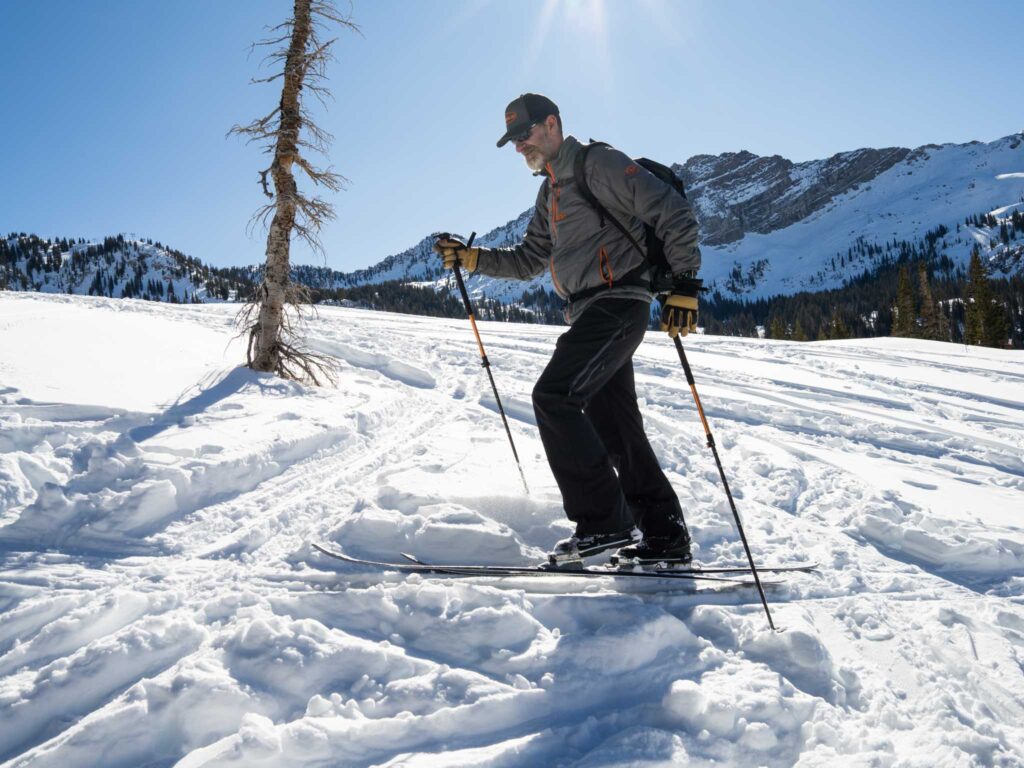
This binding concept combines the free-pivot touring advantage of the Switchback platform with a cable assembly that works more naturally with a softer leather boot. The result is a setup that could be especially appealing for XCD skiers who want the comfort and flex of a boot like the Svartisen, but also want the convenience of flipping between touring and turning modes without stepping out of the binding.
The tradeoff is weight. Compared to a standard 3-pin cable binding, the Switchback Cable adds some weight, but it brings the benefit of a true free pivot.
For skiers who love scaled skis, rolling terrain, and minimal transitions, that could be a very compelling setup.
Which Boot Should You Choose?
Here is the simplest way to think about it.
| Priority | Better Choice |
|---|---|
| Long touring days | Crispi Svartisen |
| Low-angle touring and turning | Crispi Svartisen |
| Lightweight comfort | Crispi Svartisen |
| More downhill power | Scarpa T4 |
| Faster turn transitions | Scarpa T4 |
| Medium-angle terrain | Scarpa T4 |
| Newer telemark skiers wanting more support | Scarpa T4 |
| Experienced skiers prioritizing mellow tours | Crispi Svartisen |
Choose the Crispi Svartisen if your priority is touring comfort, low-angle terrain, and long days where the turns are part of the experience but not the whole point.
Choose the Scarpa T4 if your priority is making turns, skiing more variable terrain, and building an XCD crossover setup with more downhill confidence.
The Takeaway
The Scarpa T4 and Crispi Svartisen both belong in the XCD conversation, but they sit in different places on the spectrum.
The Svartisen is the lighter, softer, more touring-focused boot. The T4 is the stiffer, more powerful, more downhill-focused boot. The right choice depends on whether your version of XCD leans more toward covering ground or making turns.
And, as always, the best setup is the one that matches the terrain you actually ski.
For a touring-focused XCD setup, look toward a leather boot and 3-pin cable binding. For an XCD crossover setup with more downhill emphasis, look toward the Scarpa T4 with a Voile Switchback, Switchback X2, or 3-Pin Cable depending on how much you value free-pivot efficiency versus weight savings.
Share this Post