




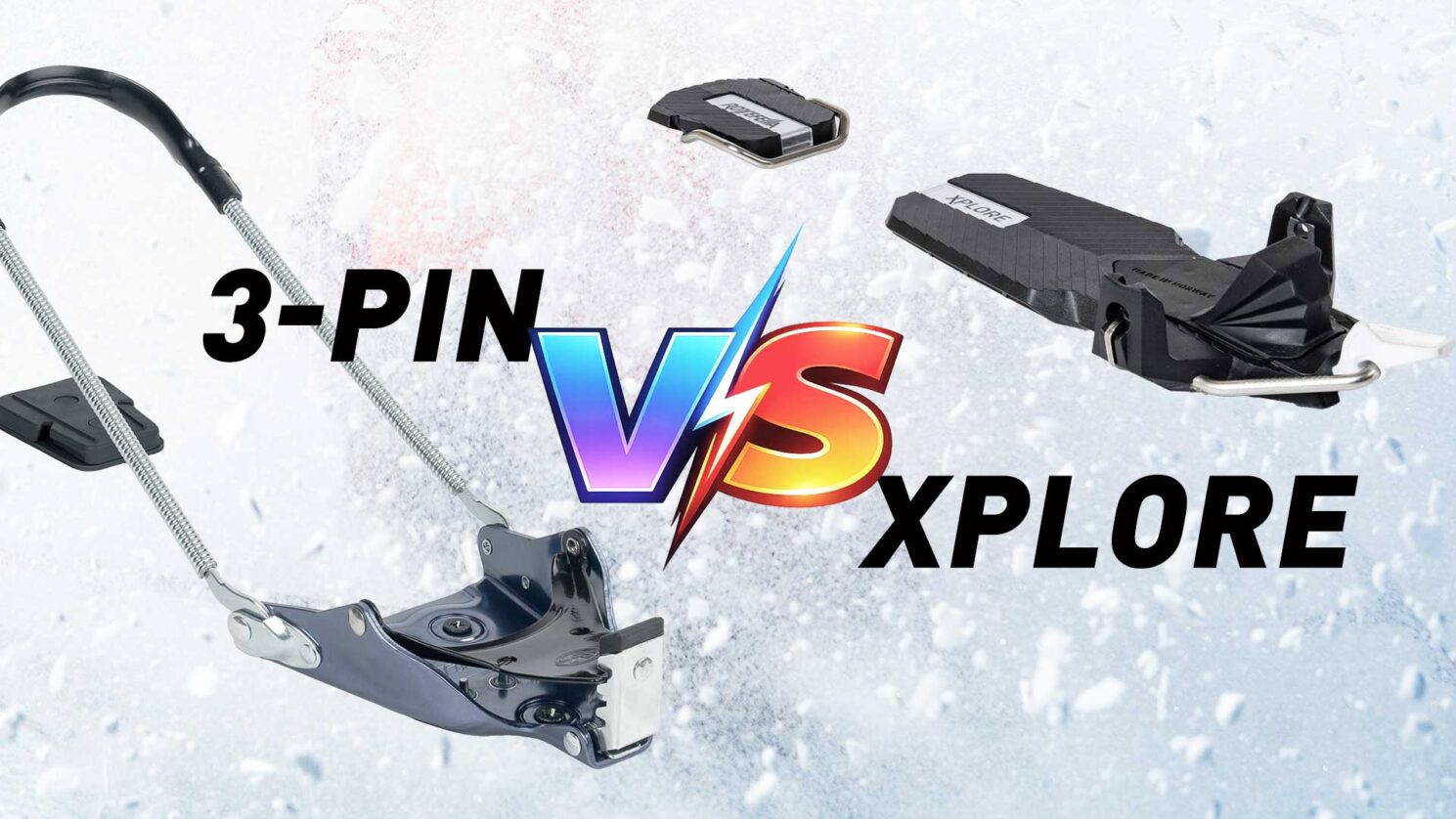
Rottefella Xplore vs 3-pin Binding: Head-to-head Shootout
We wanted to answer a simple question: Rottefella Xplore vs 3-Pin Binding… How do they compare on the descent?
To do that, we took both systems into the field and skied them side by side on the same platform, using boots that are as close to identical as possible. Then, to push things further, we added the Alfa Free 2.0 into the mix to see how much performance the Xplore system can actually unlock with a more supportive boot. The results of this test may surprise you!
The Test Setup
To keep things as consistent as possible, both bindings were mounted on the same ski:
- Voile Endeavor BC (178 cm, 84mm underfoot)
From there, we built two nearly identical setups:
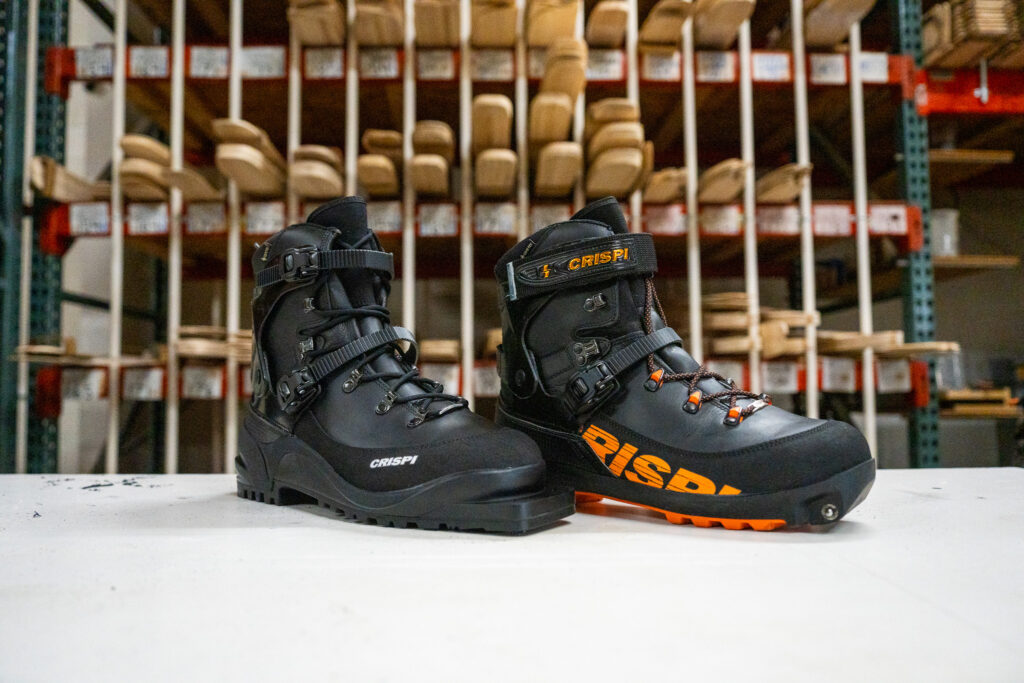
These two boots are about as close as it gets across binding systems. Both are leather boots with a carbon-reinforced structure and a ratcheting instep buckle. The main difference is simply the interface: 75mm vs. Xplore. That allowed us to isolate the real variable: The binding itself.
Then, for a final comparison, we added:
- Xplore (with hard flexor) + Alfa Free 2.0 + Endeavor BC
The reason being, we wanted to see how the Xplore platform would compare when we gave it the maximum advantage by bringing the most capable downhill XP boot into the equation.
What This Gear Is Designed For
Before getting into downhill performance, it’s worth stating what this category of gear is meant for. We consider the primary test setups to fall in the XCD (Cross-Country Downhill) category of skiing.
The XCD category of gear is built for:
- Rolling terrain
- Lower-angle descents
- Efficient travel
It’s not meant for steep, aggressive skiing. In the conditions we tested, both setups behaved exactly as they should. Stable, predictable, and easy to manage.
Rottefella Xplore vs 3-Pin Cable Binding
With the Svartisen and Futura Pro acting as near-equal boots, the comparison becomes pretty direct. There isn’t much separating the two…
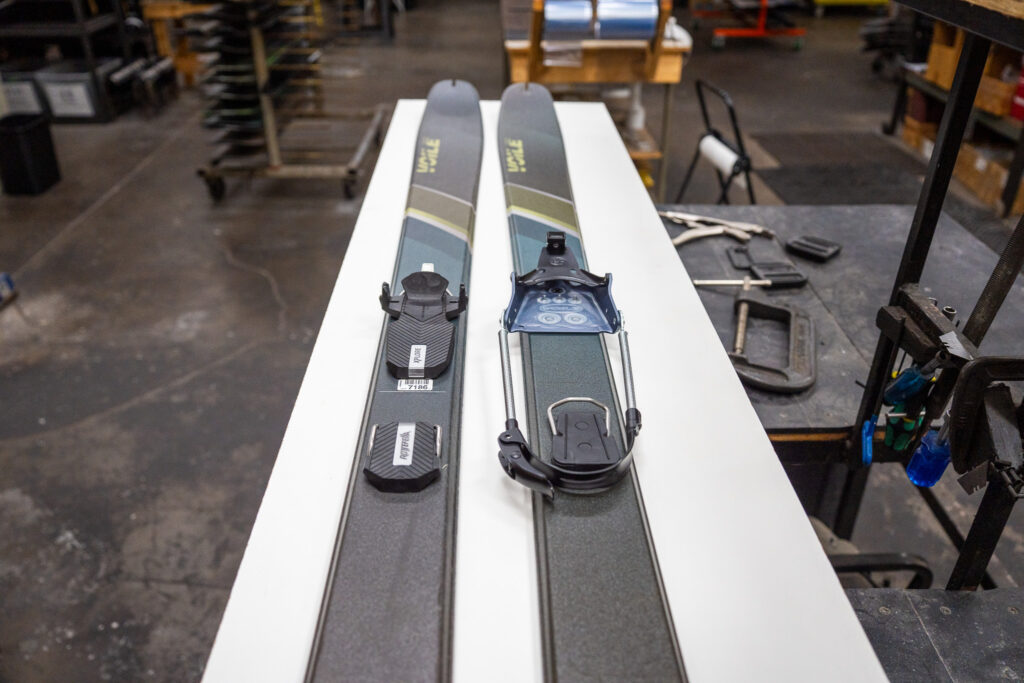
Both setups:
- Feel stable on the descent
- Initiate turns predictably
- Handle rolling terrain with ease
There’s no dramatic difference in control or confidence. The takeaway here is simple: With comparable boots, a Rottefella Xplore vs 3-Pin Binding setup performs very similarly on the downhill.
Bringing The Alfa Free 2.0 Into the Mix
The biggest difference showed up when we introduced the Alfa Free 2.0. The added cuff height and structure give the Xplore system noticeably more support and stability. Simply put, you can push the whole setup much further with a more capable boot.
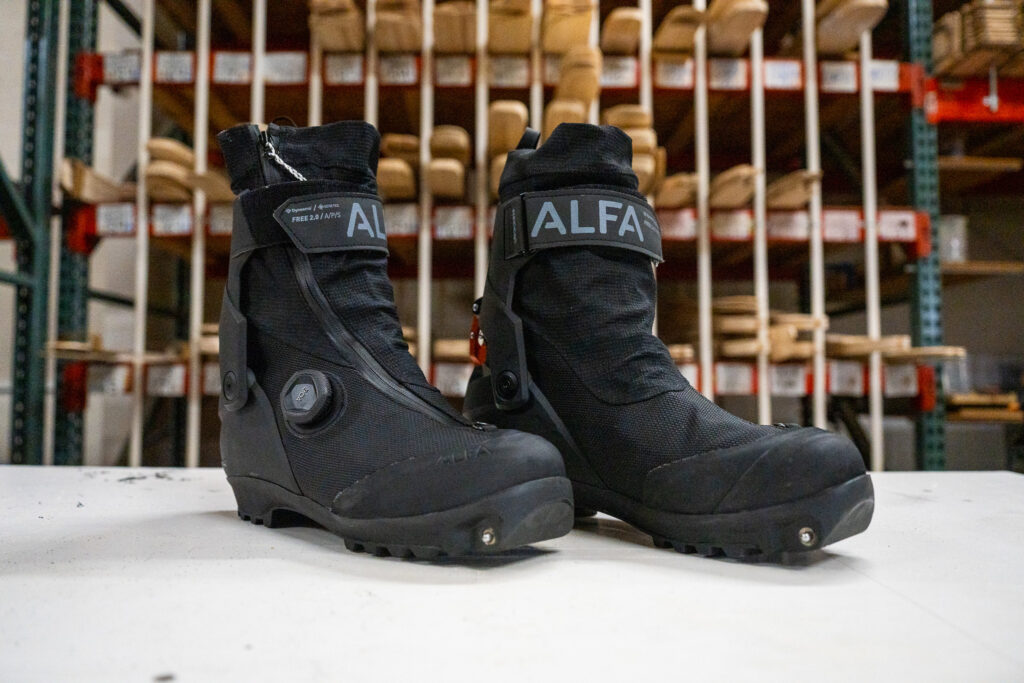
Steeper terrain becomes more manageable. Turn control improves. The overall range of the system expands. To get that same level of performance out of a 75mm setup, you would need to move into a plastic boot like the Scarpa T4, which is in a different category entirely.
Key Takeaways
After skiing all three configurations, the takeaways became very clear. First, the bindings are not the limiting factor. With similar boots, Rottefella Xplore and 3-Pin Cable binding performance are nearly identical on the descent. Second, the boot defines the capabilities of the setup. Changing boots had a much larger impact than changing bindings. With a boot like the Alfa Free 2.0, the Xplore system pushes into more demanding terrain without jumping into an XCD-Crossover setup.
Rottefella Xplore vs 3-Pin Binding: Which is Right for Me?
If you’re using a leather boot like the Svartisen or Futura Pro:
- You can expect very similar downhill performance from both binding systems
- The decision comes down to preference and compatibility
If your goal is to increase downhill capability:
- The upgrade path is through your boot
- Xplore paired with the Alfa Free 2.0 opens up more terrain. The same would go for the 3-pin cable if paired with a Scarpa T4.
Overall, there isn’t a clear winner here. Both systems are capable. Both are well-matched to the kind of skiing they’re designed for. But this comparison highlights something more useful: If you want improved downhill performance from your XCD setup, start by checking out your boot options.
In the end, the Rottefella Xplore vs 3-Pin Binding debate is neck and neck as far as pure binding performance goes… what matters more is what you put on your feet.
Frequently Asked Questions
Is Rottefella Xplore better than a 3-pin binding?
Not necessarily. In our testing, a Rottefella Xplore vs 3-Pin Binding setup performed very similarly on the downhill when paired with comparable boots. The difference comes down more to the boot than the binding itself.
Are Xplore bindings good for downhill skiing?
Yes, within the intended use. Xplore bindings handle rolling terrain and moderate descents well, especially when paired with a supportive boot. With a boot like the Alfa Free 2.0, the system becomes noticeably more capable.
How does a 3-pin cable binding perform on the downhill?
A 3-pin cable binding offers predictable, stable downhill performance for XCD-style terrain. When paired with a boot like the Crispi Svartisen, it provides solid control without adding unnecessary weight.
What is the difference between Rottefella Xplore and 3-pin bindings?
The main difference is the interface and how power is transferred through the system. Xplore uses a modern toe-pin connection with interchangeable flexors with varying stiffness levels, while 3-pin relies on a duckbill interface with cables for added support. On snow, the performance is more similar than different when boots are comparable.
What boots work best with Rottefella Xplore?
There are a lot of factors that will go into determining which XP boot is going to work best for you. Voile carries options from Alpina, Crispi, and Alfa that all have their own unique benefits and standout characteristics. You can find out what we have to say about a lot of these boots here.
Does boot choice matter more than binding choice?
Yes. In our testing, changing boots had a bigger impact on downhill performance than changing bindings. A more supportive boot increases control, stability, and confidence across all conditions.
Share this Post