




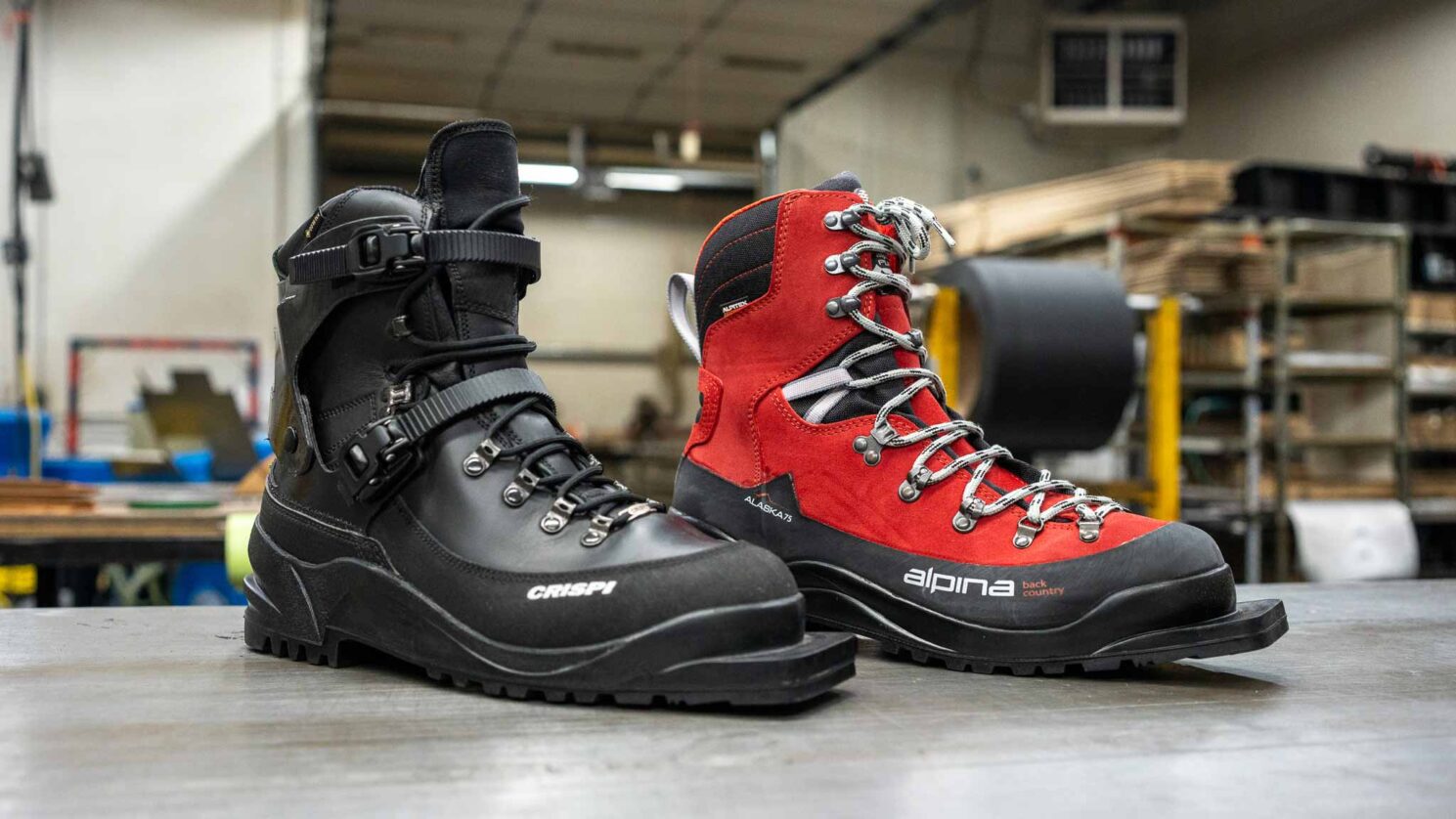
Alpina Alaska 75 vs Crispi Svartisen: XCD Boots
Share this Post
Welcome to the extended breakdown of our two favorite leather 3-pin XCD tele boots. In this video, we go deep… I mean really deep. Luckily, we broke it up into chapters so you can jump to the talking points that pique your interest. Otherwise, continue below for a full transcription of the conversation.
Thanks for tuning in!
Alpina Alaska 75 vs Crispi Svartisen
Full Discussion Transcript
Tyler (Host) × David Grissom (Voile General Manager and Partner)
Tyler:
Hey there, everybody. Tyler here with Voile. I’m sitting here today with David Grissom, and today we’re going to be discussing the Alpina Alaska 75 XCD boot as well as the Crispi Svartisen XCD boot.
We’re also going to get into bindings, how they pair up with each other, what bindings we recommend, and how to build out a full setup. I’ll be chatting with Dave, getting his perspective on all of this, and we’re really going to get in the weeds and break it down.
So first things first, I’m curious, why these two boots? Why are these the two that we’re focusing on today?
Why The Alaska and The Svartisen?
David:
Well, if you look across the market, there are only a few choices of 75mm duckbill boots still available. We wanted to take a closer look and get more intimate with the boots.
So we started testing them, and what I discovered was that these are two great boots. They’re both very comfortable. Frankly, I didn’t even know it at the time, but as I tried other boots outside of these two, I found that these really stood out for comfort and performance.
We focused on them and just dove deeper. For example, we built a binding, the 201, specifically for the Alpina Alaska 75. We made some adaptations to make it a better fit for that boot. We can go deeper into that later.
Tyler:
Yeah, totally. That’s actually a good thing to bring up now. This is essentially why we’re redoing this video. We already shot a comparison last season, but since then, there have been new developments and new information.
From your perspective, what’s the purpose of revisiting this topic?
David:
What we discovered with the Alpina Alaska was that there were some fit and durability issues that needed to be addressed.
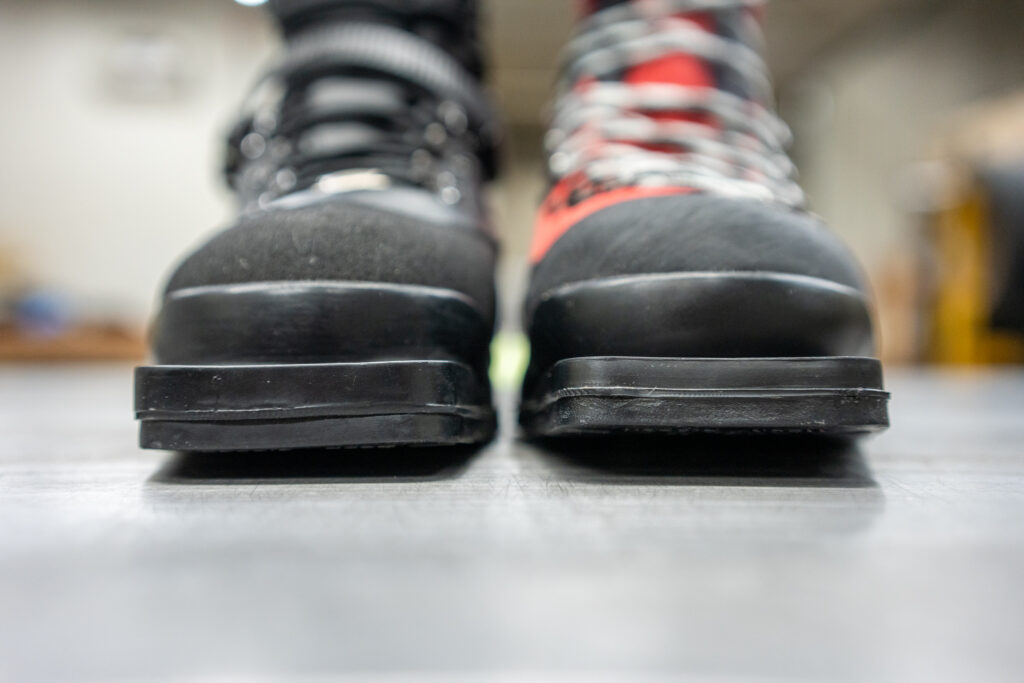
A lot of people tried to pair the Alaska with our 3-pin cable binding. The duckbill on the Alaska is a little thinner than a traditional 75mm, about 14 or 15 millimeters.
The perfect fit for that thickness was actually the bail height of our original 201 binding. That binding dates back to the early 80s and was built around thinner duckbill boots.
However, we found durability issues. The bail was grinding into the rubber rand on the boot. So we modified the bail to address that. We also added a cable version so users had that option.
Tyler:
We really spent last season living and breathing these boots. A lot of testing went into this, all of it on the Endeavor BC ski, with different bindings and different boots.
The Alaska really levels the playing field. As you said, we found good boots that were available, comfortable, and performed well, but we didn’t have the perfect binding match until now.
David:
The bail height is key. The Alaska duckbill is around 15mm, while the Svartisen is closer to 19mm, which fits perfectly in our standard 3-pin cable bindings.
Tyler:
So what you’re saying is that, instead of choosing a boot based on binding restrictions, with these updates, you can now choose exactly what you want for your setup.
David:
Exactly. We’ve tested this thoroughly and feel confident recommending specific boot and binding pairings.
We addressed the clamping issue and the durability issue. Now it’s just a better setup for the customer.
Tyler:
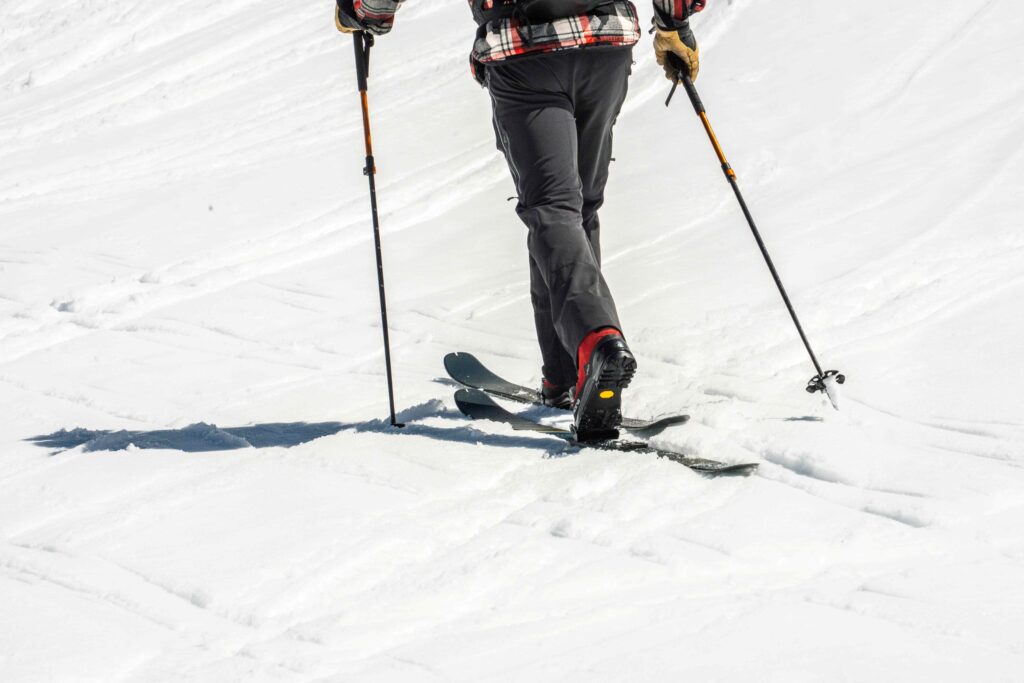
It’s important to note for folks who aren’t familiar with XCD skiing that these boots and bindings are commonly paired with scaled skis, like our BC line, specifically the Endeavor BC.
Scales allow you to skip skins, which makes things very efficient and simple for rolling and low-angle terrain.
So now that we understand why we’re talking about these boots and bindings, who are these setups for?
Who are These Setups For?
David:
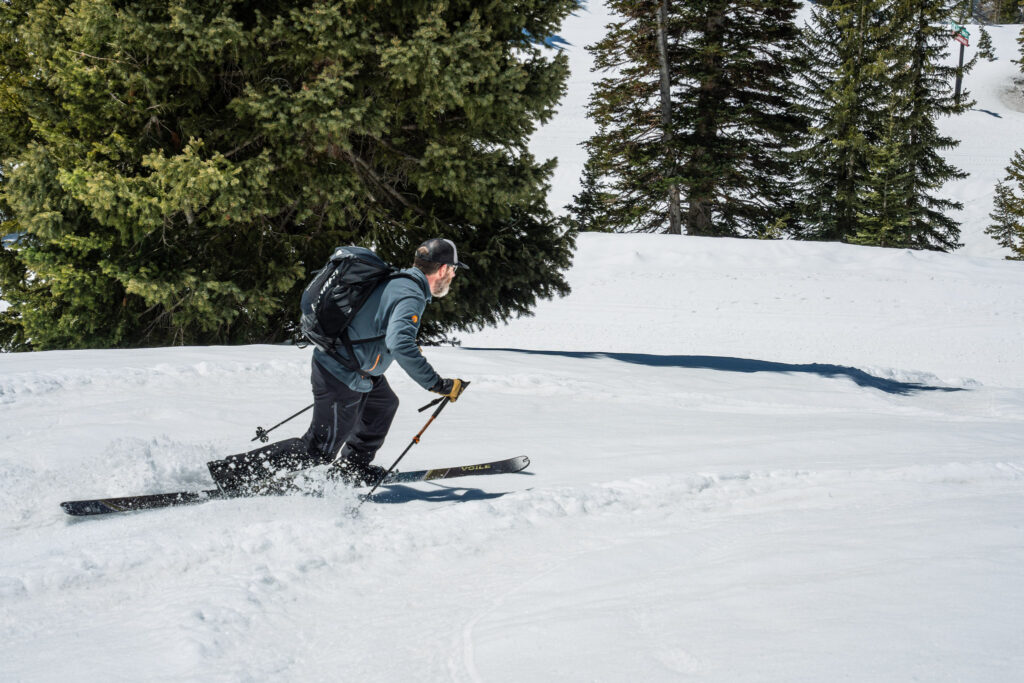
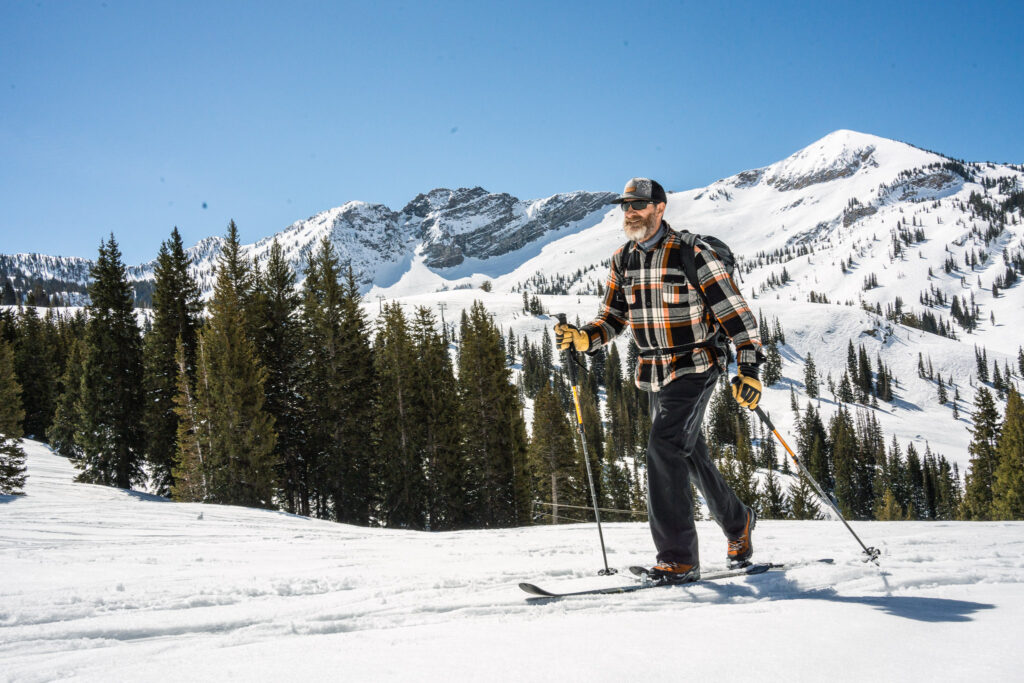
XCD stands for cross-country downhill. You can push touring as the priority or push toward turns. Both setups allow for that.
The Alaska, paired with the 201 Alaska binding, leans more toward touring. The Svartisen, paired with the 3-pin cable bindings, pushes more toward turning.
Tyler:
XCD covers a lot of ground. Some people think of the Scarpa T4 as fitting into this category. How do these boots compare to the T4?
David:
I’d put the T4 in a higher echelon in terms of downhill performance. It prioritizes turns more, but it’s heavier.
These boots are lighter, probably more comfortable out of the box. What surprised me was that you could take both boots straight out of the box and go skiing comfortably.
Alpina Alaska Breakdown.
Tyler:
Without getting too deep yet, what are the core differences between the Alpina Alaska 75 and the Crispi Svartisen?
David:
The Alaska prioritizes touring, fitness, and walking. The Svartisen prioritizes turns.
If you ski 20 days or less, I’d choose the Alaska. More than 20 days, I’d choose the Svartisen.
Tyler:
Let’s start with the Alpina Alaska 75. What does it feel like on snow?
David:
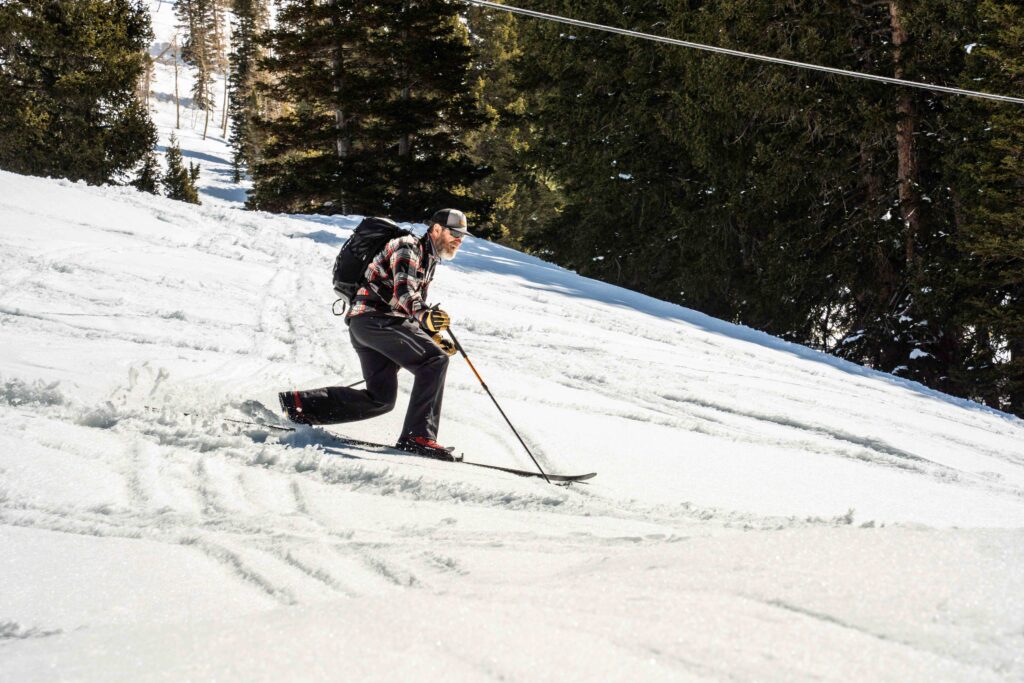
You can take it out of the box and go skiing. It’s friendly, easy to walk in, and comfortable.
It’s also a little warmer than the Svartisen. Paired with the 201 Alaska cable binding, you can make good turns.
Low-angle, rolling terrain is the sweet spot. Walking and mellow turning.
Where it starts to feel undergunned is steeper terrain, longer tours, or if you’re skiing more than 20 days a year. At that point, you might want the Svartisen.
It’s a great boot for entry-level XCD skiers or anyone prioritizing walking over turning.
The nice thing about the 201 Alaska cable binding is that you can remove the cable, stow it, and just walk on the pins.
Tyler:
So in summary, the Alaska offers out-of-the-box comfort, warmth, and is great for newer or touring-focused XCD skiers.
Now let’s shift to the Crispi Svartisen.
Crispi Svartisen Breakdown
David:
Like the Alaska, you can take the Svartisen out of the box and ski it immediately.
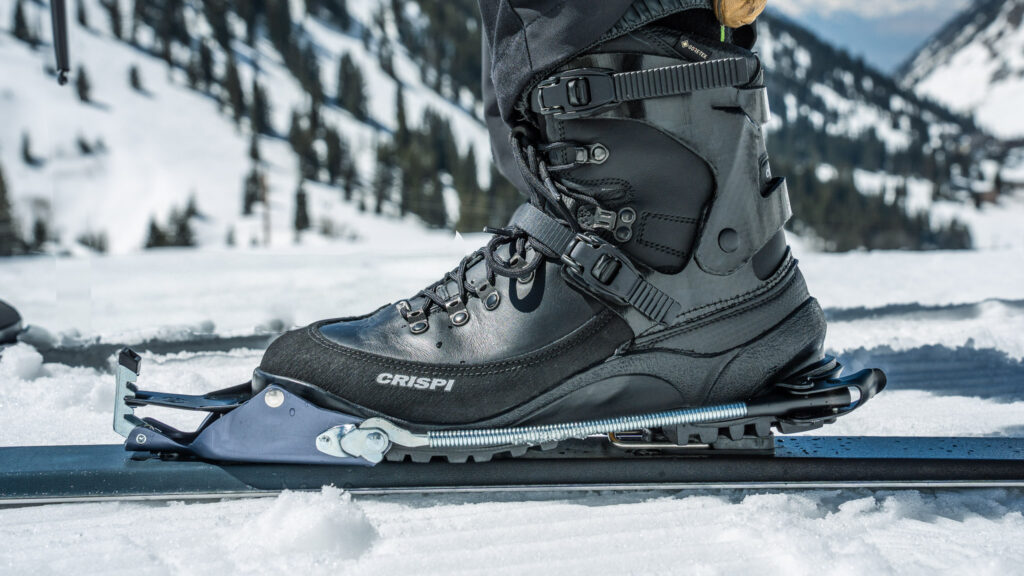
It pairs with our 3-pin cable family. It’s more durable, better for downhill performance, and has a carbon exoskeleton with two buckles.
It’s very confidence-inspiring when the terrain gets steeper or firmer, especially with the cable.
You can ski a lot with this setup. Powder, firm snow, slopes around 30 degrees. It’s lower echelon than plastic boots, but very capable.
This boot is ideal for someone prioritizing turns, wanting a lightweight, simple setup. There’s also some nostalgia here. It’s nice to see this style making a comeback.
Tyler:
In terms of weight, the Svartisen is technically slightly lighter than the Alaska, but the difference is negligible.
David:
Yes, very close. Differences really come down to skiing style and terrain.
Boot and Binding Pairings.
Tyler:
Let’s talk bindings for the Alpina Alaska 75. What pairs best?
David:
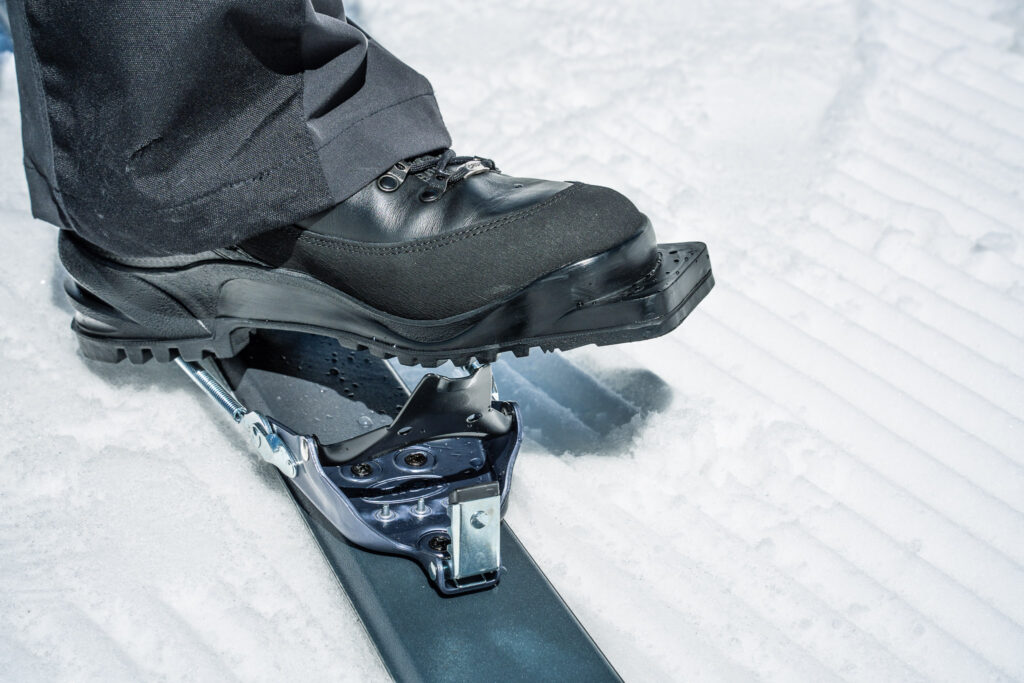
The 201 Telemark 3-pin. The Alaska duckbill is about 15mm thick, and this binding was originally designed for thinner duckbills.
We modified the bail to prevent rand wear and added a cable version for turning performance.
It’s very easy to walk in, natural stride, efficient on flat, rolling, and groomed terrain.
Straight 3-pin is best for maximum simplicity and touring. The cable adds turning performance and can be removed and stowed on the heel pad.
Tyler:
Now for the Crispi Svartisen. Which binding pairs best?
David:
The 3-pin cable binding. The 19mm duckbill fits perfectly. Secure clamping and good power transfer.
This setup is very close to old-school inbounds telemark setups, but the boot technology is much better now. More comfort, more padding, better performance.
The 3-pin cable Traverse adds a 10mm riser that helps prevent binding deflection on firm snow and steeper terrain.
If you want the simplest possible binding with the Svartisen and don’t want a cable, the HD Mountaineer is a great option.
Tyler:
If someone is choosing between these boots, what’s the first question they should ask?
David:
Is your priority walking or turning?
Rolling and mellow terrain favors the Alaska. Steeper and variable terrain favors the Svartisen.
Tyler:
Who wouldn’t the Alpina Alaska 75 be for?
David:
Someone prioritizing aggressive downhill performance.
Tyler:
And who wouldn’t the Crispi Svartisen be for?
David:
Someone purely focused on fitness skiing or Nordic-style touring with no interest in turns.
Rapid Fire Questions.
| More forgiving boot? | Alaska 75 |
| More powerful? | Svartisen |
| Lightest? | Svartisen (barely) |
| Best for long, low-angle days? | Alaska 75 |
| Better for turns? | Svartisen |
| Better for new XCD skiers? | Alaska 75 |
| Better for experienced XCD skiers? | Svartisen |
Tyler:
That wraps up our discussion on the Crispi Svartisen and Alpina Alaska 75. These are our opinions based on our experience. Feel free to share yours in the comments.
Stay tuned for the next installment, where we’ll talk about the Scarpa T4 and T2 and the next level of XCD and Nordic touring setups.
Thanks for letting me pick your brain, Dave.
David:
You’re welcome.
Share this Post