





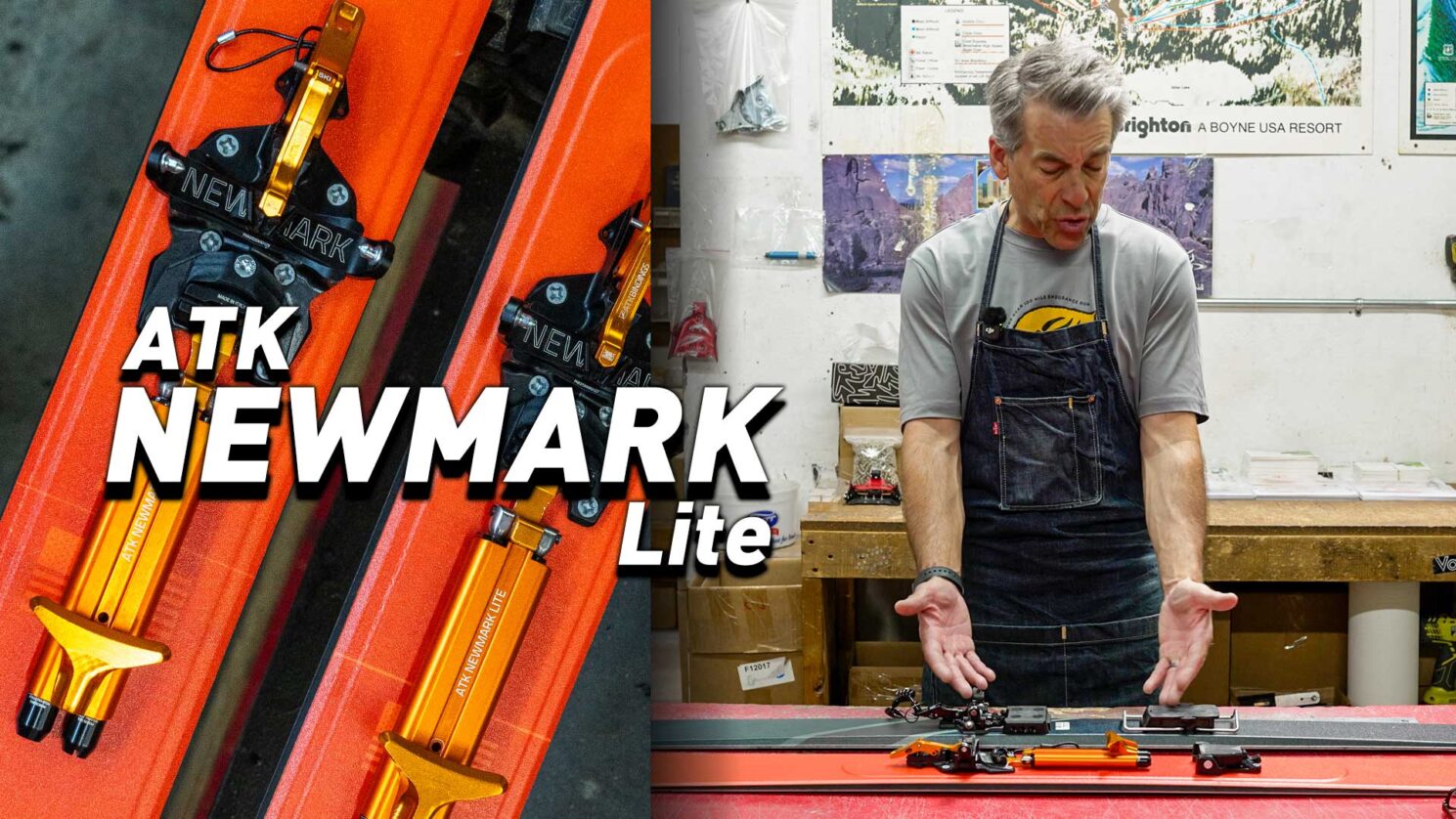
ATK Newmark Telemark Binding Review: First Look
After a few spring laps on a preproduction binding, here’s what stood out about the Newmark Lite’s touring efficiency, step-in design, pivot position, and downhill feel.
The ATK Newmark Lite is built for NTN telemark skiers who want the efficiency of a tech toe in a lightweight, touring-focused binding.
After a few spring laps, our first impression is that it tours well, engages positively, and has a clean, well-machined design. The preproduction spring we tested also felt noticeably soft. That may suit backcountry skiers who prefer a smooth, less resistant flex, while larger or more aggressive skiers will likely want to try the stiffer spring option.
What Is the ATK Newmark Lite?
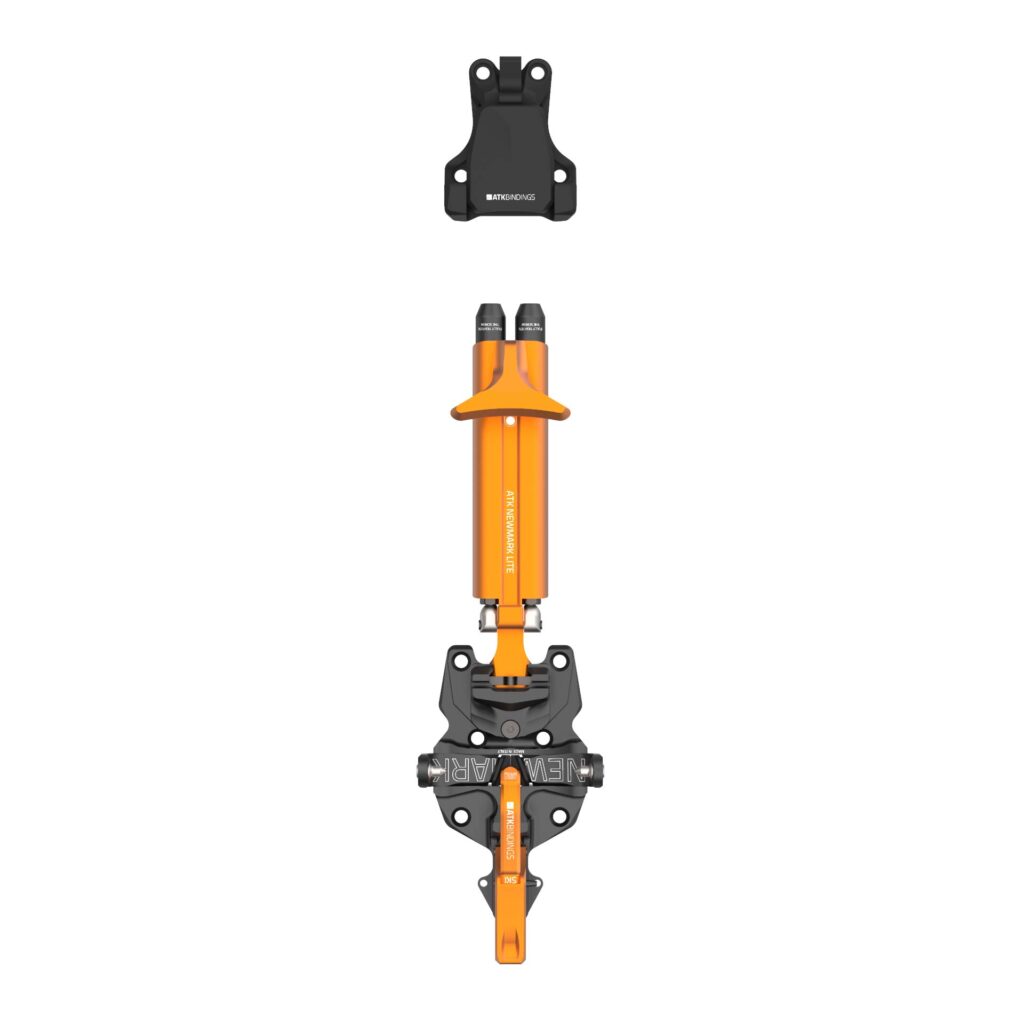
The Newmark Lite is an NTN telemark binding built around a tech toe. The boot connects at the toe through its tech fittings, while a spring-loaded claw engages the boot’s second heel for downhill skiing.
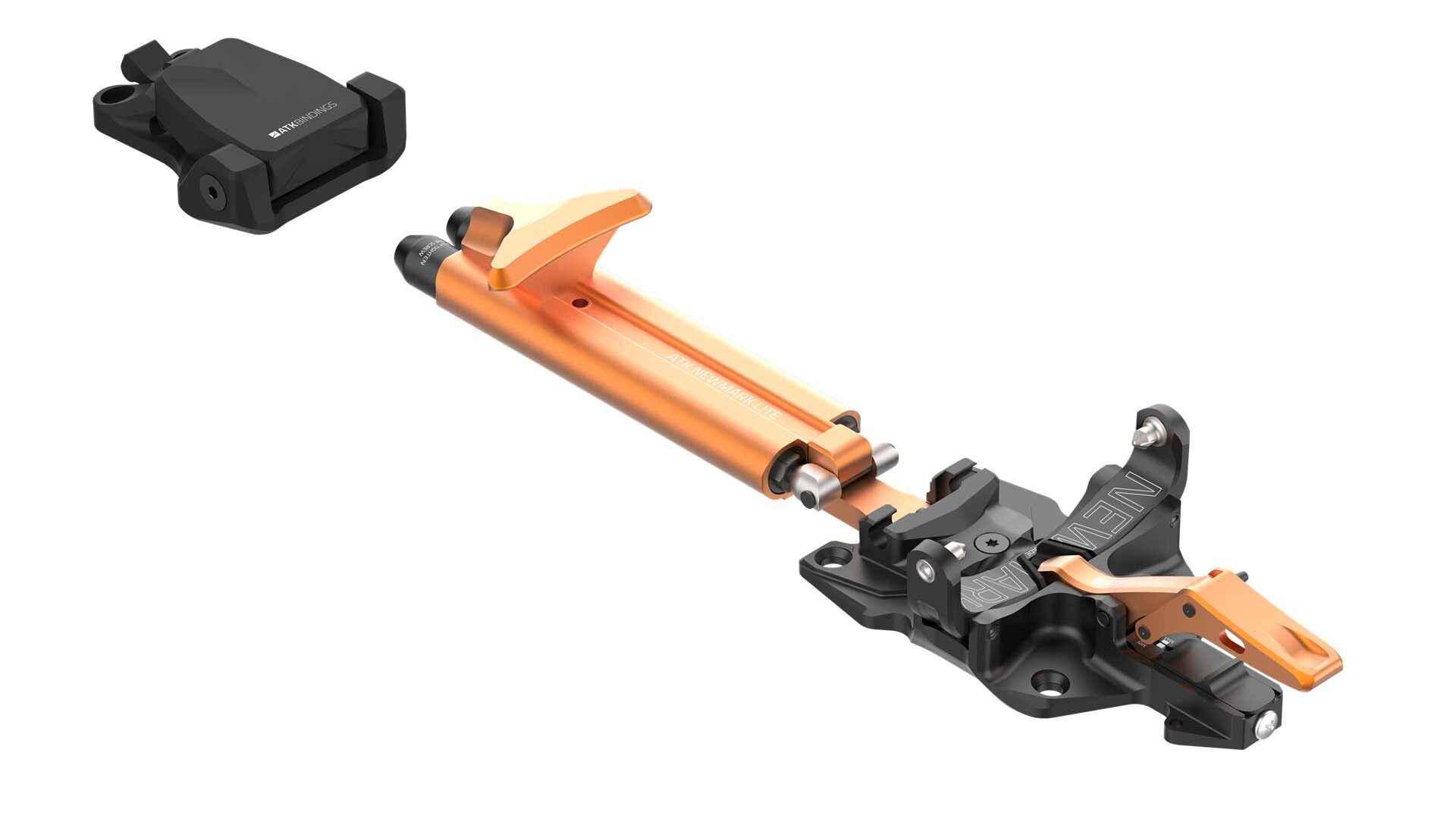
The binding has three primary components:
- A tech toe with adjustable pin tension
- A removable spring and claw assembly
- A heel pad with an integrated climbing riser
ATK has stated a target weight of approximately 340 grams per binding. We have also seen higher early weights reported, potentially depending on whether screws, mounting hardware, and the complete heel assembly are included in the published weight.
The final production weight still needs to be confirmed, and we’ll certainly weigh a pair when our own retail samples arrive (Voile will carry the ATK Newmark Lite in our retail store and online). Regardless, there is no question that this is intended to be a lightweight NTN touring binding.
ATK is known for clean machining and well-finished components, and that comes through immediately. The toe piece, cartridge assembly, and riser all feel precise and thoughtfully made.
How Easy Is It to Step Into?
The tech toe was one of the first things we liked about the binding.
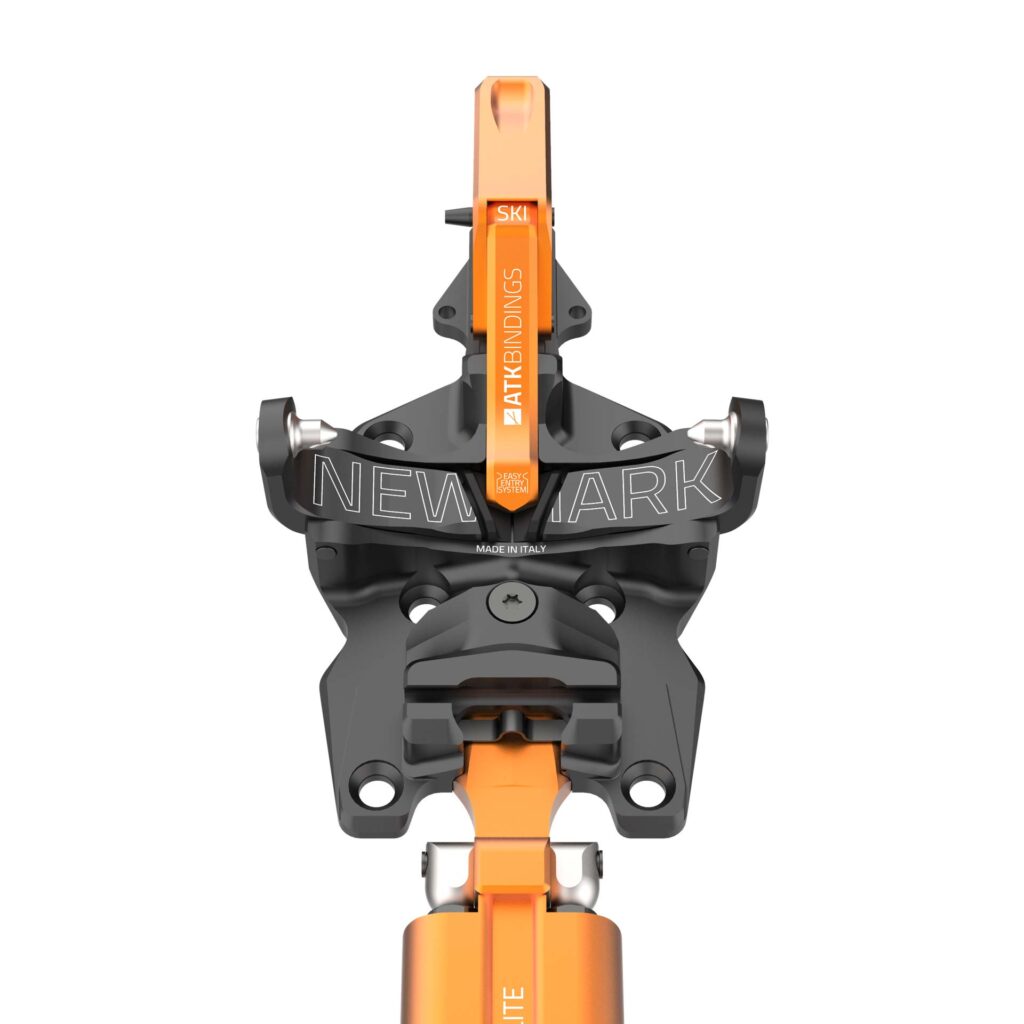
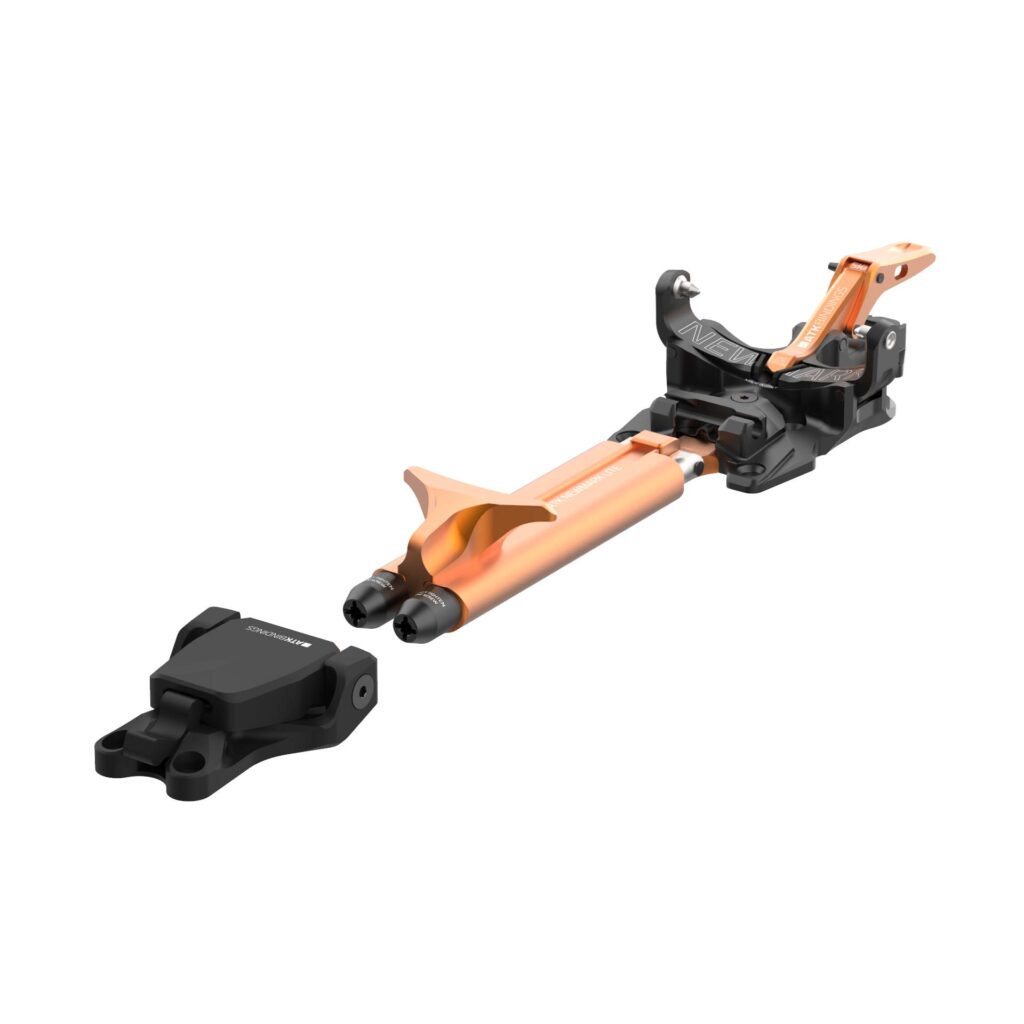
Getting the boot aligned with the pins was straightforward, and the toe engaged positively each time during our testing. Once the toe is connected, the skier steps down to engage the claw beneath the boot’s second heel.
The step-in action felt consistent and secure. There was no need to fight with the binding or make several attempts to get everything lined up.
The toe also has a small adjustment that changes the amount of pressure at the pins. That may allow skiers to fine-tune the toe based on skier weight, boot fit, or personal preference.
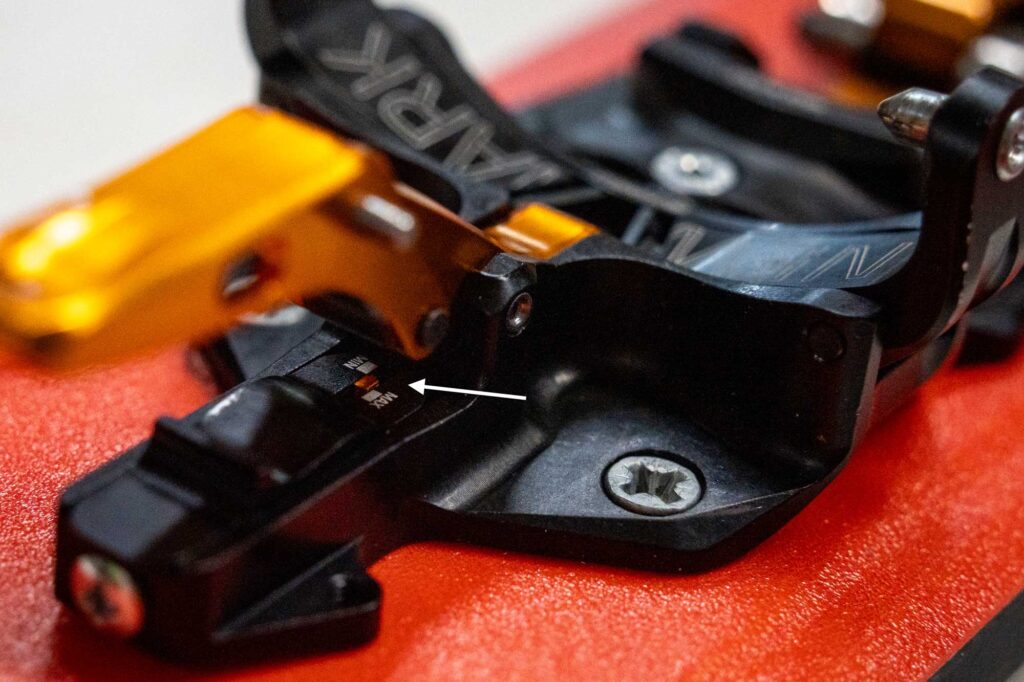
We would not describe this as an alpine-style release adjustment without more information from ATK. At this stage, it is more accurate to say that the toe offers adjustable retention or pin pressure.
How Does the Binding Accommodate Different Boot Sizes?
The position of the spring and claw assembly can be adjusted for different boot lengths.
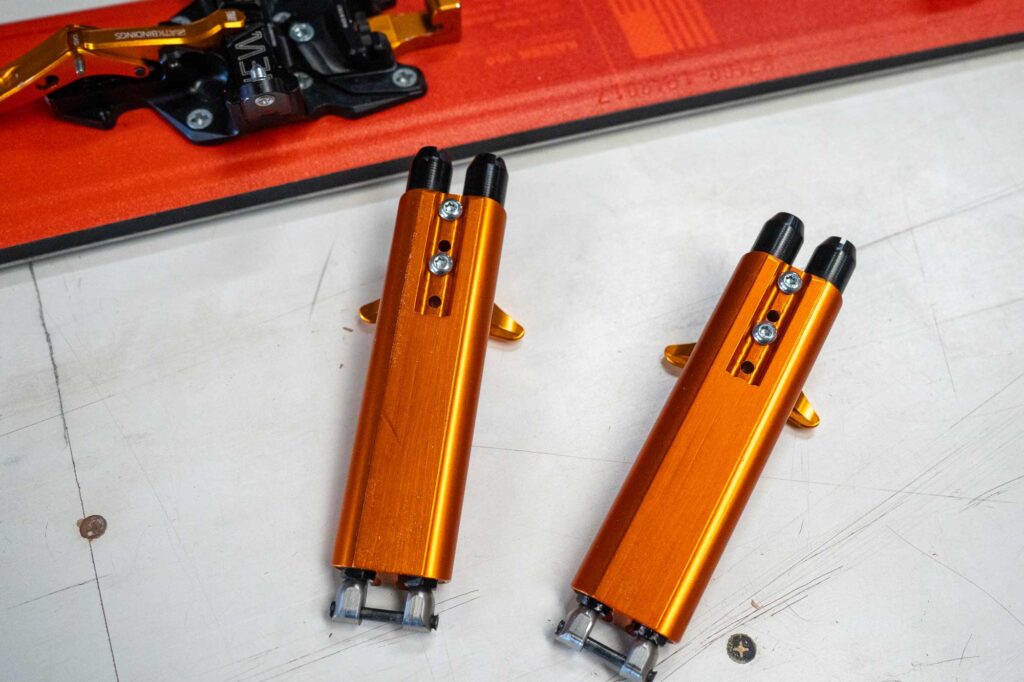
The ATK Newmark can accommodate all modern Scarpa NTN boot sizes. There’s an adjustment feature on the heel cartridge assembly. On the bottom side, you can change the screw position to accommodate small or large sole NTN boots. For Scarpa, the break point in sizes is 26 (small) – 26.5 (large)
How Does the ATK Newmark Lite Tour?
The Newmark Lite gives skiers two options for creating heel clearance during the climb.
The first is to remove the spring and claw assembly entirely. The cartridge slides off quickly and can be stored in a pack for the ascent. Reinstalling it only takes a few seconds, and it locks securely back into place.
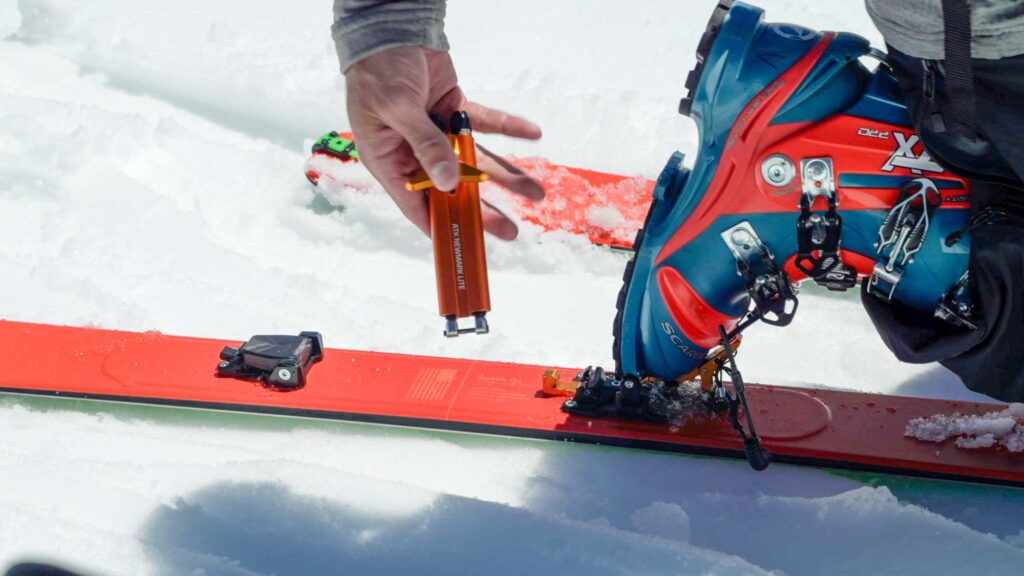
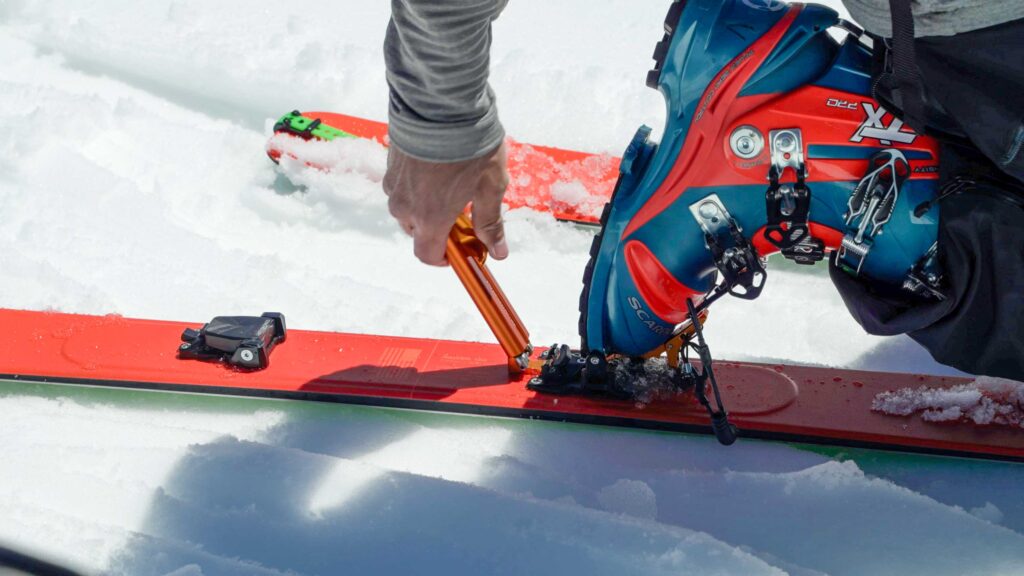
That approach reduces the amount of binding hardware carried on the ski while touring. It is similar in concept to the removable heel assembly on the Voile TTS Transit.
The second option is to keep the cartridge on the ski and raise the climbing device. A small lever at the rear can be activated with a ski pole, allowing the riser to pop into position. It’s important to note that you MUST use the climbing riser if you don’t remove the cartridge assembly.
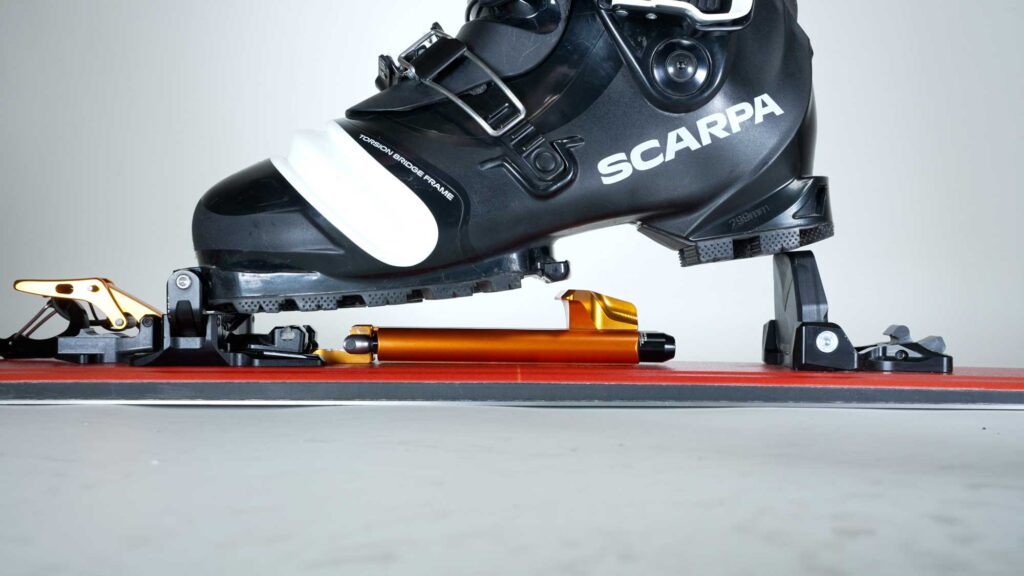
Raising the riser was easy. Lowering it was a little less intuitive.
We initially tried using the plastic handle of our ski poles, but plastic against plastic did not give us much purchase. With more practice, that may become easier. During our first outings, bending down was sometimes the quicker solution.
That is a small usability note rather than a major concern, but it is the type of detail that becomes more important during repeated transitions.
Overall, the binding toured very well. The tech toe allows the boot to pivot freely, and the removable cartridge gives uphill-focused skiers less weight to carry on their feet.
How Does the Pivot Compare With the Voile TTS Transit?
Pivot position has a major influence on how a telemark binding feels through a turn.
Because we spend a lot of time designing and skiing the Voile TTS Transit, we used it as a familiar reference point.
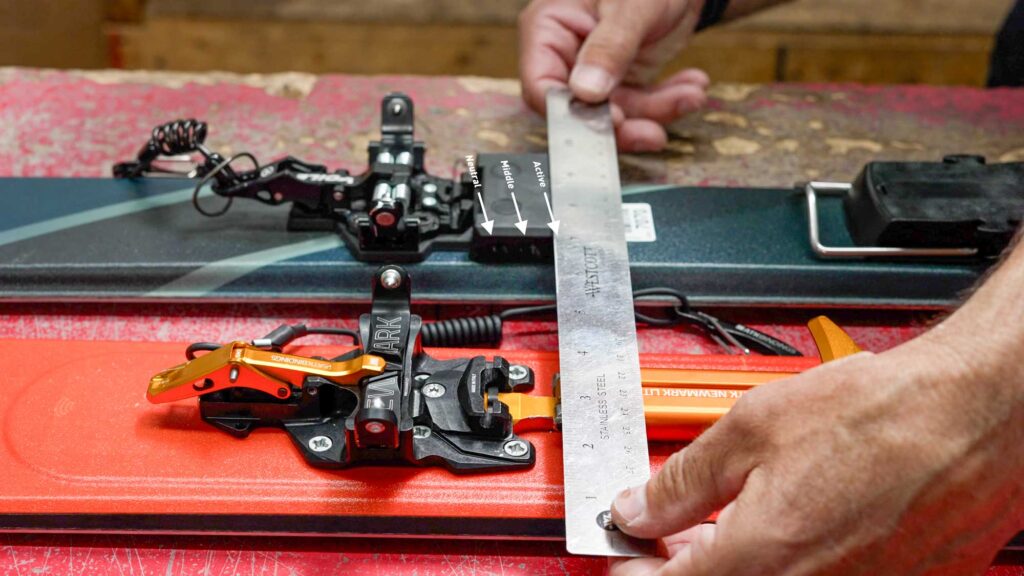
With the tech pins on both bindings aligned, the Newmark Lite’s pivot appeared to fall close to the Transit’s rearward, more active position. That gives the binding meaningful leverage over the boot without placing the pivot excessively far behind the toe.
Pivot location does not determine binding feel on its own. Spring rate, preload, travel, boot construction, skier size, and technique all matter.
Still, the Newmark Lite appears to start from a sensible pivot position for a touring-oriented NTN binding. It felt active enough to engage the boot, but the soft spring kept the overall resistance low.
How Did the Soft Spring Feel on Snow?
The preproduction binding we tested came with what appeared to be the softer spring option.
On snow, the flex felt smooth and progressive. It also felt notably soft.
For comparison, Christopherson normally skis the TTS Transit in the middle pivot position with a softer, long-travel spring. The Newmark Lite still felt slightly softer than that setup, with less resistance through the telemark motion.
That is not automatically a drawback.

Christopherson generally prefers a somewhat softer spring for backcountry skiing. A less resistant binding can allow the skier to move naturally through the turn, particularly in soft snow. Depending on the ski, stance, and technique, it may also make it easier to keep the tips from being driven beneath the surface.
That is personal preference, though. A larger skier, a more aggressive skier, or someone who prefers a powerful and highly active binding may find the tested spring too soft.
At the time of testing, we were told that ATK planned to offer both softer and stiffer spring options. That choice will likely make a meaningful difference in how the production binding skis.

With the spring we tested, the simplest description is this: smooth and controlled, but softer than the telemark setups we normally use.
Who Is the ATK Newmark Lite Best Suited For?
Based on our time with it, the Newmark Lite appears best suited to NTN skiers who place a high priority on uphill efficiency.
It may be a particularly good fit for skiers who want:
- A lightweight NTN touring binding
- A free tech-toe pivot
- Positive step-in engagement
- A removable spring assembly
- A smooth, relatively soft telemark flex
- The ability to choose between spring rates
There are also a few skiers who should demo the binding before committing. Larger or highly aggressive skiers will likely want to test the stiffer spring. The same goes for anyone who prefers a powerful, highly active binding feel.
Skiers who need a verified release function should also wait for ATK’s final technical documentation. The adjustable toe pressure should not be treated as a certified release setting unless ATK’s final documentation specifically describes it that way.
As with all telemark bindings, boot choice and personal preference will matter more than any published specifications.
For now, the Newmark Lite looks like a promising option for NTN skiers trying to reduce weight and improve touring efficiency without abandoning a true telemark turn.
Can’t decide between an NTN or 75mm setup? NTN vs 75mm: Which is better?
Share this Post