



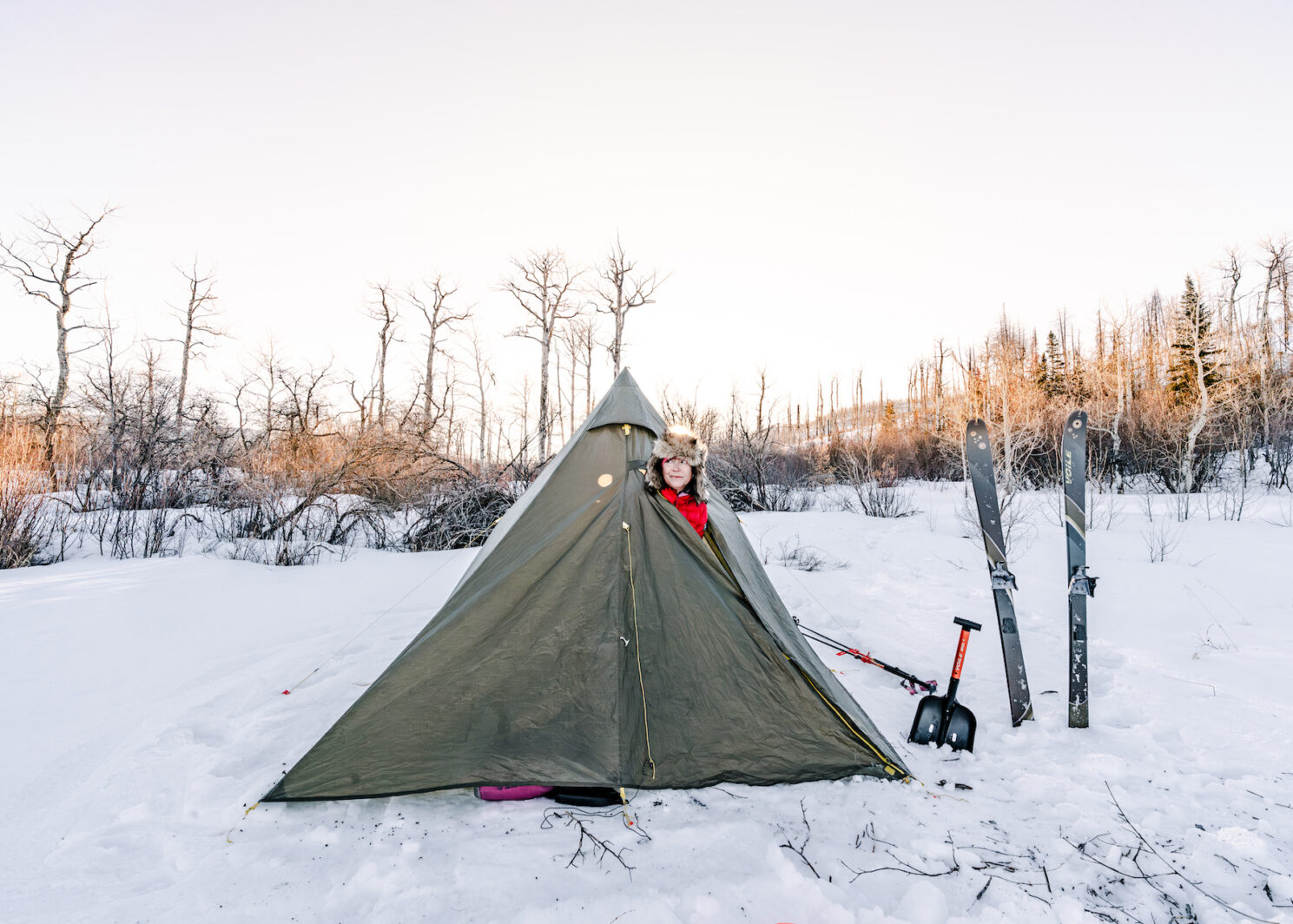
A Coureur des Bois: The Ethos of XCD Skiing
Coureur des Bois is a way of moving through winter, under your own power, carrying what you need, and using judgment to get you across the landscape – reading conditions as they change, the snow, terrain, weather, and adjusting your route, pace, and decisions in real time, without a fixed plan.
The term comes from 17th–18th century French-Canadian traders who traveled deep into winter landscapes, often independently and outside formal routes, guided by endurance, judgment, and what they could carry with them. In modern ski culture, the name was later adopted by the Canadian Ski Marathon to describe its most demanding category. One defined not by speed, but by distance, self-sufficiency, and completing the full journey under your own power.
The Draw To Self-Sufficient Travel
That lineage is what drew me in. The idea that skiing could be less about performance and more about movement through winter terrain, about carrying what you need, adapting to conditions, and finishing based on adapting to the challenge and strategy rather than time. It’s a framework that naturally aligns with XCD travel.
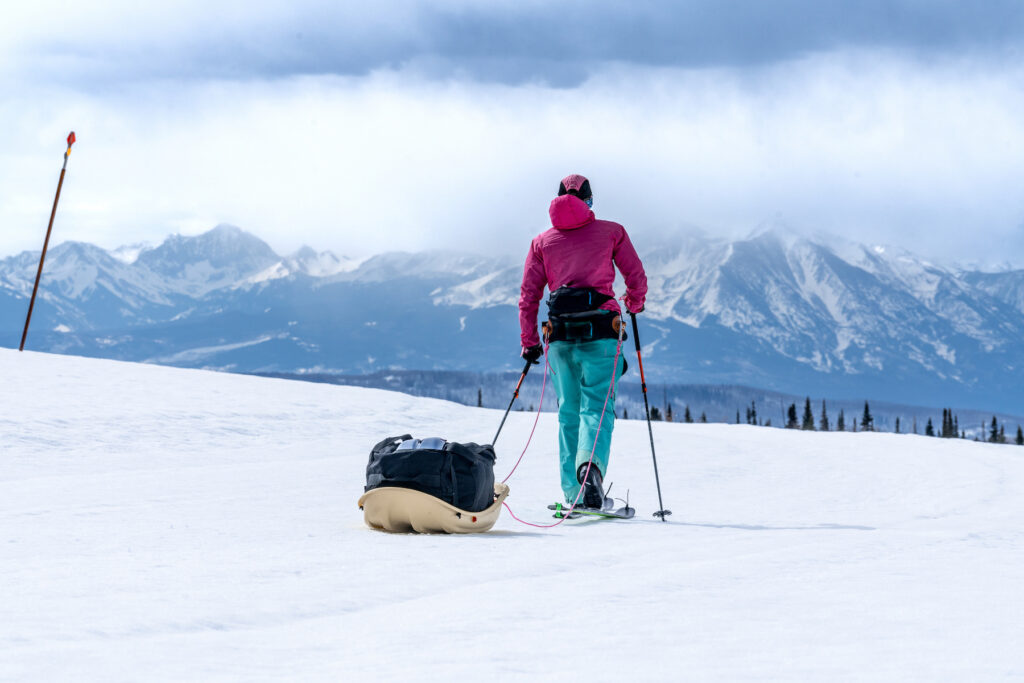
This winter, I set out to build my own version of that challenge. Something closer to the traditional format: a sled-pulled, overnight, point-to-point route inspired by both the historical Coureur des Bois and local ski race history. The plan was to follow a western Colorado Coureur des Bois race route from the early 1990s. Unfortunately a low snow year made that unrealistic as coverage simply wasn’t there to support it.
Adapting to Changing Conditions
Instead, I adjusted to a shorter overnight tour along the Lake of the Woods trail on the Grand Mesa. Part of the reason I chose that route was its connection to the north – not geographically, but in feel. The broad, open meadows ringed by old growth forests, and the sense of traveling across rather than up or down mountains echo the kind of terrain where the Coureurs des Bois once birthed. It offered a landscape that felt aligned with the tradition, even if the scale was different. And while it wasn’t the full objective, it still required the same core elements: carrying gear, managing terrain, and making decisions based on real conditions. In that sense, it stayed true to the ethos that originally inspired the project.
Finding the Right Gear for XCD Adventures
This type of skiing, closer to travel than recreation, demands a different approach to gear. I used a BCX setup built around the Voilé Endeavor BC skis with three-pin bindings. The focus wasn’t speed; it was reliability, control, and efficiency over variable terrain with a sled in tow.
Pulling a sled changes how you interact with the landscape. Every small rise, sidehill, and transition matters more. The skis need to track predictably and hold an edge when the sled is pulling you off balance or pushing from behind on descents. The Endeavor BC handled those demands well, providing a stable platform that allowed me to stay in control without overworking to compensate for conditions.
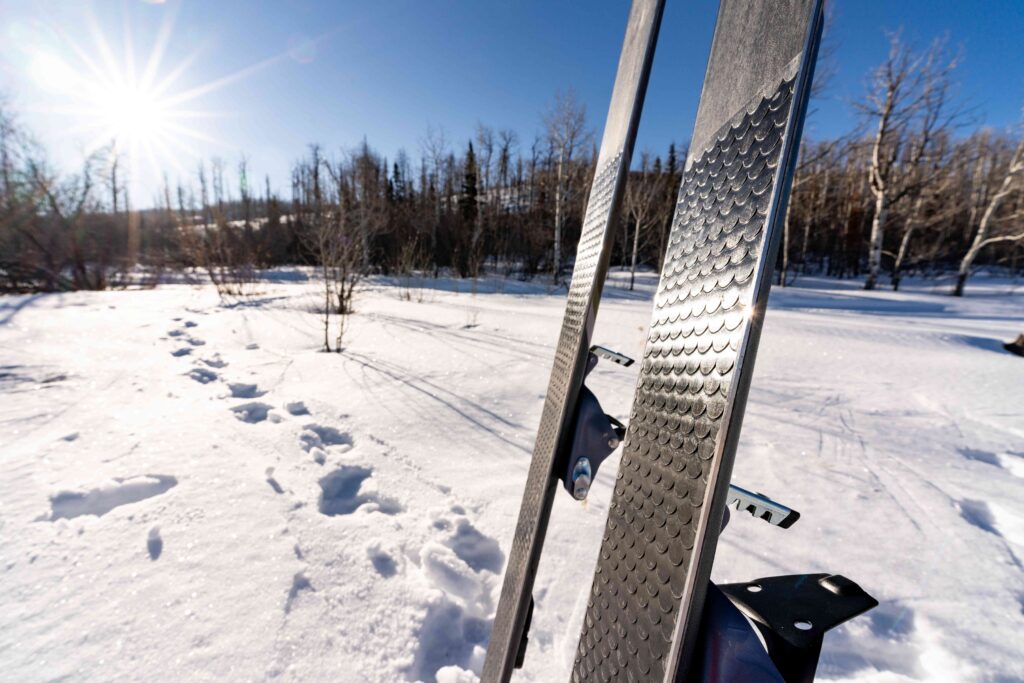
The three-pin bindings were part of that same system mindset. They offer a direct connection to the ski, which becomes more important when you’re managing weight and terrain simultaneously. They’re also simple and field-repairable – key considerations when traveling solo. In a Coureur des Bois context, where self-reliance is central, that simplicity matters.
As was typical this winter, on the Grand Mesa, conditions were mixed with ice, windblown and thin snow. The BCX setup performed consistently across those transitions. It wasn’t about maximizing glide; it was about maintaining steady progress without losing control or burning unnecessary energy.
Customizing Camp
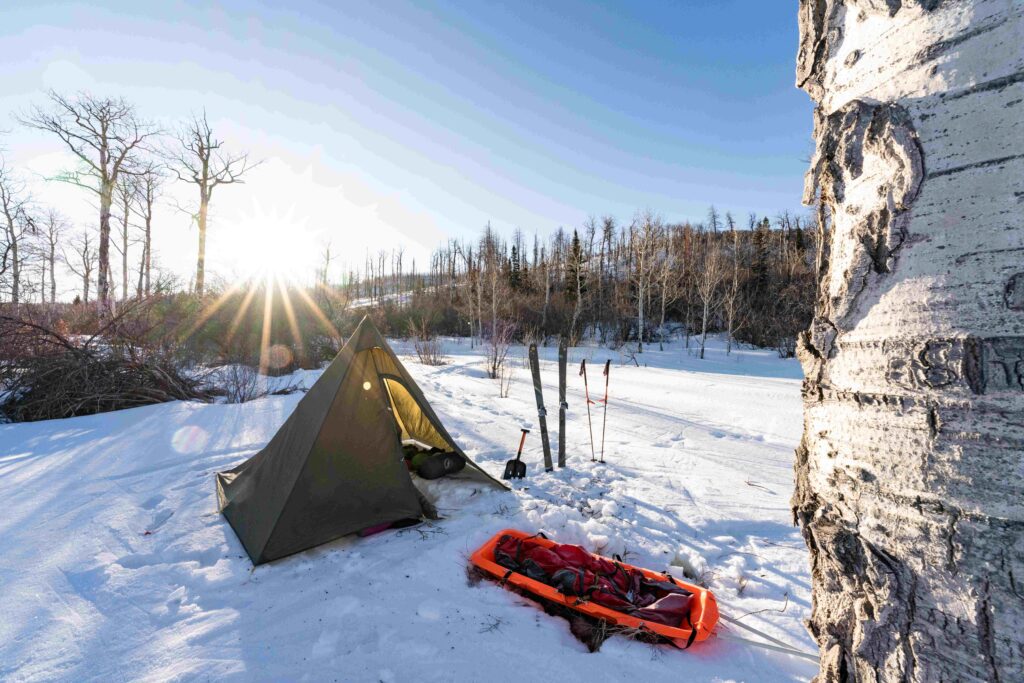
Camp setup followed the same principles. I used a hot tent, accepting the added sled weight in exchange for the ability to dry gear and recover effectively. That tradeoff reflects the broader mindset: carry what you need to stay functional, but nothing extraneous. Food, fuel, and essential repair gear take priority.
The overnight component reinforces the connection to the Coureur des Bois tradition. It introduces a second layer of responsibility – managing not just the travel, but the stop. You’re accountable for your own shelter, warmth, and readiness for the next day. That’s where the historical inspiration becomes tangible for me. While not fully recreating their experience, you are operating within the same constraints.
The Ethos of XCD Skiing
While I didn’t complete the longer route I had envisioned, this trip still captured the core of what I was after. It demonstrated that the Coureur des Bois isn’t defined by distance alone. It’s defined by its approach, one of self-supported travel, responsiveness to conditions, and the ability to move through winter terrain with intention.
More than anything, the goal is to return to this kind of effort each winter, choosing a route that requires commitment, adapting it to the conditions at hand, and accepting that the outcome isn’t guaranteed. Some years may allow for a longer traverse; others, like this one, call for a scaled version. The constant is always exploration rooted in history, resilience, and the realities of winter travel.
À l’hiver prochain.
About The Author

Ann Driggers
Location: Carbondale, CO
Top Gear Picks: V8 176cm
Instagram: @anndriggers
A Jill of all trades and a master at none, Ann is a weekend warrior and backcountry bon vivant who lives to hike, run, ride, paddle but mostly ski in the mountains of western Colorado.
Ann lives in Carbondale, Colorado, from which she aims to explore as much of the wild and beautiful places of her local geography as possible. She loves to begin her day with a backcountry dawn patrol, watching the sunrise from a local summit and then sliding into work wiping the powder from her grinning face. The weekends are spent skiing deep into the Elk Mountains, where devising new routes and truly connecting with nature, returning with memories, pictures and words with which to inspire others, are what makes her tick.
Share this Post