





Hardboot Splitboarding Toe Piece Shootout
Share this Post
For hardboot splitboarders, the toe piece is the heart of the uphill system. The design looks simple: two pins and a locking mechanism. But the way each brand executes those details determines everything about stride efficiency, uphill stability, and long-term durability.
In this post, we’re taking a closer look at the four most common hardboot splitboarding toe pieces in use today. This blog isn’t going to give you a “best toe” but instead will help you understand which one might be best for you. Let’s take a look at options from Voile, Spark R&D, Plum, and Dynafit.
Voile Toe Piece
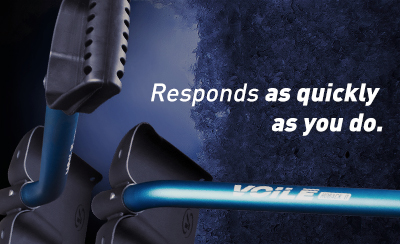
Voile’s hadboot splitboarding toe piece (STS Tour Binding) is a study in mechanical minimalism. There are no springs or cams — just manual sliding pins and a rotating lever lock. Engagement is entirely manual, and the rider directly controls every step of the lock sequence.
That simplicity eliminates nearly all common failure modes: no spring fatigue, no frozen cams, no misaligned preload. The interface is solid once locked, and long-term reliability is excellent. I’ve logged thousands of tours without needing any special replacement parts. In my experience with this toe, the only failure I’ve experienced is wear on the plastic lever, which can loosen the lock over time. Fortunately, it’s an easy fix in the field – just wrap a Voile Strap around the lever, binding, and under the boot.
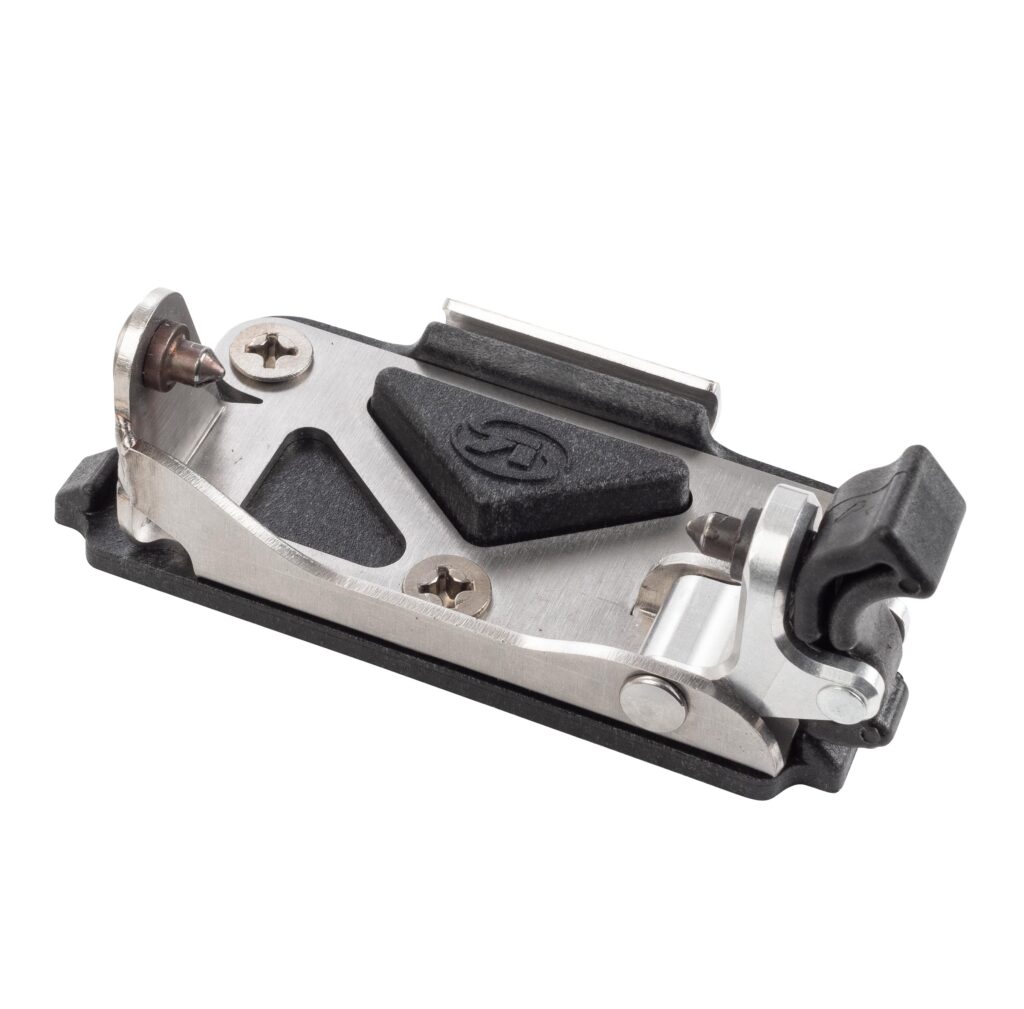
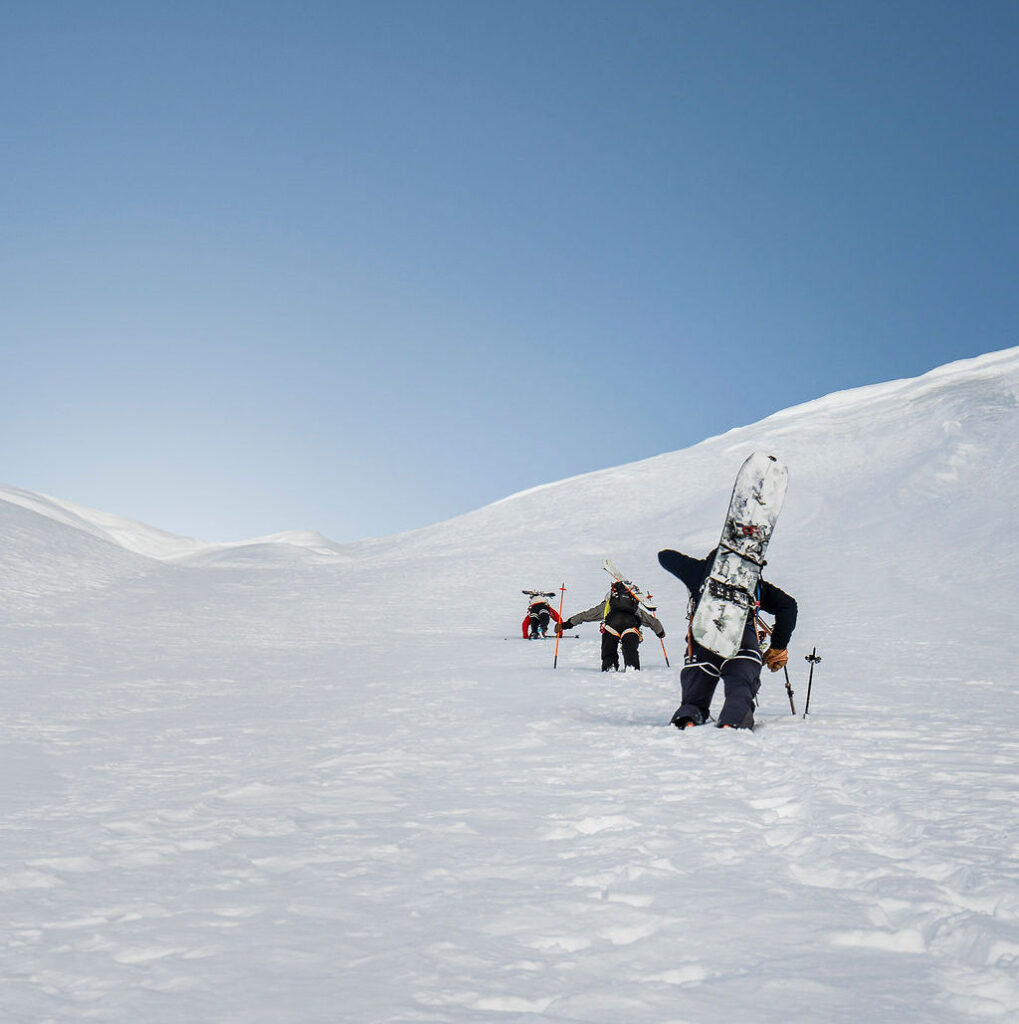
The downside is the step-in ergonomics. Since riders have to bend over to manually close the toe-engagement requires dexterity, and transitions are slower. Without spring preload, the fiddle factor can be high, especially for new users or in tricky spots like firm sidehills.
It’s my opinion that for those who prize durability above all else, the Voile remains the benchmark for field reliability. These are also the cheapest of the bunch, coming in at almost half of the other offerings listed here.
Weight: ~135 g per toe
Cost: $165 Pair
Mounting: Voilé 3-hole pattern
Crampons: Classic Voile slot
Known issues: Slower transitions, less ergonomic engagement, and lock mechanism wear
Spark Tech Toe
Spark is the original split-specific binding company, and in that vein, Spark’s Tech Toe was the first to translate Dynafit-style ski touring hardware directly into a three-hole (Voile) mounting pattern. It mounts directly to standard touring bracket holes and includes integrated crampon slots — meaning no adapter plate, low stack height, and a straightforward setup.
Mechanically, Spark’s design uses a spring-preloaded dual-pin closure operated by a cam-style locking lever. When locked out, the lever compresses the springs further, stiffening the interface and keeping the rider attached. That preload gives Spark’s toe a forgiving, user-friendly feel. Step-ins are intuitive; the toe self-centers the boot and snaps closed with a clean click. This makes the Spark Tech Toe especially beginner-friendly for new hardbooters.
However, the same spring force that adds forgiveness also introduces long-term fatigue. In cold conditions, the spring rate can change slightly, and over many tours, wear may appear as subtle side-to-side slop. More concerning are cases of cracked or broken pincer arms, typically occurring near the pin boss. Failures are rare but severe, often appearing without visible warning due to stress risers beneath the anodizing.
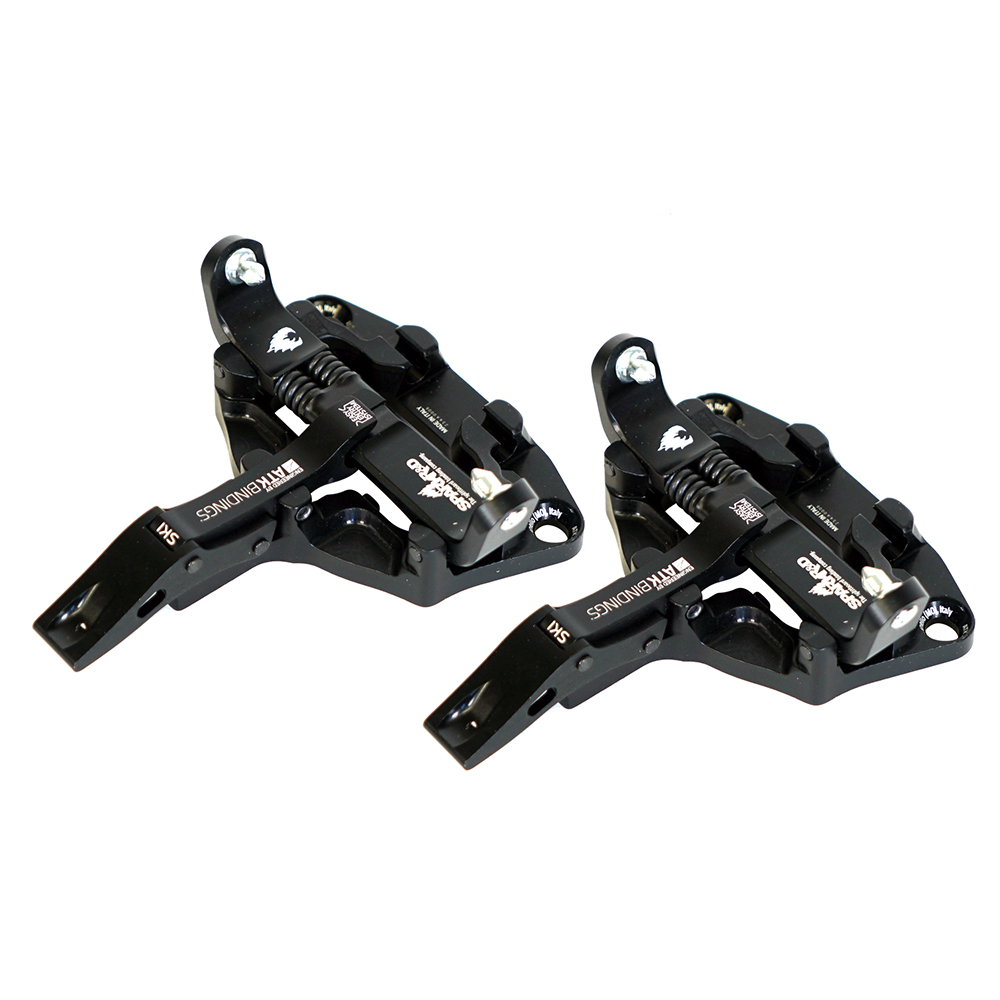
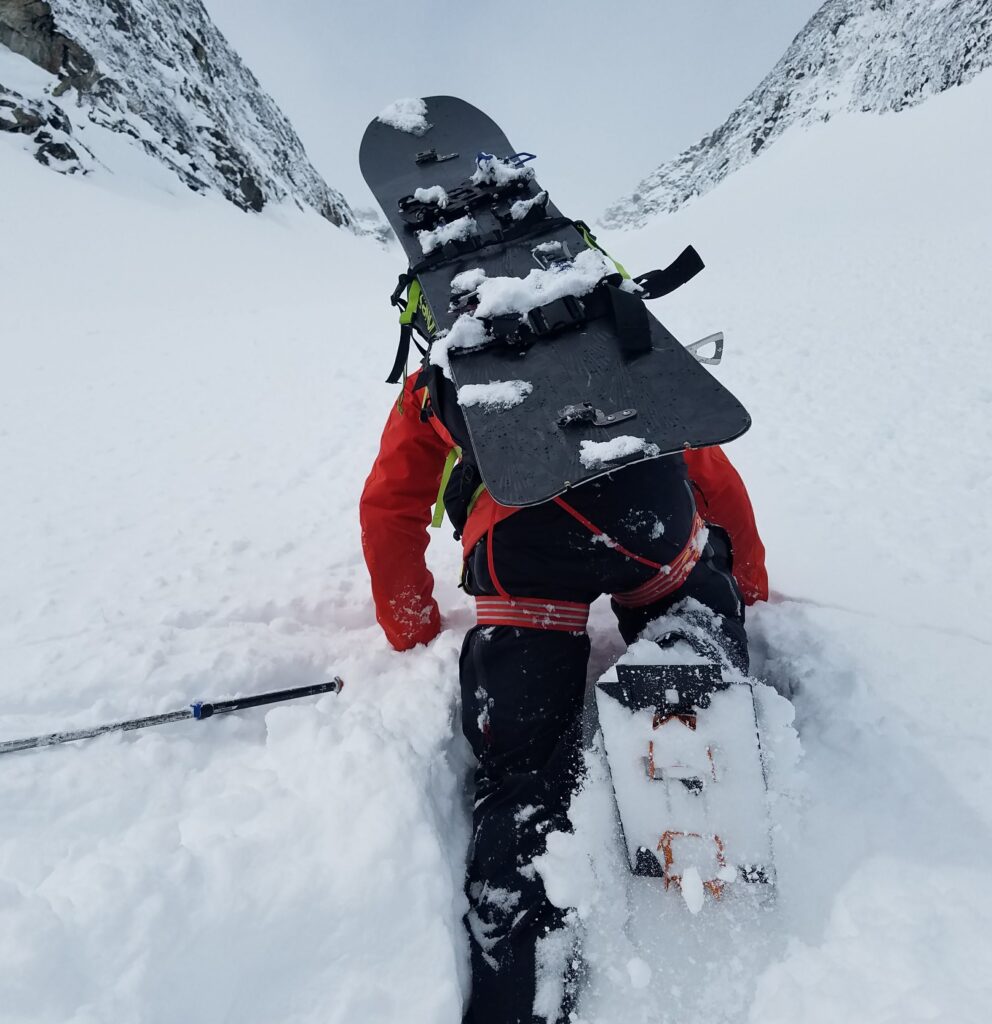
From a mechanical standpoint, Spark’s arms experience a bending load concentrated near the pin bore. Their geometry, optimized for low weight, may be underbuilt for repetitive lateral cycling under heavier riders or firm traverses. Spark has revised the forging and heat treatment over time, but it remains a known point of failure. Caveat emptor.
In the field, the Spark hardboot splitboarding toe piece is the most ergonomic design available, but not the most mechanically conservative. Riders using them in high-consequence terrain should inspect frequently and consider carrying a spare.
Weight: ~148 g per toe
Cost: $289
Mounting: Direct to splitboard bracket holes
Crampons: Integrated Spark D-Rex interface
Known issues: Spring fatigue, rare arm fractures
Adapter + Dynafit Toe
This is what I started with, and it’s still on a few of my boards today. It’s the original tech toe system for hardbooters (aside from direct drilling, which I would not generally recommend due to pullout issues without a T-nut in the board) and is still a great option. These adapters are made by Spark and Plum (although the Spark adapters can be hard to find nowadays). This setup sidesteps split-specific toe options by using an adapter plate to mate a ski toe with a splitboard. This allows the use of almost any tech toe (There are so many!) with standard splitboard touring holes.
The result is splitboard-specific integration paired with ski-industry-grade reliability. The cost of this is weight. It’s the heaviest of the four options here. Dynafit toes use hardened stainless arms, precision-ground pins, and a torsionally rigid forged baseplate. Their preload and lever geometry are refined from decades of ski touring development and extensive fatigue testing.
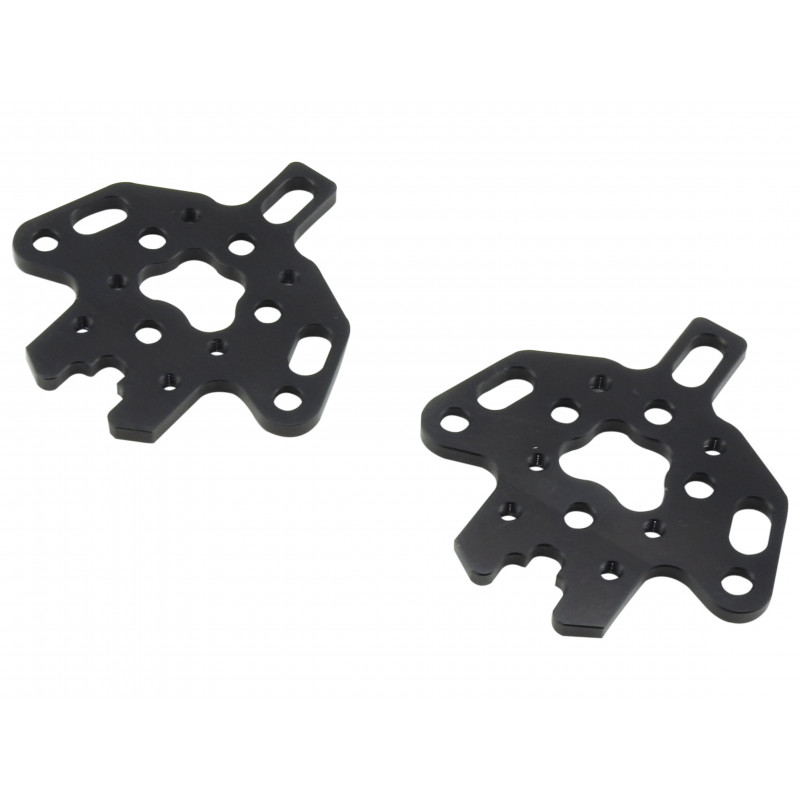

When mounted to Spark’s plate, stack height increases slightly (typically 3–5 mm), but torsional stiffness generally improves. The overall feel is tight with more leverage available to the rider. This gives the rider more precise edge control – though it can also amplify small missteps. The cam lock mechanism is smoother, and pin alignment is more precise.
The tradeoff is complexity. Adding the adapter introduces another interface layer — four more screws, more potential for tolerance stacking, and slightly more weight. But mechanically, it’s the most conservative option. In terms of reliability, Dynafit’s track record surpasses any splitboard-specific toe currently available.
Weight: ~170–190 g per toe (depending on Dynafit model)
Cost: Varies
Mounting: Adapter to touring bracket holes
Crampons: Spark-compatible slot
Known issues: Added height, more hardware, potential tolerance stacking
Plum Pekye Toe
Plum’s Pekye is a slightly more minimalist hardboot splitboarding toe piece when compared to Spark’s, though they share a similar appearance and boot engagement/locking method. The Pekye is also the newest option out there, so crowd-sourced information on reliability is minimal, but the reports are good. They’re also the lightest and priciest of the bunch,
The Pekye’s springs are a little beefier than the other options here and close with a bit more force. In theory, this keeps you locked in a little tighter, but in reality, a locked cam lever on any of these should keep the rider attached to the ski at all times. This interface is exceptionally stiff. On a firm sidehill, you’ll feel every little tilt of the ski. This is good and bad. This stiffness translates to outstanding torsional resistance, which reduces ankle fatigue and improves edging on icy traverses. The flip side is that it can feel harsh – there’s no mechanical “give” to absorb chatter. It’s like driving a Ferrari as your daily. fun and fast with the right driver, but maybe not the most comfortable or forgiving. There are plenty of days when I don’t want to feel every bump.
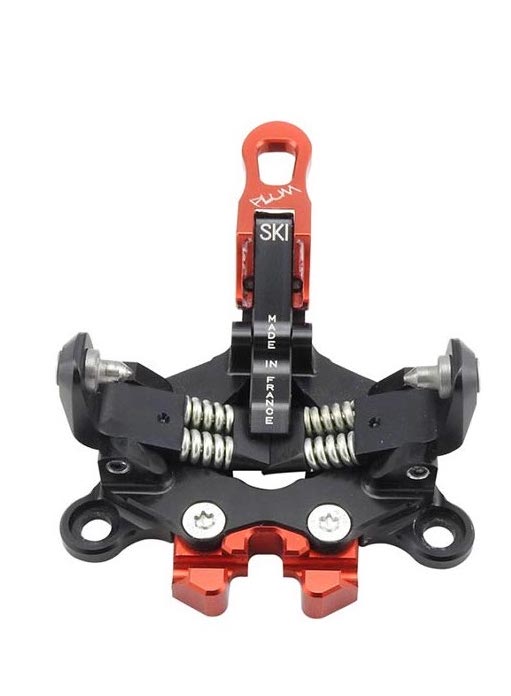
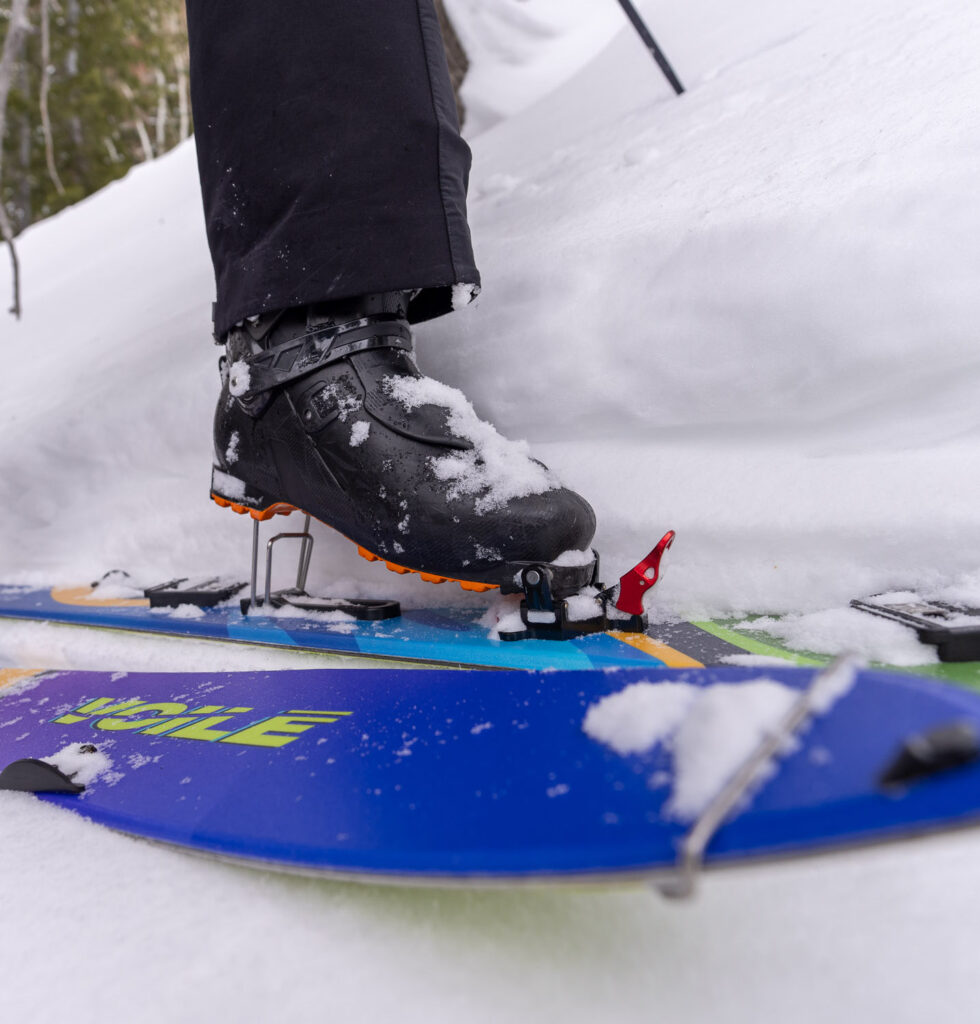
Plum’s design uses a robust machined baseplate and hardened pins with tight tolerances. Field maintenance is easy: keep the pins clean and occasionally lubricate the lock mechanism. The Pekye mounts via the classic Voile three-hole touring bracket pattern. Crampons require a separate bracket.
Weight: ~120 g per toe
Cost: $305/pair
Mounting: Voilé 3-hole pattern
Crampons: Separate bracket required
Known issues: Demands precise alignment, less forgiving engagement
The Takeaway
Each of these hardboot splitboarding toe pieces shines in different ways, and the decision on which to buy is a personal one. Although they are generally my last choice, I see more Spark toes in the field than anything else. Personally, I am a Voile and adapter plate/Dynafit guy. I see very few Plum toes out there, but they are the newest on the scene and also the priciest.
My biggest piece of advice? Don’t be afraid to change things up that aren’t working for you. You might just discover your new favorite piece of gear.
“Everybody’s got to find their own sound. What works for me probably wouldn’t work for somebody else.” – Jerry Garcia
About The Author

Aaron Diamond
Location: Jackson, WY
Top Gear Picks: Skyline 166cm / Hyper V-Tail 160cm and 190cm
Instagram: @aarondiamond13
Aaron Diamond is an AMGA Certified Splitboard Guide and avalanche educator based in Jackson, Wyoming. He guides year round for Exum Mountain Guides and has guided technical ski and snowboard descents on various Teton summits including the Grand Teton, Middle, Teton, Nez Perce, and Mt Moran. In the summer months Aaron works as an alpine climbing guide on Denali and throughout the Greater Yellowstone Ecosystem. He is alway psyched to share his backyard with experienced and new backcountry travelers
In his free time Aaron enjoys spending time in the splitboarding in the Tetons, or exploring the lesser known areas of the Alaska Range with his friends. He has first descents in the Tetons, Andes, and Alaska Range, including unrepeated splitboard descents of the Ramen Route on Mt Hunter (14,573ft), Mt Foraker’s Sultana Ridge (17,400ft), The Fat Calf Couloir on Pico Polaco (5995m) and the SE Face of the Gilkey Tower (12,320ft).
Share this Post